
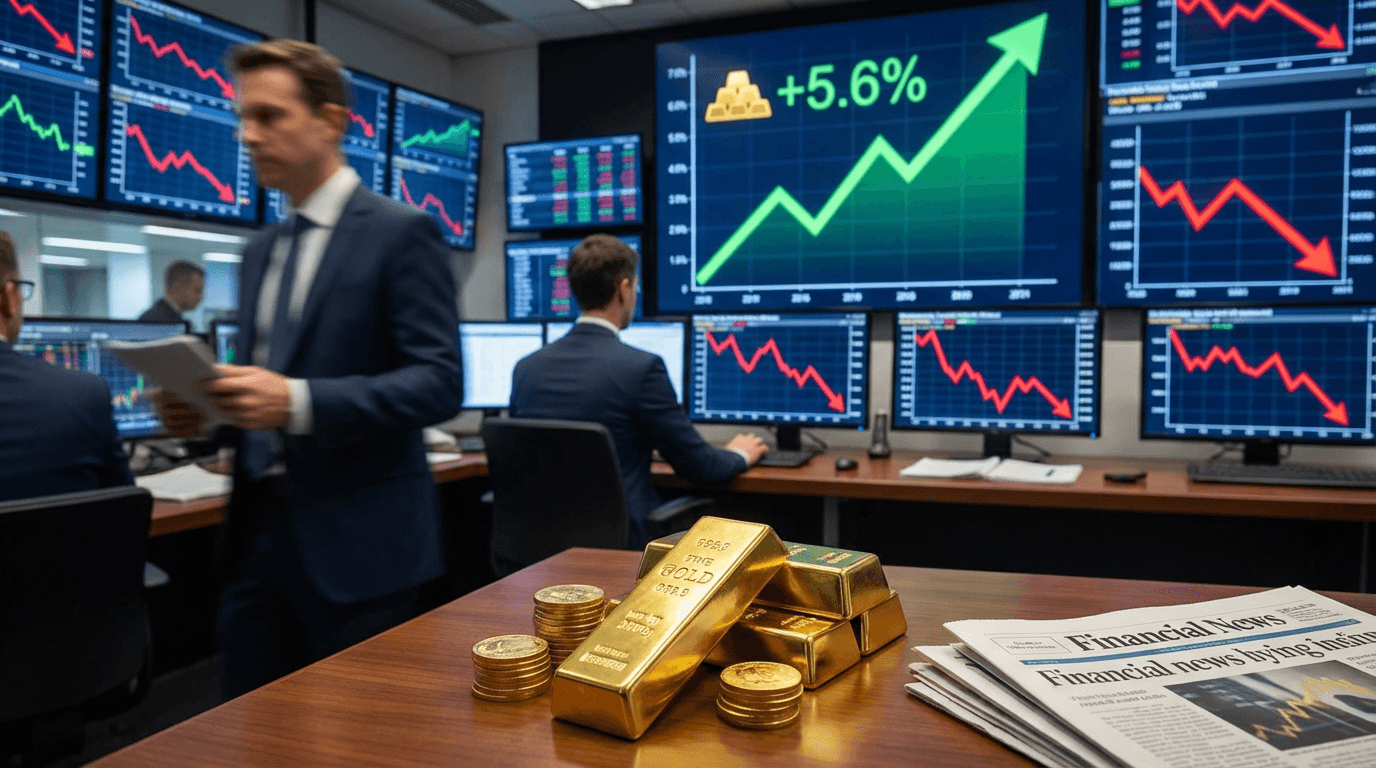
Gold markets have experienced remarkable volatility recently, with the precious metal rebounding strongly as investors seek shelter from equity market turbulence. On February 3, 2026, gold traded at $4,913 per ounce, marking a significant recovery following a dramatic three-day selloff that saw prices plunge 21% from record highs. This surge underscores gold's enduring role as a safe-haven asset during periods of market uncertainty and economic concern.
The rebound in gold prices reflects a fundamental shift in investor sentiment as equity markets faced headwinds from technology sector weakness and broader economic concerns. When stock prices decline sharply, institutional and retail investors alike turn to precious metals as a hedge against portfolio losses. Gold's inverse relationship to equities has made it a reliable diversification tool, particularly during periods of elevated market volatility. The February 3 surge demonstrates this dynamic playing out in real-time, with investors rotating capital from equities into hard assets perceived as more stable.
Gold's Record-breaking Rally And Correction
Gold's price action over the past few weeks has been nothing short of extraordinary. The precious metal reached a record intraday high of $5,608.35 per ounce on Thursday of the previous week, representing a stunning 30% gain in less than a month. This remarkable advance was fueled by strong central bank demand and what analysts call the "debasement trade," where investors rotate out of paper assets like bonds and cash into tangible assets due to concerns about currency weakness and government debt expansion.
However, this rapid ascent created conditions ripe for a correction. The announcement of Kevin Warsh's nomination as the next Federal Reserve chair triggered the initial selloff, as markets perceived him as more hawkish than other potential candidates. This raised concerns about tighter monetary policy, which typically supports a stronger US dollar and weighs on gold prices. The nomination resolved months of uncertainty about Fed leadership, paradoxically sparking the sharp decline as investors reassessed rate expectations and currency trajectories.
Over three trading days, gold collapsed to an intraday low of $4,405 per ounce, erasing weeks of gains. Yet this dramatic pullback proved temporary. Bargain hunting quickly emerged as investors recognized the oversold conditions and the fundamental factors supporting higher gold prices remained intact.
What's Driving The Rebound
The recovery in gold prices reflects recognition among market participants that the underlying bullish case for precious metals persists despite the Fed leadership transition. Central banks worldwide continue accumulating gold reserves, providing structural support for prices. Additionally, the debasement trade narrative remains compelling, as investors worry about long-term currency devaluation stemming from elevated government debt levels and persistent inflationary pressures.
Gold prices have soared 72.93% over the past year, rising from $2,841 per ounce to current levels around $4,913. This outperformance reflects a broader reassessment of risk assets in an environment characterized by geopolitical tensions, economic uncertainty, and questions about the sustainability of current monetary policy frameworks. For investors seeking assets less affected by inflation, gold continues to demonstrate its historical tendency to appreciate over time.
The volatility itself tells an important story about market psychology. After the initial shock of the Warsh nomination wore off, investors recognized that removing uncertainty about Fed leadership could actually be stabilizing long-term. Furthermore, the technical oversold conditions created compelling valuations for gold, attracting fresh buying interest and algorithmic support.
Investment Implications And Future Outlook
For portfolio managers and individual investors, the recent gold volatility underscores both the opportunity and the risk inherent in precious metals. Gold can serve as a steady portfolio component during market turbulence, but investors must be prepared for significant short-term price swings. The bid-ask spread in gold trading typically remains tight, but volume surges during volatile periods can create execution challenges.
Major financial institutions have turned increasingly bullish on gold despite the recent correction. Societe Generale has upgraded its year-end gold price target to $6,000 per ounce, up from a previous forecast of $5,000. JP Morgan forecasts $6,300 per ounce by year-end, with potential to reach $6,600 in 2027. These price targets suggest further upside potential from current levels, supporting the thesis that recent weakness represents a healthy correction rather than a fundamental trend reversal.
Market analysts expect the coming week to bring clarity on rate expectations through multiple data releases, including RBI policy decisions, US employment figures, and global manufacturing indices. These events will likely influence both the dollar's strength and precious metals volatility going forward.
Takeaway For Investors
Gold's recent price action offers valuable lessons for portfolio construction. The precious metal demonstrated its characteristic resilience by rebounding quickly from oversold conditions, while equity markets struggled with broader uncertainty. For investors seeking portfolio diversification and protection against currency debasement, gold prices at current levels may represent compelling entry points after the dramatic correction.
The combination of central bank demand, inflation concerns, and equity market volatility creates a supportive environment for gold. While short-term volatility may persist, the longer-term fundamental rationale for holding gold remains robust.