
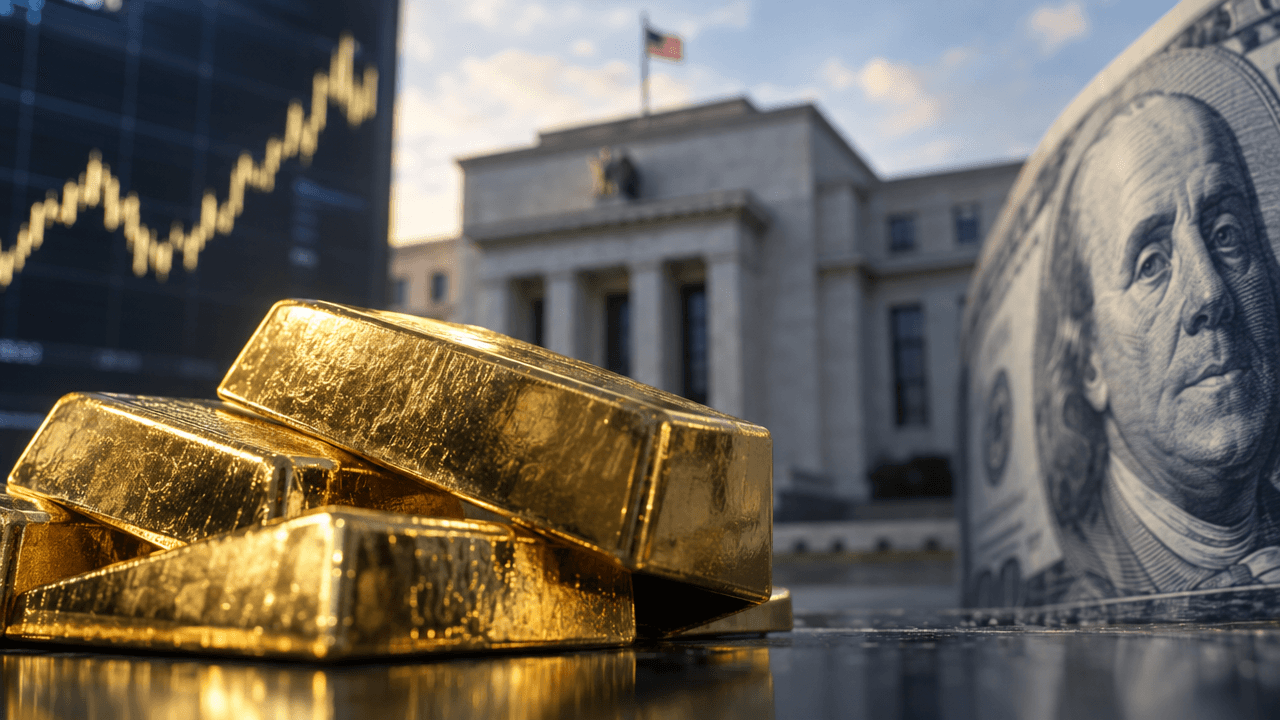
Gold has rebounded above $3,600 per ounce after a sharp sell-off pushed the metal to a 15-month low. The recovery reflects easing liquidation pressure, a softer US dollar and changing expectations around the Federal Reserve’s next policy decisions. However, the rally remains fragile: persistent inflation, resilient economic growth and expectations of further rate increases could continue to limit gold’s upside. [1][5]
Why Gold Rebounded
The latest move is best understood as a repricing event rather than a complete change in the fundamental outlook. Gold had suffered a steep decline as traders increased bets on higher US interest rates. As the sell-off became extended, some investors began reducing short positions and buying after prices reached technically oversold conditions.
A partial recovery in global equities also helped calm broader market conditions. When forced selling eases, investors often return to assets that have fallen rapidly, especially when the original bearish catalyst has already been widely reflected in prices.
The US dollar was another important influence. Gold is priced in dollars, so a weaker US currency generally makes the metal more affordable for international buyers. Lower Treasury yields can provide similar support because gold does not generate interest income. When bond yields decline, the opportunity cost of holding a non-yielding asset becomes less severe. [1][4]
Rate Expectations Remain The Central Driver
Despite the rebound, markets have not abandoned the possibility of additional Federal Reserve tightening. Recent inflation and growth data have reinforced the view that price pressures may remain persistent while the US economy continues to show resilience.
Market pricing has indicated a high probability of a 25-basis-point rate increase at the Fed’s December meeting. Some market participants have also considered the possibility of further hikes into early 2027. That “higher for longer” outlook supports the dollar and Treasury yields, both of which can create headwinds for gold. [3]
This creates a difficult environment for precious metals. Gold can benefit from uncertainty, financial stress and safe-haven demand, but those forces may be outweighed when investors expect cash and government bonds to offer higher returns.
For traders, the key question is not simply whether the Fed raises rates in December. It is how policymakers describe the path afterward. A hike accompanied by firm guidance could pressure gold again. A hike followed by signs that the tightening cycle is nearing its end could encourage another move higher.
Technical Levels To Watch
Reclaiming $3,600 is psychologically important because round numbers often attract significant buying and selling interest. Yet holding above that level is different from establishing a sustained uptrend.
Near-term resistance has been identified around $3,651, followed by the $3,695 to $3,700 region. A decisive close above those areas could strengthen the recovery narrative and signal that buyers are regaining control. Some technical projections identify $3,700 as an important threshold before a possible move toward higher levels. [11]
On the downside, traders should monitor whether gold can maintain the $3,600 area as support. A failure to hold it could expose the market to renewed selling toward recent lows. The broader technical picture remains vulnerable after the metal’s near-9% decline, meaning sharp two-way price movement should be expected rather than assumed to be a sign of a stable trend. [6]
A practical approach is to wait for confirmation. Instead of buying solely because gold has rebounded, traders can look for a higher low, improving momentum and evidence that the dollar and Treasury yields are losing strength.
What This Means For Simfi Traders
Gold’s current behavior offers a useful case study in macro-driven trading. The metal is reacting simultaneously to interest-rate expectations, currency movements, bond yields, equity-market sentiment and technical levels. That makes it an effective instrument for learning how several market variables interact.
SimFi traders should begin by identifying the primary catalyst before entering a position. If the trade thesis is based on softer rate expectations, then the dollar and Treasury yields should confirm that view. If gold rises while yields and the dollar also strengthen, the move may be less reliable.
Risk management is equally important. Volatility can increase around inflation reports, employment data and central bank announcements. Position sizes should reflect the distance to the stop-loss rather than the trader’s confidence in the idea. A smaller position can help prevent a single unexpected headline from causing excessive account damage.
Traders can also build alternative scenarios. In a bullish case, gold holds above $3,600, breaks resistance near $3,651 and advances toward $3,700. In a bearish case, a stronger dollar and renewed rate-hike expectations push the metal below $3,600 and back toward recent support. Planning both outcomes reduces emotional decision-making.
The Bigger Picture
Gold’s rebound above $3,600 shows how quickly sentiment can shift after an aggressive decline. Still, the recovery is not yet proof that the broader downtrend has ended. The next direction will depend heavily on incoming inflation and labor-market data, the Fed’s December communication and the behavior of the dollar and bond yields.
The most important takeaway is that gold remains highly sensitive to real-time changes in rate expectations. A sustainable rally will likely require more than a weaker dollar for a few sessions; it will require evidence that tightening expectations are fading and that buyers are willing to defend higher prices.
For E8 Markets traders, the opportunity lies in treating the move as a structured market exercise. Track the macro drivers, mark the key technical levels, define the invalidation point and manage exposure carefully. In a market that can rebound sharply while remaining fundamentally pressured, preparation matters more than prediction.