
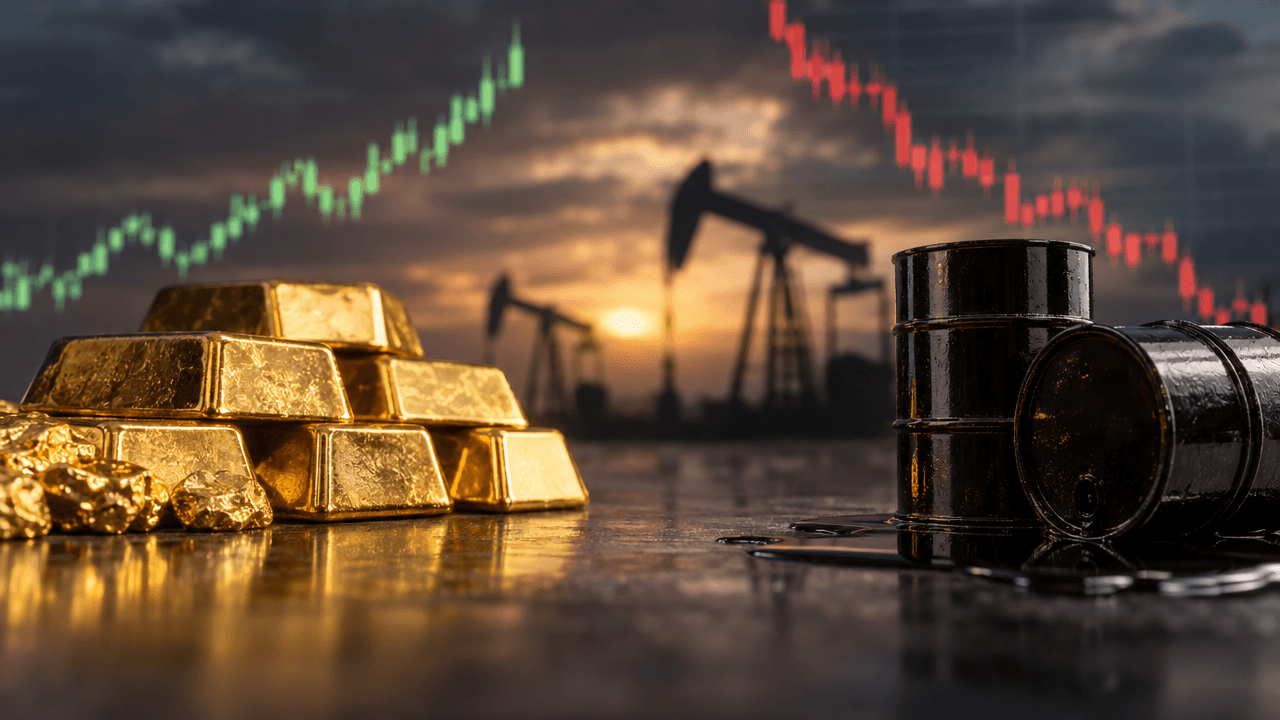
Gold rebounds while oil prices decline, highlighting a sharp divergence across major commodities. Gold climbed nearly 3% to around $3,637 per ounce after falling to a more-than-one-year low, while Brent and West Texas Intermediate crude declined roughly 3.5% to 3.7% amid renewed concerns about excess supply. The opposing moves show how investors are responding to two different forces: demand for protection in uncertain markets and growing pressure on the energy outlook. [4][9]
The Gold Rebound
Gold’s rebound followed one of its most severe recent selloffs. Spot gold had fallen to its lowest level since September 2025 before bargain hunters returned to the market. The recovery suggests that some investors viewed the decline as excessive, particularly after the metal’s steep weekly loss. [9]
The move also reflects changing expectations for U.S. monetary policy. Gold does not generate interest income, so higher interest rates and rising bond yields generally make it less attractive compared with cash and fixed-income assets. Conversely, when traders reduce expectations for additional rate increases, gold can benefit as the opportunity cost of holding bullion declines.
The Federal Reserve remains central to the outlook. Upcoming inflation data and official communications could influence expectations for the next stage of monetary policy. If inflation shows signs of cooling, markets may begin pricing a less restrictive rate path, potentially supporting gold. If inflation remains persistent, higher yields and a stronger dollar could limit the metal’s recovery.
Gold’s rebound should therefore be viewed as a reaction to positioning, monetary expectations and risk management—not necessarily proof that a lasting uptrend has begun. The metal still needs to hold above important technical support and attract sustained buying before traders can confidently call the decline complete.
Why Oil Is Moving Lower
Oil prices faced a different set of pressures. Brent crude fell below $92 per barrel, while WTI traded near $83 as markets focused on robust exports and the possibility of a growing supply surplus. [14]
The energy market has also seen part of its geopolitical risk premium unwind. Earlier concerns about disruptions to Middle Eastern shipments had supported prices, but recovering exports have reduced the immediate fear of a severe supply shortage. Recent reporting indicates that Brent and WTI have posted substantial monthly declines as traders reassess the balance between geopolitical risks and actual physical availability. [5]
Supply expectations are particularly important because oil demand can weaken quickly when economic growth slows. If producers continue supplying more crude while consumption growth disappoints, inventories may rise and prices could face additional pressure. Goldman Sachs has projected that the oil market could move into a sizeable surplus in 2027, with supply potentially exceeding demand by approximately two million barrels per day. [2]
That outlook does not eliminate the possibility of short-term rallies. Oil remains highly sensitive to shipping disruptions, military escalation, production decisions and unexpected inventory data. However, when supply concerns dominate the headlines, traders generally require a meaningful disruption or stronger demand evidence to sustain higher prices.
What The Divergence Means For Markets
The contrasting performance of gold and oil offers a useful snapshot of current investor sentiment. Gold is benefiting from defensive demand and dip-buying, while oil is being pressured by concerns about oversupply and weaker future consumption.
This divergence can also affect inflation expectations. Lower oil prices may reduce transportation, manufacturing and household energy costs, easing headline inflation over time. That could give central banks more flexibility if underlying price pressures also moderate. At the same time, stronger demand for gold may indicate that investors remain uneasy about economic growth, financial-market volatility or policy uncertainty.
For traders, the key lesson is that commodities should not be treated as one broad asset class. Gold responds heavily to real interest rates, the U.S. dollar, central-bank policy and investor risk appetite. Oil is more directly connected to physical inventories, production capacity, transportation networks and global economic activity.
Using the same assumptions for both markets can lead to poor decisions. A trader who interprets gold’s rebound as evidence of broad commodity strength may overlook the very different supply dynamics weighing on crude.
Practical Takeaways For Traders
First, avoid chasing gold after a sharp rebound. A move of nearly 3% following a major decline can represent short covering or bargain hunting rather than a confirmed trend reversal. Traders should monitor whether gold can establish higher lows and remain above recent support levels.
Second, track real yields and the dollar when evaluating gold. A rising dollar or higher inflation-adjusted bond yields could make it difficult for bullion to extend its recovery. Softer economic data or a more accommodative Federal Reserve outlook would create a more supportive backdrop.
Third, follow oil inventories, export flows and producer policy. Supply growth can keep prices under pressure even when geopolitical risks remain elevated. Conversely, any disruption affecting major shipping routes or producing regions could quickly reverse the current bearish tone.
Finally, manage risk around major economic releases. Inflation data, central-bank minutes and employment reports can move both metals and energy markets by changing expectations for growth, rates and currency values.
Looking Ahead
Gold’s rebound and oil’s decline are not contradictory once their market drivers are separated. Gold is attracting renewed defensive and value-oriented buying after an unusually sharp selloff, while oil is absorbing concerns that supply may outpace demand.
The next phase will depend on whether gold can convert its bounce into sustained accumulation and whether crude markets receive evidence of stronger demand or tighter supply. For SimFi traders, this is an important reminder that market narratives can change quickly. The strongest approach is to combine macroeconomic analysis with price action, define risk before entering a trade and avoid assuming that one commodity’s signal automatically applies to another.