
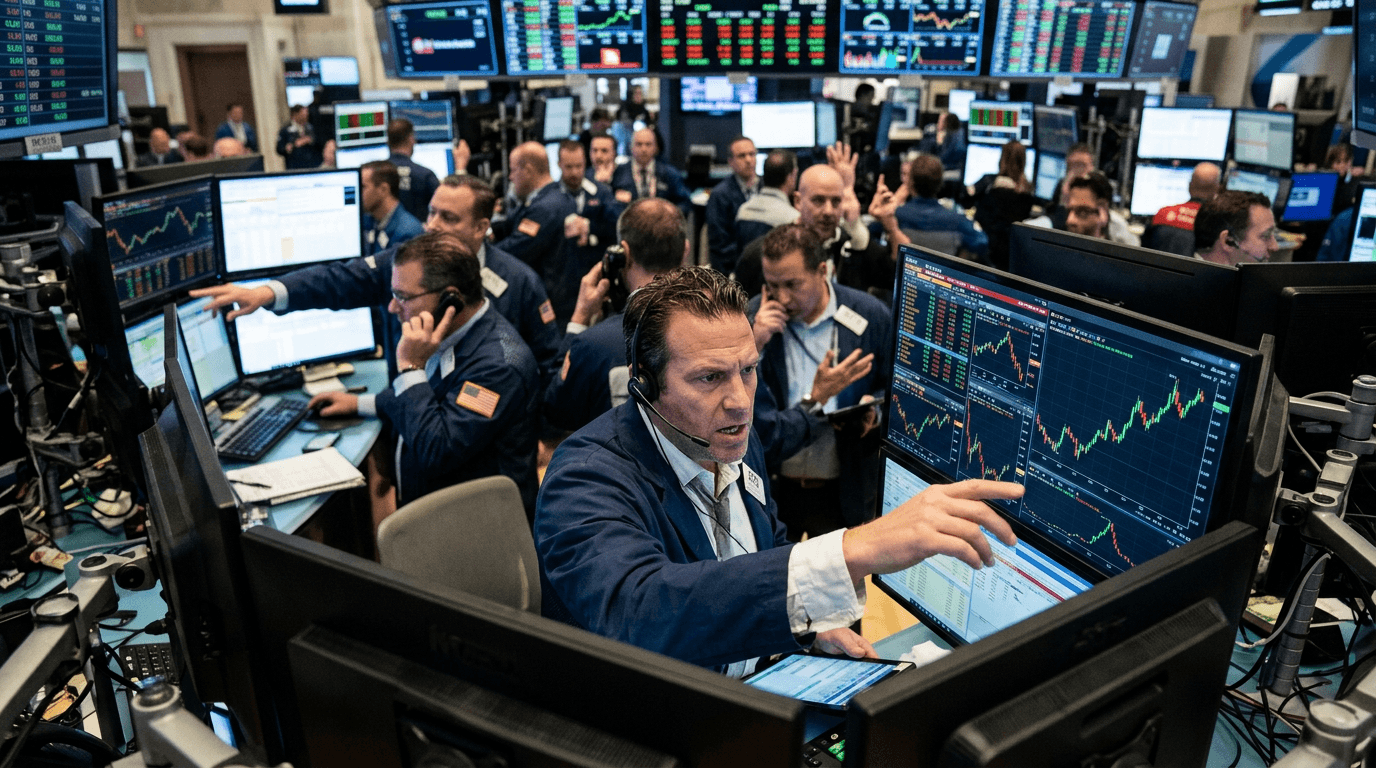
Gold’s rebound is a fresh reminder that in times of uncertainty, markets often fall back on the oldest hedge in finance: the yellow metal.[1] After a sharp pullback, buyers have stepped back in as investors rotate out of riskier assets and into perceived safe havens, mirroring a classic “risk-off” pattern that cuts across commodities, bonds, and forex.[1] For traders, the move is about far more than a single day’s price action—it’s a live lesson in how macro forces, real yields, and the dollar interact.
Why Gold Is Back In Focus
Gold tends to shine when investors worry about growth, inflation, or geopolitical stability.[1] The latest bounce fits neatly into that playbook: rising geopolitical tensions and softer US data have triggered a defensive shift in positioning, pushing capital back toward safe-haven assets like gold and Treasuries.[1]
In practice, three themes are pulling gold back into the spotlight:
- Geopolitical risk: Headlines that hint at escalation—whether in conflict zones, trade disputes, or sanctions—often push investors to hedge tail risks using gold.[1]
- Macro disappointment: Weak economic releases, from manufacturing surveys to consumer confidence, can reinforce fears of slower growth, fueling demand for defensive assets.[1]
- Debt and policy uncertainty: Concerns about the sustainability of high government debt levels, especially in the US, continue to support gold’s role as a long-term store of value.[3]
Although gold has struggled at times when interest rates rise, the latest rebound shows safe-haven demand remains very much alive when the backdrop looks fragile.[1][2] The result is a market where gold can sell off sharply one session and recover just as quickly when risk sentiment flips.
The Macro Drivers: Real Yields, Dollar, And Rates
Understanding gold’s latest move starts with real yields and the US dollar—two variables that sit at the core of its pricing.[1]
Real yields (nominal yields minus inflation expectations) are crucial because they represent the “true” return on safe government bonds. When real yields fall, the opportunity cost of holding non-yielding assets like gold decreases, making gold more attractive.[1] Recent safe-haven flows into bonds have helped nudge real yields lower, creating a tailwind for gold prices.[1]
At the same time, the US dollar is a key transmission channel. Gold is priced in dollars, so:
- A stronger dollar often weighs on gold, as it becomes more expensive for non-dollar buyers.
- A weaker or softer dollar tends to support gold, especially when driven by expectations that the Fed may not be able to keep policy as tight if growth slows.[1][2]
There is also a tug-of-war between safe-haven demand and interest rate expectations. Earlier periods of rising yields and aggressive rate hike pricing have pressured gold, suggesting rates can overpower safe-haven flows.[2] The recent rebound underscores that when macro risks flare and data cools, that balance can tilt back in gold’s favor, at least in the short term.
For traders, the lesson is simple: gold does not move in isolation. It lives at the intersection of:
- Real yields
- The US dollar
- Risk sentiment
- Structural demand from central banks and long-term investors[1][3]
What This Means For Forex And Cross-asset Traders
Gold’s safe-haven rally isn’t just a commodity story—it has implications across FX and broader risk assets.
When investors rotate into gold and Treasuries, that shift often coincides with:
- Defensive flows into currencies like the US dollar, Japanese yen, and Swiss franc.
- Pressure on high-beta or risk-sensitive currencies, including many emerging market FX pairs.
- Wider spreads between risk assets (equities, high-yield credit) and defensive assets (gold, high-grade bonds).
The dynamic can be nuanced. In some episodes, the dollar rallies alongside gold as global investors rush into both US assets and safe-haven metals. In others, if safe-haven flows drive real yields lower and raise speculation about future policy easing, the dollar can soften while gold strengthens.[1][2]
For FX-focused traders, monitoring gold can offer an extra layer of confirmation:
- A rising gold price alongside falling real yields can validate a shift toward risk-off sentiment.
- Divergence—such as gold climbing while equities hold firm—may hint at hidden stress or brewing macro risks.
In simulated trading environments, pairing gold analysis with USD pairs (like XAUUSD vs. DXY behavior) can help traders build intuition about cross-asset risk flows without financial risk.
Trading Gold In A Safe-haven Rally
For active traders, the rebound in gold offers both opportunities and pitfalls. Safe-haven spikes are often fast, headline-driven, and emotionally charged—conditions that reward preparation over prediction.
Key practical considerations
1. Anchor your view in macro drivers Track real yields, key US data releases, and central bank commentary. If incoming data continues to disappoint and yields drift lower, the safe-haven bid for gold can persist.[1][2]
2. Respect volatility and liquidity Safe-haven flows can produce sharp intraday swings and quick reversals, especially around news headlines. Use defined position sizing, avoid over-leverage, and consider wider—but controlled—stop distances when volatility expands.
3. Watch technical levels around the rebound Identify where gold has previously stalled or bounced—recent highs, lows, and consolidation zones. A rebound that holds above prior support can signal that buyers are willing to defend the move, while repeated failures at resistance may hint at fading momentum.
4. Think in scenarios, not certainties Scenario A: Geopolitical tensions and weak data persist, real yields stay under pressure, and gold grind higher as safe-haven demand remains in play. Scenario B: Tensions cool, data stabilizes, and yields rise, reasserting the drag from higher rates and capping gold’s upside.[2][4]
Simulated trading can be particularly useful here: testing how different scenarios impact gold and related FX pairs helps build a rules-based approach instead of reacting emotionally to every headline.
Key Takeaways For Simulated And Live Traders
The latest rebound in gold carries several durable lessons:
- Safe-haven demand remains powerful but is not constant; it switches on and off with changes in macro and geopolitical risk.[1][2]
- Real yields and the US dollar are core drivers—if you trade gold without watching them, you are missing half the story.[1]
- Market narratives evolve: periods when rates dominate gold’s behavior can switch quickly to periods when fear and hedging flows take over.[2][4]
- Cross-asset context matters; gold’s message is clearer when seen alongside bond yields, equity indices, and key FX pairs.
In a SimFi environment, traders can practice building playbooks around these dynamics: defining what constitutes a “risk-off” regime, how gold typically behaves in those regimes, and which indicators best signal when conditions are changing.
Conclusion And Trading Takeaways
Gold’s rebound as safe-haven demand returns is more than a headline—it is a snapshot of how modern markets still respond to fear, uncertainty, and shifting policy expectations.[1] The move highlights that despite competition from other hedges and periods where higher rates suppress its appeal, gold retains a central role whenever the macro and geopolitical backdrop looks fragile.[1][3]
For traders, the opportunity lies in turning that insight into a structured process. That means tracking real yields, the dollar, and risk sentiment; recognizing when safe-haven flows are accelerating; and stress-testing trading strategies under different macro scenarios. Whether in a simulated environment or in live markets, those who understand why gold is moving—not just that it is moving—will be better positioned the next time risk-off sentiment returns in force.