
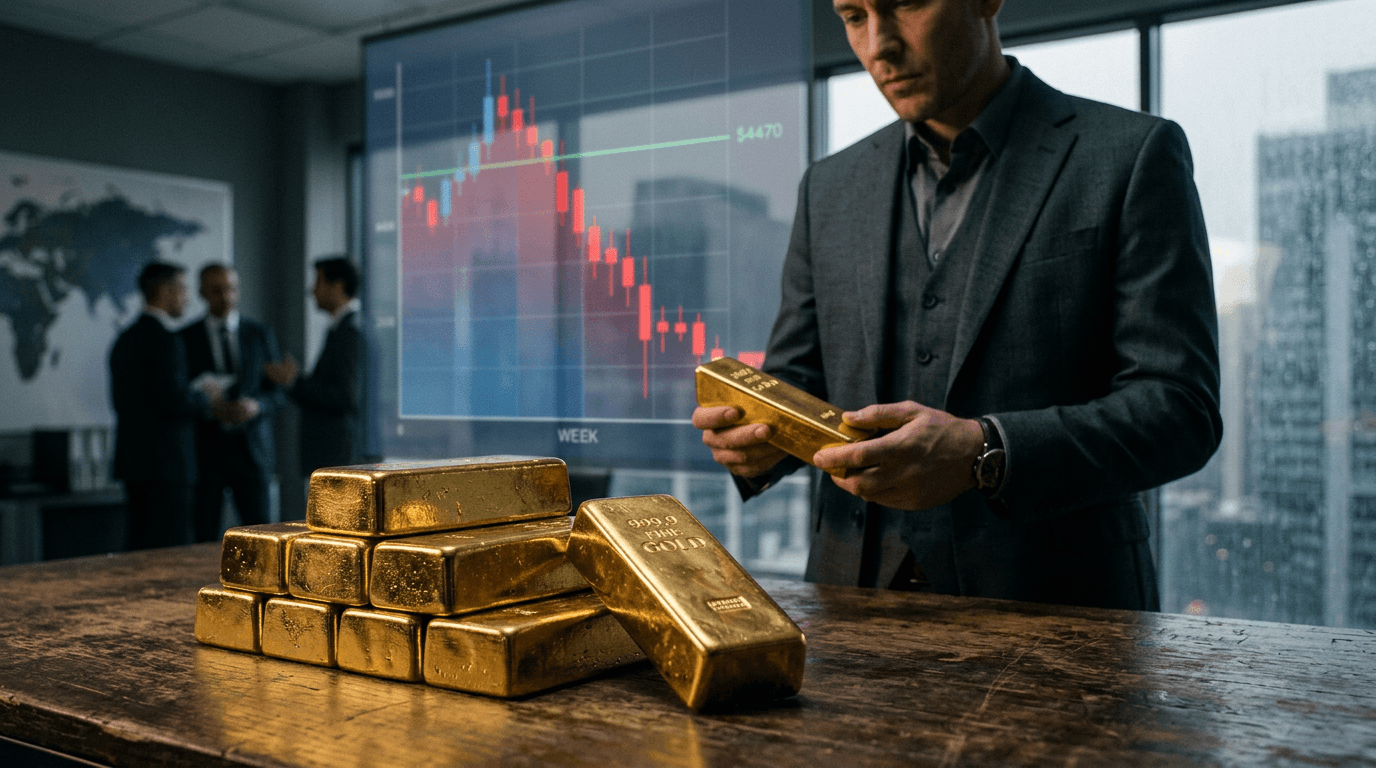
Gold prices are navigating a curious contradiction in today's markets: even as the precious metal records its first weekly decline in five weeks, underlying demand flows reveal a starkly different picture. The yellow metal has rebounded above $4,470 per ounce, propelled by renewed safe-haven demand amid escalating geopolitical tensions, yet simultaneously faces structural headwinds from rising Treasury yields and a strengthening US dollar. This apparent paradox highlights a crucial distinction between short-term price momentum and the fundamental forces reshaping how institutional and retail investors view gold in 2026.
The Paradox Of Rising Demand And Falling Prices
Understanding why gold can climb while posting a weekly loss requires examining the mechanics of modern commodity markets. The disconnect stems from multiple simultaneous market forces operating at different time horizons. On one hand, investors spooked by geopolitical risks—particularly tensions around Venezuela following US actions and broader Middle East uncertainty—are rotating defensively into bullion. On the other hand, rising inflation expectations triggered by surging oil prices above $110 per barrel have pushed Treasury yields higher and strengthened the US dollar, both of which typically weigh on gold prices.
This creates the unusual situation where gold gains intraday or day-to-day, yet closes the week lower. It's not that safe-haven demand has disappeared; rather, tactical profit-taking and position adjustments are temporarily offsetting the structural bid underneath the market.
Structural Drivers Supporting Gold Prices
The forces supporting gold extend far beyond short-term fear positioning. Central banks globally continue accumulating physical gold at a remarkable pace. China has extended its gold-buying streak to 14 consecutive months, tightening available supply while signaling long-term confidence in the metal's value as a reserve asset. This central bank participation creates a floor beneath prices that wasn't present in previous commodity rallies.
Strategic demand from emerging markets also contributes meaningfully to current price levels. As geopolitical risks mount and currency uncertainty persists, developing economies recognize gold as essential portfolio insurance. Unlike cyclical commodity demand tied to economic growth, this diversification impulse is structural and likely to persist regardless of short-term market gyrations.
Financial institutions are taking note. HSBC and Morgan Stanley have both raised or maintained strong price forecasts for 2026, grounded in these same fundamental drivers. Their conviction suggests that major financial actors view current gold prices as sustainable rather than speculative excess.
The Rate Cycle And Inflation Trade-off
The recent weakness in oil prices and moderating inflation concerns would normally benefit gold by reducing Treasury yields and lowering the opportunity cost of holding non-yielding assets. However, the inverse relationship has complicated this dynamic. The surge in oil prices above $110 per barrel has triggered significant repricing of Federal Reserve rate cut expectations.
Markets that had previously priced two rate cuts for 2026 are now reassessing this outlook. Higher for longer interest rates increase real yields, making the return forgone on holding gold more expensive. Simultaneously, rising Treasury yields strengthen the US dollar by making dollar-denominated assets more attractive to international investors, pricing gold higher in foreign currencies and dampening demand from overseas.
This creates a temporary headwind, but history suggests it's more tactical than structural. During previous market dislocations—2008, 2020, 2022—gold initially declined as liquidity tightened before reasserting its uptrend as safe-haven positioning took hold. The current weakness appears to follow this established pattern rather than signaling a fundamental trend reversal.
What This Means For Traders
For traders navigating this environment, distinguishing between structural trends and tactical movements proves essential. The weekly decline reflects genuine near-term pressures: real repricing of rate expectations, solid dollar strength, and some profit-taking from overbought conditions. However, the underlying support mechanisms remain robust and arguably strengthening.
Central bank accumulation, safe-haven inflows from geopolitical concerns, currency depreciation worries, and elevated energy prices create multiple supports absent in typical commodity rallies. The convergence of these factors suggests that temporary weakness may present attractive entry points rather than signals of a top.
Institutional and retail investors are increasingly recognizing gold's role as portfolio insurance in an uncertain world rather than viewing it primarily as a speculative commodity. As markets continue navigating Middle East tensions and elevated energy prices, conditions favoring gold appreciation appear likely to intensify once the immediate inflation-driven repricing cycle concludes.
Positioning For The Longer Term
Patient traders who distinguish between short-term noise and longer-term fundamentals position themselves advantageously in this environment. The first weekly decline in five weeks looks more like a healthy correction within a sustainable uptrend than a trend reversal. Structural demand from central banks, emerging market diversification, and safe-haven positioning creates a fundamentally different backdrop than past commodity rallies.
The key for traders is recognizing that near-term weakness driven by rising yields and dollar strength operates alongside longer-term structural support from geopolitical uncertainty and reserve diversification. This combination creates opportunities for disciplined traders to add positions during dips while maintaining exposure to gold's fundamental upside drivers.