
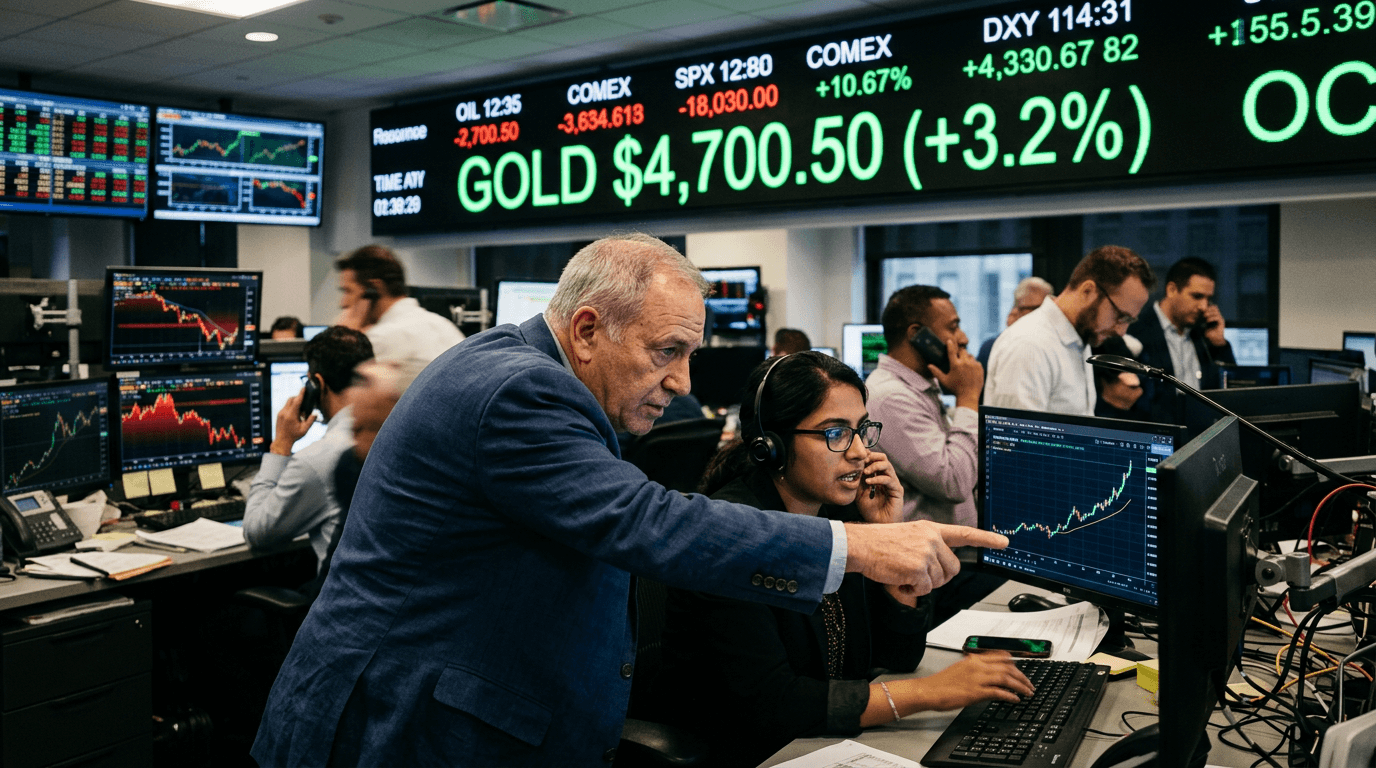
Gold prices have staged a remarkable recovery toward the psychologically important $4,700 level, driven by a potent combination of safe-haven demand and intensifying geopolitical uncertainty. After experiencing a brutal decline earlier in the year, the precious metal has rebounded nearly 15% from its lows, signaling that investors remain willing to pay premium prices for assets perceived as stores of value during periods of global tension. This recovery reflects far more than temporary market sentiment—it reveals fundamental shifts in how institutional and retail investors are positioning their portfolios against mounting economic and political risks.
The Anatomy Of Safe-haven Flows
Safe-haven demand represents the cornerstone of gold's current strength. When geopolitical tensions spike or economic uncertainty intensifies, investors systematically rotate capital away from risk assets and toward assets perceived as defensive. This year has seen an accelerating pattern of territorial disputes, trade tensions, and military posturing that have fundamentally altered investor behavior. The escalation of US-Iran conflict rhetoric, combined with broader questions surrounding global trade relationships and national security concerns, has created an environment where holding gold feels less like speculation and more like prudent risk management.
The mechanics are straightforward: as uncertainty rises, the relative attractiveness of non-yielding assets like gold increases. Investors may sacrifice current yield in exchange for perceived safety, viewing gold as insurance against unexpected policy shifts or economic disruption. This dynamic has proven resilient, supporting gold prices even as other traditional safe-haven assets like the Swiss franc and Japanese yen have fluctuated. The fact that gold has accumulated approximately 8% gains during 2026 alone—while many risk assets have struggled—underscores the credibility investors are placing in precious metals as a hedge against systemic risks.
Geopolitical Premium In Focus
The current geopolitical landscape has introduced a meaningful risk premium into commodity prices across the board. Oil has surged following tensions and better-than-expected economic growth reports, while gold has benefited from the broader risk-off sentiment accompanying these developments. Greenland tensions, US-Iran friction, and broader trade uncertainties have all contributed to the "flight to safety" dynamic supporting gold prices.
What makes this geopolitical premium particularly durable is its multifaceted nature. It's not simply about short-term headline risk. Rather, it reflects deeper institutional concerns about the future trajectory of global trade relationships, the stability of international institutions, and the potential for unexpected policy pivots. Central banks have responded to these concerns by continuing to accumulate gold at historically elevated rates, viewing the precious metal as crucial for portfolio diversification and reserve asset adequacy. This structural demand from official sector buyers provides a floor under prices that distinguishes the current environment from previous speculative rallies.
The Dollar-gold Relationship And Rate Expectations
Gold's recovery has coincided with periods of US dollar weakness, a relationship that cannot be overlooked. When the dollar weakens, foreign investors can purchase gold at lower costs in their home currencies, increasing demand at the margin. President Trump's threatened tariffs and other protectionist measures have at times weighed on the dollar, indirectly providing support to gold prices. However, the dollar-gold relationship remains complex, particularly when geopolitical tensions also boost dollar demand as a safe-haven currency.
More importantly, gold's strength reflects shifting expectations around Federal Reserve policy. The recent decline in oil prices and moderating inflation readings have prompted some market participants to reassess the timeline for potential interest rate cuts in the second half of 2026. Lower interest rate expectations reduce the opportunity cost of holding non-yielding gold, making the precious metal more attractive relative to yield-bearing alternatives. This creates a scenario where gold can maintain strength even as some of the acute geopolitical fears potentially moderate—provided inflation remains contained and rate expectations shift dovishly.
Technical Levels And Market Positioning
From a technical perspective, gold's ability to hold above $4,700 suggests buyers remain sufficiently confident to defend this level. The broader historical trend remains exceptionally strong, with gold having advanced from near the $3,200 region a year ago to recent highs above $5,400. The current consolidation near $4,700 represents both a correction from those highs and an accumulation zone where institutional buyers have demonstrated willingness to support prices.
Key resistance levels exist near $4,720 to $4,800, while $4,650 serves as important support. The technical structure suggests the medium-term trend remains bullish, though traders should remain alert to the possibility of mean reversion moves if geopolitical tensions abruptly ease or if economic data begins signaling accelerating growth alongside persistent inflation.
Key Takeaways For Traders
Monitor the US dollar as the primary driver of near-term price direction. Watch for any significant moderation in geopolitical tensions, as such developments could rapidly shift the safe-haven premium that currently supports prices. Remain aware that strong rallies rarely rise indefinitely, making prudent risk management at key resistance levels essential for long-term portfolio health.