
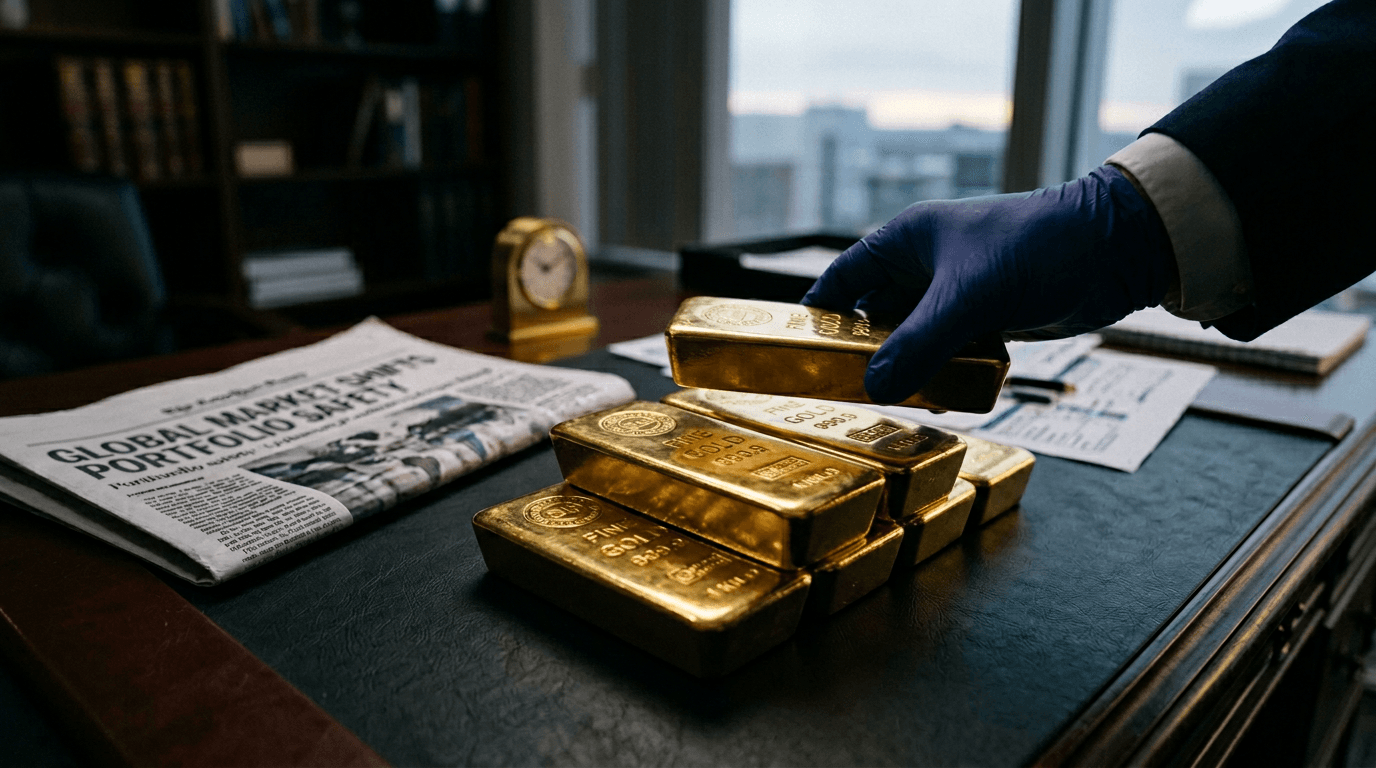
Gold prices have shown impressive resilience recently, rebounding from significant drops as investors flock to the metal as a safe-haven asset amidst growing inflation fears and geopolitical tensions. Despite facing its first potential weekly decline in five weeks, gold's recovery highlights the intricate dynamics driving the precious metals market in 2026. Up nearly 18 percent this year, gold's performance reflects evolving investor sentiment and its enduring role as a hedge against both economic and political uncertainties.
Recent fluctuations in gold prices reveal the complex interplay of factors influencing investor behavior. Gold prices initially fell by 3 percent to around $5,015 per ounce but quickly rebounded as safe-haven demand surged. This pattern exposes the market's underlying tensions: investors are caught between inflation worries, rising interest rates, and geopolitical risks. Grasping these dynamics is essential for anyone navigating the precious metals market effectively.
The Inflation-interest Rate Dilemma
The interplay between inflation, interest rates, and gold prices remains a key determinant of market sentiment. A stronger US dollar, alongside concerns of rising interest rates, has kept some investors cautious, as gold yields no returns and becomes less appealing when interest rates climb. However, the scenario is more complex than a straightforward inverse relationship. Recent Federal Reserve meetings have indicated that inflationary pressures are more persistent than anticipated, complicating the outlook for rate cuts.
This creates a paradox for gold investors. Typically, rising inflation supports gold prices since the metal preserves purchasing power during currency debasement. In contrast, higher interest rates diminish gold's appeal by offering better returns through alternative investments. Currently, both forces are at play, creating volatile trading conditions as investors reassess their positions. J.P. Morgan Global Research anticipates that gold demand will drive prices toward $5,000 per ounce by the end of 2026, with potential to reach $5,400 by 2027, influenced by long-term trends in reserve and investor diversification.
Geopolitical Uncertainty Fuels Safe-haven Demand
Escalating tensions in the Middle East have become a significant driver of gold volatility and safe-haven demand. Rising crude and natural gas prices, fueled by regional conflicts, have intensified inflationary pressures. While geopolitical uncertainty often supports gold prices due to its safe-haven status, some investors have sold gold to raise cash during extreme stress, temporarily pushing prices down.
Looking forward, the duration of geopolitical tensions will be pivotal. A swift resolution could weaken the dollar and boost gold rallies, whereas prolonged conflict might elevate the US currency and Treasury yields due to anticipated inflation and interest rate hikes. Gold remains an ideal hedge against various scenarios, providing diversification benefits due to its low correlation with other asset classes during market stress.
Central Bank Buying And Etf Support
Central bank purchases have been a strong support for gold prices. The People's Bank of China extended its buying spree into February 2026, marking 16 months of continued purchases and highlighting strong institutional demand for the metal. While some analysts note a slight decline in central bank purchases at elevated price levels, this reflects a mechanical adjustment rather than a fundamental shift in demand. Central banks require fewer tonnes of gold to meet reserve allocation goals when prices rise significantly.
Beyond official reserve buying, exchange-traded funds and retail investors could continue driving inflows, especially if markets anticipate a Federal Reserve rate-cut cycle. Historically, gold follows a predictable pattern during early Fed rate cuts, typically declining briefly, stabilizing, and then rising again after a few months. This cyclical behavior suggests that patient investors positioning for future rate cuts may find compelling opportunities in precious metals.
What Investors Should Monitor
The future trajectory of gold prices hinges on several key factors: inflation data trends, Federal Reserve policy signals, Middle East tensions, and US dollar strength. Market participants are closely monitoring critical economic indicators, including US employment data, which could clarify the Fed's next moves.
For investors contemplating their precious metals allocation, the current landscape presents both challenges and opportunities. Gold remains significantly up for the year, with major financial institutions maintaining a bullish long-term outlook. However, short-term volatility is likely to persist as markets reconcile competing signals regarding inflation, geopolitical risks, and monetary policy. As one analyst noted, sometimes the wise choice is to wait for clearer signals before making substantial portfolio adjustments.
The rebound in gold prices amid inflation concerns underscores the metal's enduring importance in diversified investment portfolios. Whether serving as protection against inflation, geopolitical insurance, or a currency hedge, gold's multifaceted appeal ensures its continued relevance in an uncertain world.