
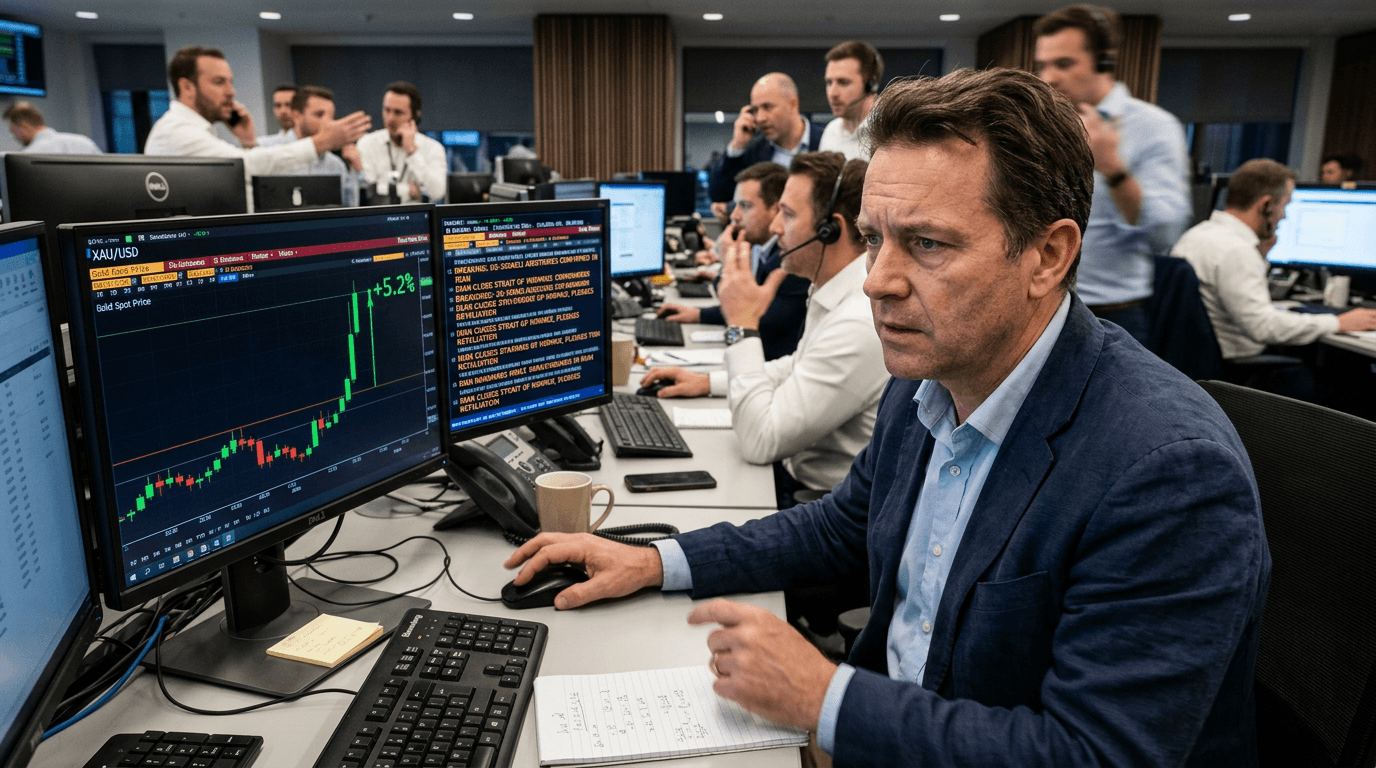
In early March 2026, gold prices skyrocketed beyond $5,400 per ounce, driven by escalating geopolitical tensions in the Middle East. The brewing conflict between the Western alliance and Iran erupted into open warfare, propelling investors to seek refuge in the age-old safety of precious metals. Within mere days, gold surged over 5%, as markets quickly priced in the ramifications of coordinated US-Israeli airstrikes on Iranian infrastructure and the consequential closure of the Strait of Hormuz, a critical artery for global energy supplies. This movement reaffirms a timeless market principle: in times of uncertainty, gold remains the ultimate hedge.
### THE CATALYST: OPERATION EPIC FURY AND ESCALATING TENSIONS
The dramatic ascent in gold's value can be traced back to a series of pivotal events in late February and early March 2026. Long-standing tensions between Western powers and Iran reached a boiling point, culminating in what military analysts dubbed Operation Epic Fury. This strategic offensive saw US and Israeli forces executing airstrikes on key Iranian targets, including nuclear sites and military command hubs. The strikes were both swift and devastating, breaching Iran's advanced air defense systems and reportedly causing significant losses within the Iranian Revolutionary Guard's leadership.
Market reactions were swift. As news of the strikes circulated during Asian trading on March 1 and 4, gold prices surged past multiple technical resistance levels. April gold futures soared to an unprecedented $5,178.40 per ounce, while spot gold broke the $5,400 mark in subsequent trading. This was not mere speculative fervor; it signaled a fundamental re-evaluation of global risk, as investors acknowledged that gold's geopolitical premium had forcefully reemerged.
### SAFE-HAVEN DEMAND TRANSFORMS MARKET LANDSCAPE
The March 2026 gold rally is noteworthy not just for its magnitude but for the breadth of participants driving it. This was no retail-driven frenzy; rather, it was a calculated shift by institutional entities. Central banks, sovereign wealth funds, and major financial institutions actively bolstered their bullion reserves amid the crisis. The rationale was clear: in a world where diplomatic solutions falter and regional conflict threatens, physical gold—with its zero counterparty risk—becomes an increasingly attractive asset.
The closure of the Strait of Hormuz significantly amplified the demand for safe havens. This vital channel accounts for approximately 20% of the global oil supply. Any prolonged disruption poses not only a threat to energy markets but also to the global economic landscape. As energy prices surged and supply chain fears escalated, gold's allure as a non-correlated asset was undeniable. Investors who had retreated during a brief February sell-off found themselves re-entering the market at elevated prices to safeguard their portfolios.
### GOLD'S PLACE IN THE DE-DOLLARIZATION MOVEMENT
The surge in gold prices highlights profound shifts within the international monetary framework. Over the past two years, central banks in Asia and the Middle East have aggressively diversified away from US dollar-denominated assets, driven by concerns over potential sanctions or asset seizures amid geopolitical tensions. The March 2026 crisis affirmed these apprehensions, as gold's rise solidified its status as the ultimate currency of last resort.
This marks a critical juncture. Gold has reasserted its historical position as the supreme store of value, unaffected by the policy decisions of any single nation. The trend towards de-dollarization, coupled with increased geopolitical fragmentation, suggests that gold's elevated status may not be a fleeting spike but rather a structural revaluation reflecting the new geopolitical landscape.
### SCENARIOS AND TRADING IMPLICATIONS
Looking forward, traders must consider several scenarios that could propel gold even higher. A complete month-long closure of the Strait of Hormuz could elevate gold prices by 12-18% as supply fears intensify. A prolonged disruption lasting four months or more could trigger surges of 20-30% or possibly higher, as economic uncertainty and energy inflation converge to create a "perfect storm" for precious metals demand.
Market participants should closely monitor key indicators, including the status of the Strait of Hormuz. Any strategic shifts from Tehran or de-escalation efforts by Washington and Jerusalem could prompt sharp reversals, whereas continued conflict would likely sustain upward pressure. Additionally, monthly bullion purchase reports from key central banks and statements from the UN Security Council will shape whether this rally is a temporary reaction or the onset of a sustained bull market.
### INVESTOR TAKEAWAY
The March 2026 gold surge is more than a fleeting trading opportunity; it represents a fundamental shift in global capital's response to geopolitical risk and currency instability. For investors, the message is unambiguous: the geopolitical premium on gold is back and more substantial than ever. Whether through physical bullion, gold futures, or precious metals equities, maintaining positions for sustained gold valuations is prudent as long as Middle East tensions persist. The challenge lies in vigilant monitoring of developments while adhering to disciplined entry points and risk management strategies.
### ### ###