
The Unexpected Rise of Gold Amid Peace Talks
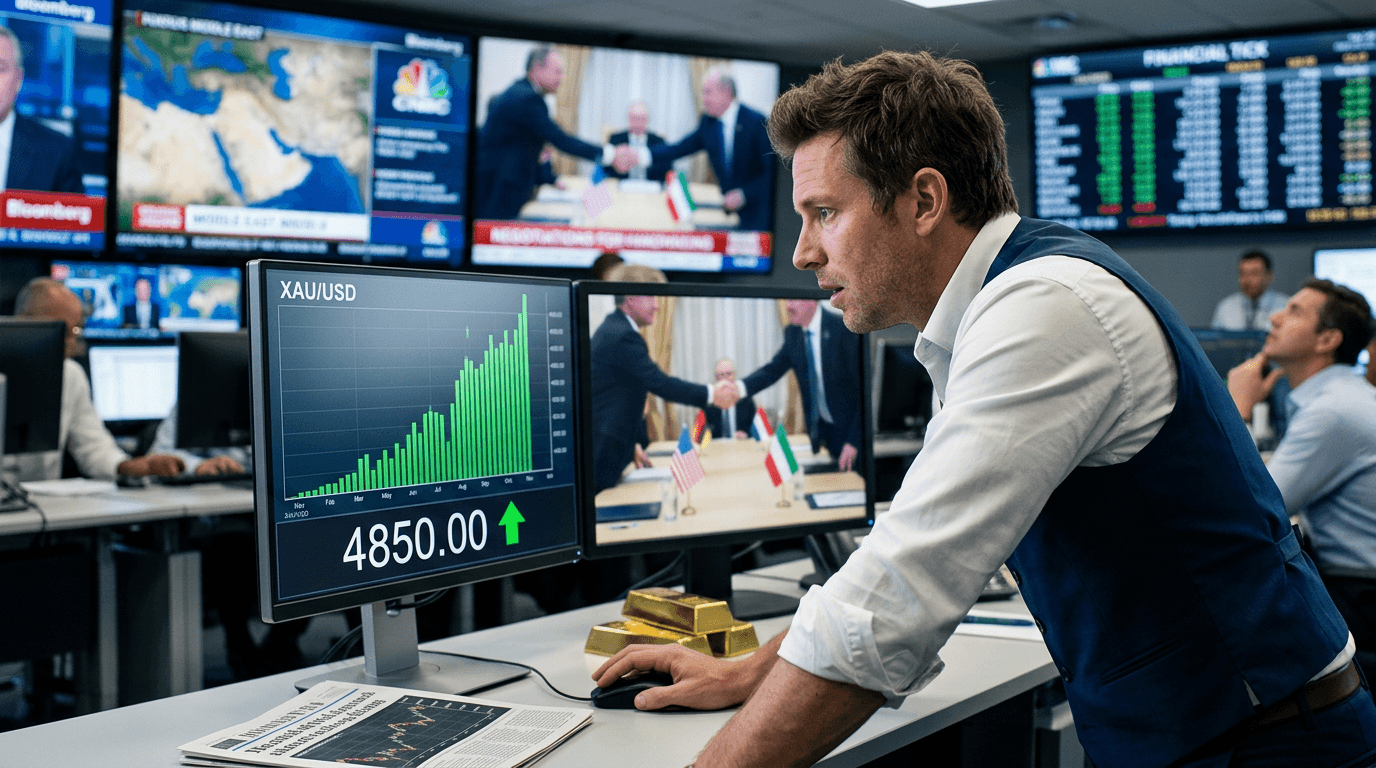
In a surprising twist, global financial markets are witnessing a surge in gold prices to $4,850, challenging conventional wisdom that peace diminishes the allure of safe-haven assets. The catalyst? Emerging ceasefire discussions between the United States and Iran, which paradoxically weaken the US Dollar while boosting demand for gold, creating a complex financial landscape defying traditional expectations.
The Mechanics Behind the Paradox
Traditionally, gold prices drop when global tensions ease, as its appeal lies in being a reliable safe-haven during crises. However, current market conditions defy this norm, with gold climbing approximately 2% to $4,820 amid diplomatic progress. This anomaly highlights the nuanced forces influencing gold: it's not merely about fear premiums but a dynamic interplay of factors.
Dr. Anya Sharma, Chief Commodities Strategist at Global Markets Insight, explains, "As geopolitical risk premiums compress, the US Dollar often weakens, making gold more affordable for those holding other currencies, thus providing underlying support even as immediate geopolitical bids fade."
The Dollar's Pivotal Role
The US Dollar Index has faced significant pressure as investors reevaluate its role amidst easing geopolitical tensions. As risk sentiment improves, capital flows from the safe-haven dollar to riskier assets, naturally weakening the dollar. This shift is crucial for gold, as a weaker dollar makes it more affordable globally, boosting demand and providing price support.
Data from exchanges shows spot gold breaking resistance levels while the Dollar Index falls, illustrating the inverse relationship between the dollar and gold—a fundamental aspect of global commodity markets.
Structural Support for Gold's Rise
Beyond ceasefire headlines, deeper structural factors bolster gold prices. Bank of America projects a $5,000 per ounce target by 2026, citing US debt, persistent dollar weakness, and BRICS nations' demand as key drivers. Central banks continue to increase gold reserves, lending stability to the market.
Gold's status as an inflation hedge remains appealing amid macroeconomic policies, attracting investors seeking diversification from traditional assets due to concerns over currency debasement and fiscal imbalances. Analysts view consolidation phases as healthy corrections in a longer-term uptrend driven by these structural factors.
Key Indicators for Traders
Active traders should closely follow US-Iran diplomatic developments, as each new step can recalibrate market positioning. The US Dollar Index remains a critical indicator; continued weakening suggests sustained gold support, even amid volatility. Conversely, stalled talks could drive demand for defensive assets, triggering gold price rallies.
The relationship between crude oil prices and geopolitical sentiment is also significant, as oil volatility can introduce competing narratives about inflation and growth.
Future Outlook
The current gold price trajectory amid US-Iran ceasefire talks exemplifies the complexities of modern financial markets. Instead of asking if peace benefits gold, savvy investors recognize the dominant macroeconomic forces at play. In this scenario, dollar weakness prevails, redirecting capital towards tangible assets despite easing geopolitical tensions.
Going forward, this market environment will favor traders who are flexible, attentive to diplomatic shifts, and perceptive of the intricate links between currency values, geopolitical sentiment, and commodity prices. Gold's dual role as both crisis insurance and currency hedge ensures its continued importance in portfolio strategies, regardless of tomorrow's headlines.