
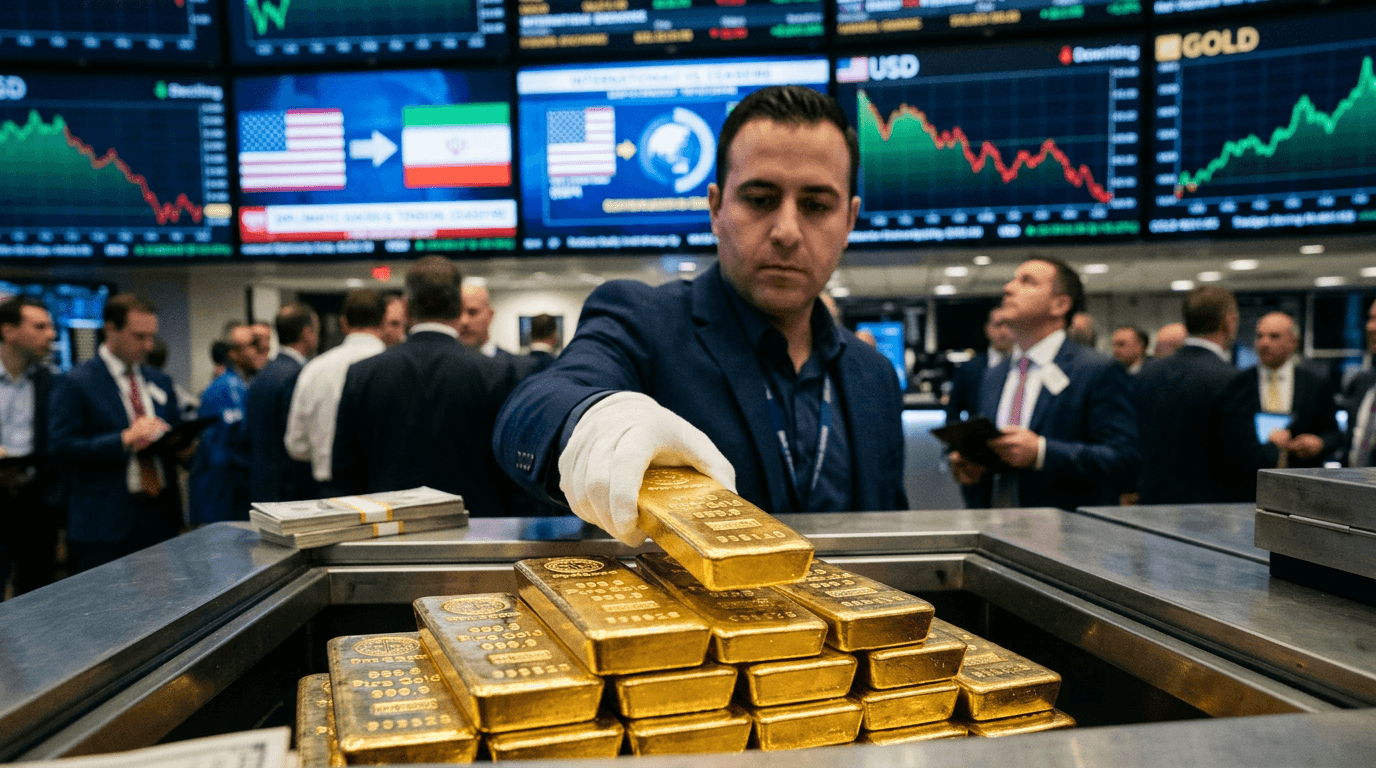
Gold Prices Soar Amid US-Iran Ceasefire, Highlighting Deeper Market Dynamics
In a striking move, gold prices surged to nearly $4,800 this week following the announcement of a US-Iran ceasefire, underscoring the intricate interplay of geopolitical tensions, currency shifts, and fundamental market forces. While gold rose by 1.95%, silver outpaced it with a 5.89% rise to $77.37. Beneath the surface of easing military tensions, a complex narrative unfolds as gold and silver maintain their ascent, defying the usual "risk-on" shift that follows de-escalation. This divergence offers vital insights into the precious metals market and hints at future price trajectories.
The Ceasefire's Immediate Impact
The US-Iran ceasefire, mediated by Pakistan and declared by President Trump, marks a significant pause in a conflict ignited on February 28 by US and Israeli actions against Iran's military and nuclear sites. The crisis initially flared when Iran blocked the Strait of Hormuz, a crucial artery for nearly 20% of global oil and gas. This blockade sent fuel prices soaring and triggered widespread inflationary pressures.
The ceasefire, lasting two weeks, required Iran to reopen the Strait, with safe passage coordinated through its military. The market's response was swift: oil prices plummeted over 16%, stock futures surged, and precious metals gained, driven by a perceived geopolitical relief.
Safe-Haven Demand and Structural Support
What sets this rally apart is the steadfastness of gold and silver, even as typical market behavior would suggest a shift away from defensive assets. Historically, easing geopolitical tensions lead investors to favor riskier assets like stocks. Yet this time, both metals held their ground, indicating robust safe-haven demand driven by more than just temporary conflict concerns.
Kyle Rodda, a senior market analyst at Capital.com, remarked on the fundamental support from conflict-induced safe-haven demand. However, the data suggests a more intricate picture: the rally is not purely fear-driven. Concerns about monetary debasement, central bank gold reserves accumulation, and a weakening dollar provided a solid foundation for prices. The ceasefire acted more as a catalyst to an existing bullish market rather than sparking new demand.
The dollar's reaction adds another layer to this complexity. The ceasefire announcement coincided with a significant dip in the US dollar, falling below the 99 level. Since gold is priced in dollars, a weaker dollar makes it more affordable to international buyers, adding upward pressure independent of geopolitical factors.
Fragility and Persistent Uncertainty
Despite headlines heralding the ceasefire as a major de-escalation, the situation remains uncertain. Vice President Vance described the truce as "fragile," with Iran contesting the ceasefire's terms and accusing the US of violations. Reports of missile and drone attacks surfaced shortly after the announcement, indicating the two-week pause is merely a brief respite ahead of planned peace talks in Islamabad.
This fragility is significant for the precious metals market as it suggests the risk premium supporting gold hasn't vanished. Caution persists among shippers about reopening key trade routes, awaiting clear directives from Iran's military. Inflationary pressures from prior oil supply concerns linger, sustaining safe-haven demand even as mainstream narratives predicted a swift conflict premium decline.
Broader Context for Precious Metals
The ceasefire's influence on precious metals must be viewed within a broader economic context. Central banks globally continue to amass gold reserves, bolstering fundamental demand. Monetary policy remains historically accommodative, with anticipated interest rate cuts later in 2026. In such low-rate environments, non-yielding assets like gold flourish due to reduced opportunity costs.
Moreover, inflation concerns endure despite falling oil prices. PCE inflation data exceeded expectations, reminding markets of persistent price pressures. This creates an unusual scenario where assets traditionally seen as hedges against inflation and currency debasement retain their appeal, even as typical risk-off trades unwind.
Key Takeaways for Traders
The gold rally following the ceasefire announcement highlights several critical market dynamics. First, structural support for precious metals extends beyond geopolitical headlines. Second, the metals' resilience amidst de-escalation reflects strong confidence in long-term bullish trends. Third, ongoing dollar weakness enhances gold's attractiveness for global investors.
Traders should keep an eye on the ceasefire's sustainability through upcoming peace talks, fluctuations in the dollar index, Federal Reserve policy cues, and central bank gold accumulation. While immediate geopolitical risks have eased, the persistent bullish narrative for precious metals hinges on these broader factors remaining supportive.
Conclusion
The gold rally amid the US-Iran ceasefire showcases how precious metals markets operate at the confluence of multiple forces. While geopolitical tensions initially fueled trading, the sustained strength of metals underscores deeper concerns about currency depreciation, monetary policy, and inflation. Recognizing this distinction aids traders in navigating the precious metals landscape with a nuanced understanding of future market movements.
Headline: Gold Prices Climb as Ceasefire Weakens Dollar and Spurs Safe-Haven Demand
Summary: Gold prices soared to $4,800 on US-Iran ceasefire news, highlighting structural dynamics beyond temporary geopolitical relief as dollar weakness and safe-haven demand converge.
News Impact Score: 7