
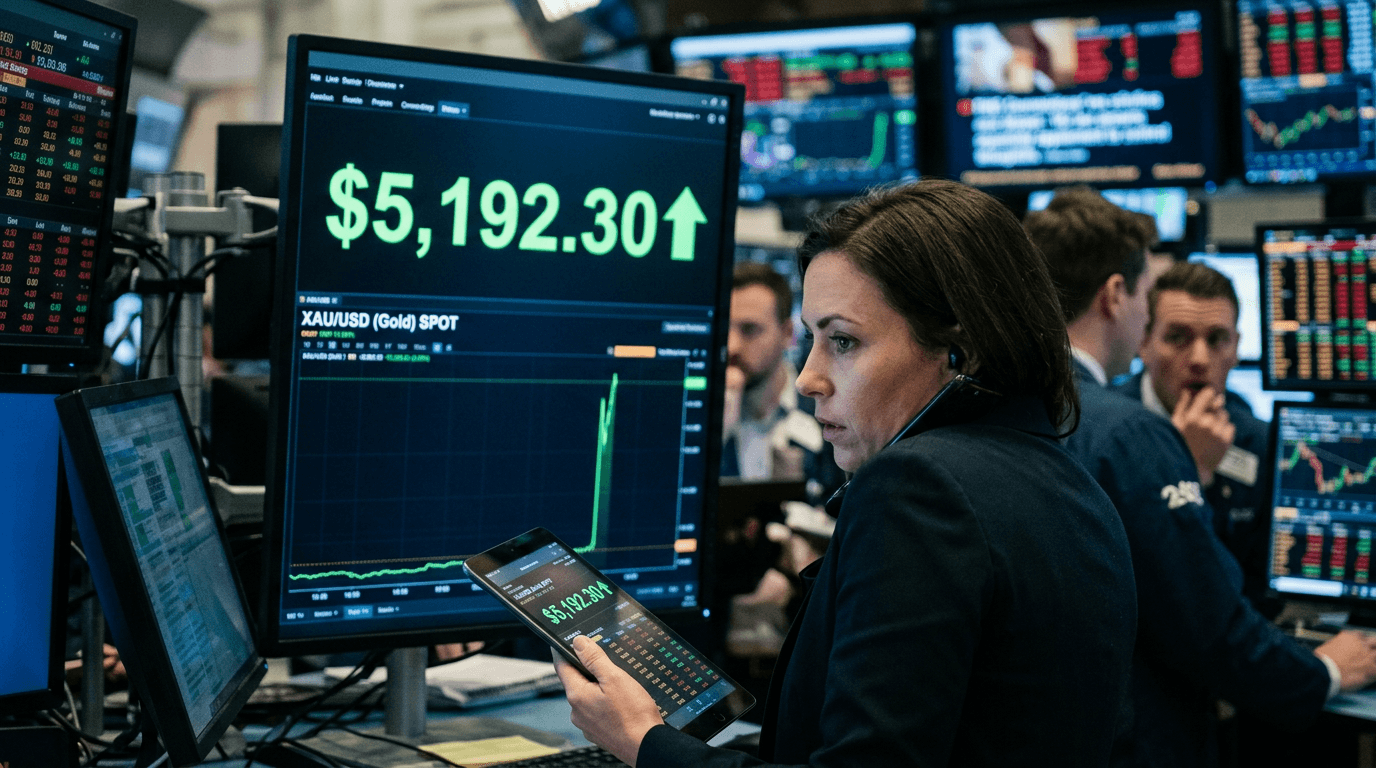
Gold prices have surged decisively higher as geopolitical tensions in the Middle East reignite safe-haven demand, pushing the precious metal toward levels not seen since its record highs earlier this year.[1][3] The Iranian conflict, now in its sixth day with escalating military strikes from both the U.S. and Israel, has transformed gold into the crisis hedge of choice for investors seeking protection amid global uncertainty.[3] Gold is trading around $5,190 to $5,195, gaining roughly 1.4% as traders rush to secure their portfolios against further deterioration in geopolitical stability and the potential for energy supply disruptions that could cascade through global markets.[1][3]
The Perfect Storm For Precious Metals
Multiple macroeconomic and geopolitical headwinds are converging to create ideal conditions for gold's continued ascent. The Middle East conflict has already demonstrated its market impact, with gold rocketing from approximately $5,100 to an intraday high of $5,419.32 on Monday following the strikes that killed Iran's Supreme Leader, a gain of more than 6% in a single session.[2] This sharp move illustrates the volatility and conviction behind safe-haven flows into the precious metal.
Beyond the immediate military tensions, the Strait of Hormuz remains a critical vulnerability for global energy markets. This strategic waterway carries almost 20% of the world's oil and gas shipments, and disruptions from military activity could trigger significant energy price increases.[1] Rising energy costs would amplify inflation pressures globally, strengthening gold's fundamental case as an inflation hedge and wealth preservation tool during periods of economic uncertainty.[1] Investors are acutely aware that energy shocks historically cascade through consumer prices, making traditional inflation-hedging assets like gold more valuable by the day.
Technical Analysis Shows Bullish Momentum
From a technical perspective, gold has reclaimed critical support levels and is now consolidating within an ascending channel pattern on daily charts.[3] The metal is trading above its rising 50-day exponential moving average and has reclaimed the nine-day moving average, signaling sustained buying interest from institutional investors and traders.[3] The 14-day Relative Strength Index is hovering in the mid-50s, indicating steady buying pressure rather than overbought conditions, which keeps room for further upside as long as the current market structure persists.[3]
More importantly, gold has broken above the 50% Fibonacci retracement level from its recent correction, targeting initial resistance near $5,418.55.[1] Analysts are watching for a potential test of the $5,600 record high set in late January 2026, with some market participants suggesting that if geopolitical tensions continue or energy markets experience genuine disruptions, gold could eventually challenge its all-time high above $5,595 per ounce.[1][2]
Financial Forecasts Paint A Bullish Picture
The investment banking community remains structurally bullish on gold despite recent volatility. J.P. Morgan has raised its year-end 2026 target to $6,300 per troy ounce, citing ongoing central bank purchases, persistent inflation concerns, dollar uncertainty, and the escalating geopolitical environment as cumulative tailwinds.[2] City Index analysts see $5,500 as achievable in the short term, with new all-time highs above $5,600 following shortly after, while longer-term Fibonacci projections from technical analysts reach as high as $6,100 to $7,200.[2]
These forecasts reflect confidence in gold's fundamental drivers. Central banks continue to accumulate gold at robust rates, with central bank and investor demand expected to average 585 tonnes quarterly in 2026.[4] ETF inflows are also expected to remain strong, with approximately 250 tonnes of inflows anticipated throughout 2026, while bar and coin demand is projected to surpass 1,200 tonnes annually.[4] This structural demand from both institutional and retail investors provides a solid floor under prices.
Understanding Gold's Inverse Relationships
It's critical to understand that gold moves in inverse correlation with both the U.S. Dollar and U.S. Treasury yields.[3] When the dollar weakens, gold becomes cheaper for international buyers and more attractive as a diversification tool. Similarly, higher Treasury yields increase the opportunity cost of holding non-yielding assets like gold, while lower yields make the metal relatively more attractive.[1][3] Currently, the market is grappling with the tension between rising inflation expectations from energy concerns and the potential for Federal Reserve hesitancy on rate cuts, creating conflicting signals for gold's direction.
Key Takeaways For Market Participants
For traders and investors, the key insight is that gold's fundamental backdrop remains robust despite tactical volatility. The convergence of geopolitical escalation, inflation risks, central bank demand, and technical momentum creates multiple reasons to maintain or increase exposure to precious metals. Silver is also benefiting from this dynamic, with prices climbing 3.3% to around $86 as the broader precious metals complex attracts safe-haven flows.[1]
The market stands at an inflection point where the next major catalyst—whether a resolution to Middle East tensions or a fresh inflation surprise—could determine whether gold consolidates near current levels or makes a decisive push toward new record highs. Until geopolitical tensions ease or inflation pressures clearly moderate, expect safe-haven demand to continue providing a structural bid for precious metals.