
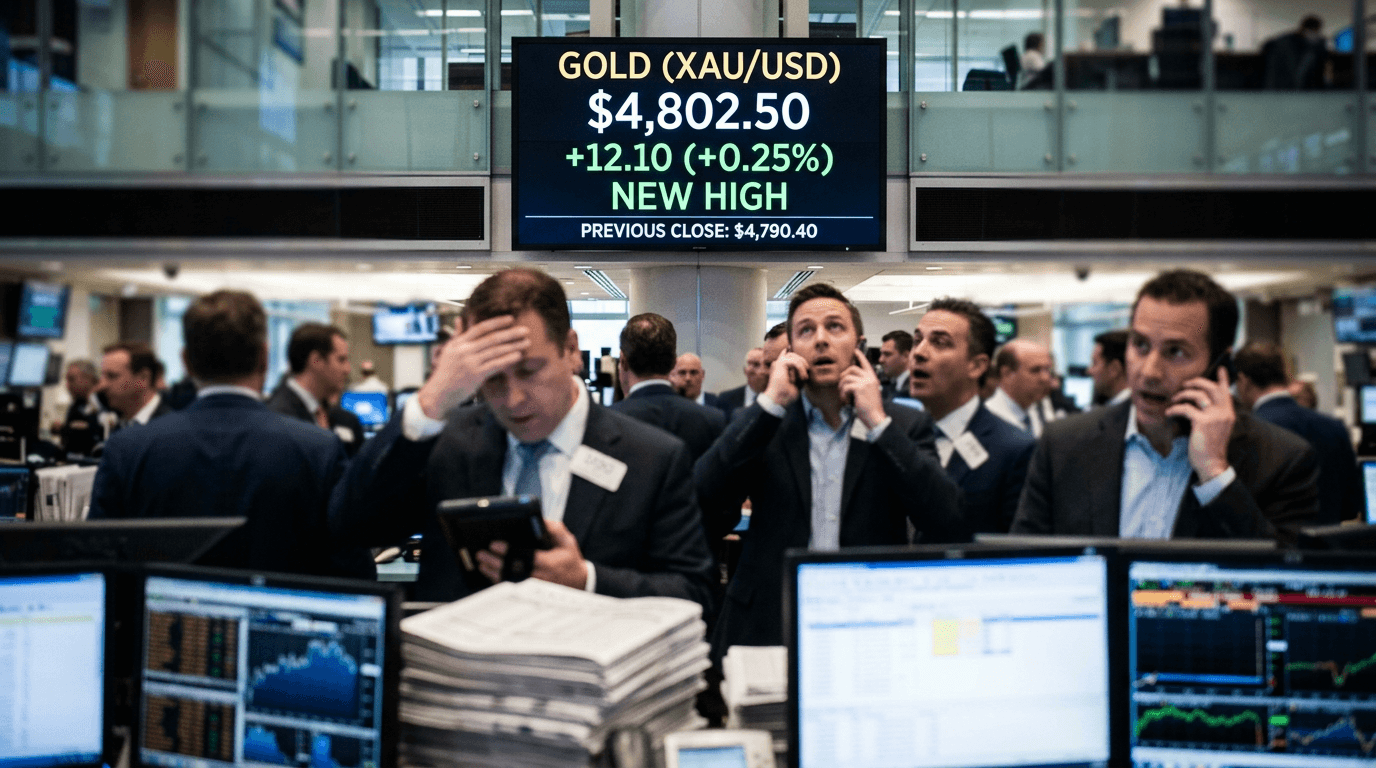
Gold prices have ascended to unprecedented levels, surpassing the $4,800 per ounce benchmark, as global investors flock to the safety of precious metals amidst escalating geopolitical tensions. This robust rally signifies a pivotal moment in the commodity markets, illustrating a wider shift in investor sentiment towards defensive assets. The confluence of political uncertainty, trade conflicts, and currency devaluation has forged an ideal environment spurring demand for gold as a traditional hedge against economic instability.
Geopolitical Tensions Drive Safe-haven Demand
The principal force driving gold higher is the intensification of geopolitical conflict among leading global powers. Recent disputes between the United States and Europe over territorial interests, particularly concerning Greenland, and escalating trade disagreements have unsettled global markets, prompting investors to seek stability. When political risks escalate, investors instinctively gravitate towards assets perceived as safe havens, with gold historically fulfilling this role throughout modern financial history.
The sharp and dramatic escalation of these tensions has compelled market participants to reassess their risk exposure. Gold prices soared 1.7% to hit an unprecedented high of $4,844.39 per ounce as geopolitical anxieties intensified, with the precious metal appreciating more than 5% since the start of the week. This rapid accumulation exemplifies how swiftly market sentiment can shift in the face of political uncertainty. Investors are not merely hedging their portfolios; they are actively reallocating capital into defensive positions, viewing gold as critical insurance during periods of global tension.
The safe-haven flows have been especially robust, as institutional investors and central banks recognize gold's historical resilience during crises. Unlike equities or bonds that can suffer significantly during geopolitical upheaval, gold typically retains its purchasing power and often appreciates when other assets decline. This intrinsic characteristic explains why gold consistently attracts capital during periods of heightened political risk.
The Weakening Dollar Magnifies Gold's Ascent
A crucial factor underpinning gold's rise has been the marked weakening of the U.S. dollar. The dollar hovered near three-week lows against the euro and Swiss franc as geopolitical tensions incited a broad selloff in U.S. assets, from the currency itself to Wall Street stocks and Treasury bonds. This currency deterioration creates a compounding effect for gold prices, rendering the commodity cheaper for overseas buyers and thus increasing international demand.
When the dollar weakens, dollar-denominated commodities like gold become more appealing to foreign investors because they can acquire more gold with their home currency. This dynamic significantly amplifies demand beyond what domestic factors alone would generate. The confluence of safe-haven flows and currency weakness has cultivated an exceptionally favorable environment for precious metals, with both factors reinforcing each other and driving prices to record territory.
Interest rate expectations have also buoyed gold's strength. The Federal Reserve is widely anticipated to maintain interest rates at current levels despite political pressure to enact cuts. Gold, which does not yield interest, typically performs well in a low-interest-rate environment because it incurs no opportunity cost relative to bonds or savings accounts. The prospect of sustained higher interest rates elsewhere in the world reinforces gold's appeal as a non-yielding asset.
The Broader Precious Metals Rally
Gold's surge has not occurred in isolation. Silver is nearing the $100 per ounce milestone, platinum has reached record highs above $2,500 per ounce, and palladium has also posted gains. This broad-based precious metals rally indicates that safe-haven demand is extending across the entire sector, not just concentrated in gold. The simultaneous strength in multiple precious metals suggests a fundamental shift in risk appetite among investors, reallocating capital systematically out of riskier assets and into defensive positions.
The record highs across precious metals represent a significant technical development. These levels suggest that supply and demand dynamics have shifted meaningfully, with investors willing to pay premium prices to establish or maintain positions in these safety assets. The strength in platinum and other metals amplifies the signal that something meaningful has changed in how markets perceive current risks.
What This Means For Investors
For traders and investors monitoring commodity markets, the gold rally above $4,800 represents both opportunity and information. The record prices signal heightened geopolitical risk and validate the decision to maintain precious metals exposure within diversified portfolios. However, traders should also recognize that geopolitical tensions can resolve suddenly, potentially causing rapid reversals in gold prices.
The technical patterns in gold charts indicate strong momentum and potential for additional gains ahead, but investors should remain cognizant that extreme price moves in either direction can occur swiftly when political situations shift. The fundamental drivers appear solid in the near term, but maintaining disciplined risk management remains essential. Gold's role as a portfolio stabilizer has been validated once again, reminding investors why this ancient store of value remains relevant in modern financial markets.