
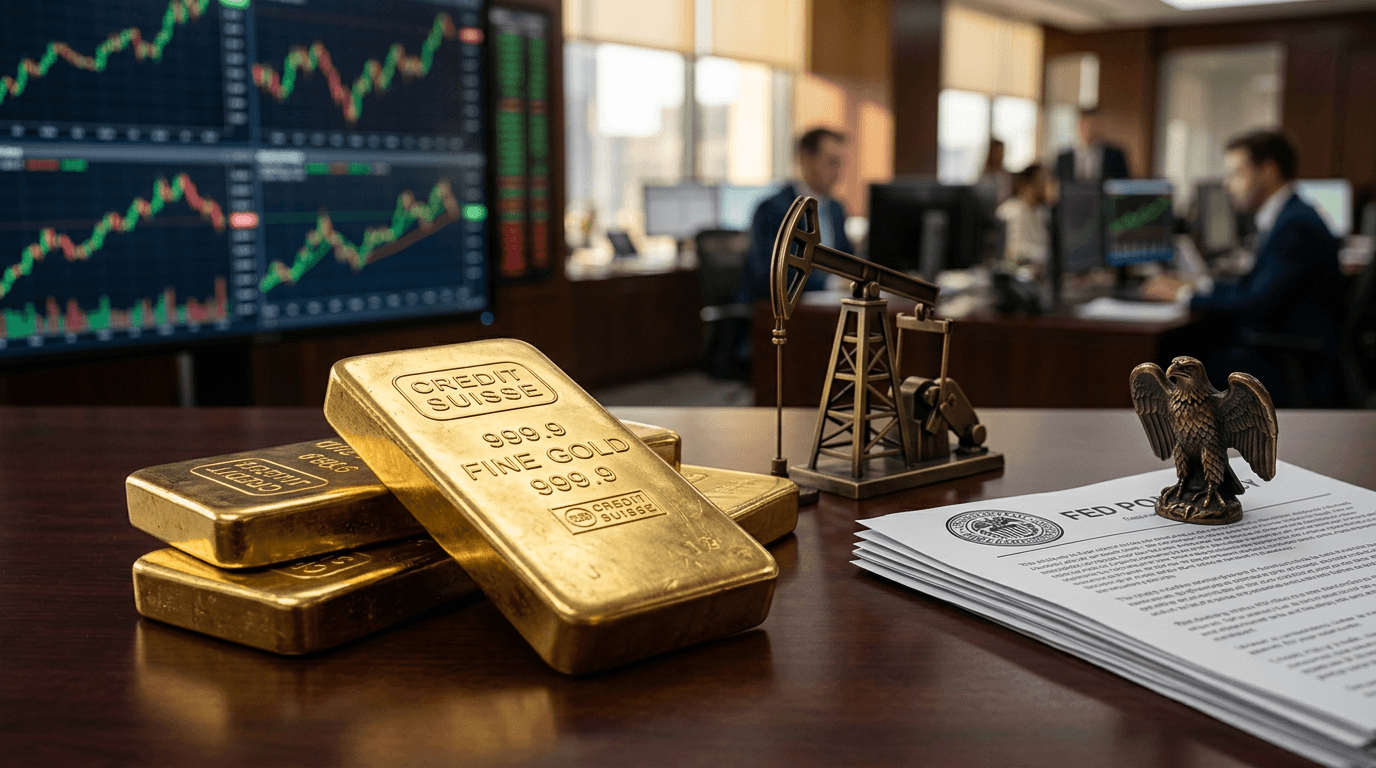
Gold's performance this week offers a fascinating insight into market contradictions. As precious metals staged a notable recovery on Friday, driven by heightened safe-haven flows due to Middle East tensions, the broader narrative reveals a metal caught in a tug-of-war between opposing forces that will shape investment strategies as we advance into Q2 2026. Understanding this dynamic is crucial for traders and portfolio managers navigating an increasingly volatile macro environment.
The Paradox Of Safe-haven Demand
The narrative is familiar: geopolitical tensions draw investors toward gold as a stable portfolio anchor. Friday's rally, which saw gold futures rise approximately 1.6% past the $4,500 mark, aligns with this traditional pattern. When uncertainty escalates, risk assets lose favor, and capital shifts to perceived safe havens. This week's surge in Middle East tensions provided the exact catalyst needed, prompting both institutional and retail investors to reassess their exposure to non-yielding assets like gold.
Central banks have been particularly active buyers, engaging in record gold purchases to diversify away from U.S. dollar exposure. This structural demand from the official sector creates a significant price floor beneath the market, ensuring gold retains fundamental support even when speculative interest wanes. This strategic shift indicates a long-term trend that transcends short-term volatility, underscoring confidence in gold's role as a reserve asset amid an increasingly uncertain geopolitical climate.
However, here's the paradox: the same tensions that boost safe-haven demand are simultaneously driving up energy costs. Brent crude has surged to around $101.30 per barrel, with some reports suggesting spikes above $108, creating a conundrum that diminishes gold's appeal through an unexpected channel.
The Oil-inflation Trap
Rising oil prices typically pose challenges for precious metals, not due to direct correlation, but because of the inflation expectations they generate. Higher energy costs permeate the economy as stagflationary pressures, where growth stagnates while price levels remain stubbornly high. This combination creates a unique headwind for gold investors.
When concerns about stagflation rise, the Federal Reserve tends to maintain a restrictive monetary policy stance to combat inflation, keeping interest rates elevated. This dynamic is crucial because gold's allure is inversely tied to real interest rates. Higher rates make interest-bearing assets more attractive compared to non-yielding commodities. Additionally, elevated real yields diminish the opportunity cost of holding cash or bonds, pulling capital away from bullion.
The stronger U.S. dollar compounds this pressure. As the dollar appreciates, gold becomes more expensive for international buyers, dampening global demand right when dollar strength signals Fed hawkishness. Combined with rising bond yields, this creates a triple headwind that explains why gold posted its first weekly decline in five weeks, despite Friday's impressive rally.
The market faces a genuine tension between traditional safe-haven factors and macroeconomic realities. Both can be true simultaneously: gold can attract defensive capital while also struggling to maintain upward momentum due to inflation-driven policy constraints.
Central Bank Buying And Structural Support
What prevents this story from being entirely bearish is the persistent accumulation of gold by central banks worldwide. These institutions operate with different time horizons than speculative traders. They are not trading daily risk sentiment; they are pursuing multi-year reserve diversification strategies, waning confidence in fiat currency systems, and hedges against geopolitical fragmentation.
This official demand, combined with supply-side constraints from mining challenges and reduced exploration investments, establishes meaningful structural support for prices. Beyond central banks, demand from technology sectors, recovering jewelry markets, and innovative investment products adds layers of fundamental support that transcend immediate geopolitical factors. The market is not solely reliant on crisis-driven safe-haven flows but also on genuine, diversified demand across multiple applications.
Navigating Q2 With Volatility As The New Normal
As we progress into Q2 2026, gold investors should brace for persistent volatility. The future trajectory hinges on three critical variables: developments in the Middle East conflict, Federal Reserve policy decisions on interest rates, and crude oil price direction. Should geopolitical tensions ease and oil prices fall, inflationary pressures might subside, potentially alleviating a key headwind for gold and increasing the likelihood of Fed rate cuts.
The technical landscape is equally important. Critical support levels, combined with ongoing central bank buying and long-term positioning, suggest that while consolidation is likely, a complete collapse remains unlikely. However, without a material shift in Fed policy expectations, new highs require either a geopolitical de-escalation or clear evidence of cooling inflation in the data.
Investor Takeaways
Gold's recent movement underscores a vital lesson: traditional safe-haven assets are not immune to macroeconomic headwinds, particularly when those headwinds arise from the same geopolitical tensions driving safe-haven demand. Friday's gains represent an opportunity, but they should be viewed as tactical positioning rather than a sustained directional move. Investors should closely monitor Fed communications, track crude oil prices for signs of stabilization, and maintain realistic expectations for near-term volatility. The long-term case for gold remains intact, but the path forward requires patience through a period of genuine uncertainty.