
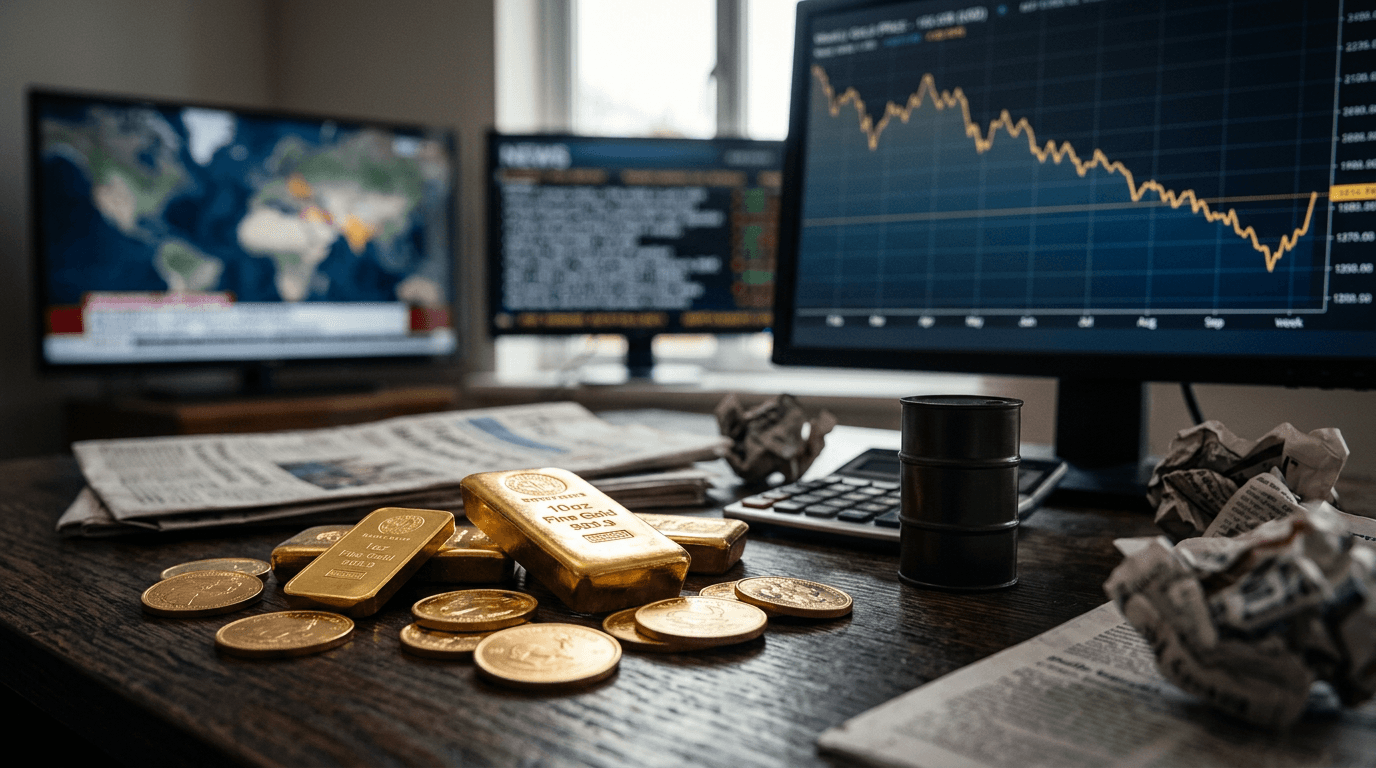
Gold prices are experiencing a compelling interplay this week, as they rebound on safe-haven demand while still charting toward their first weekly decline in five weeks. This dichotomy highlights the current financial market landscape, where two influential forces are vying for supremacy. On one front, geopolitical tensions and economic instability are driving investors toward the traditional security of precious metals. On the other, rising oil prices and renewed inflation concerns are weakening the case for rate cuts, diminishing gold's appeal as a non-yielding asset. For traders, comprehending this scenario is vital to navigating the present climate.
The Safe-haven Rally Driver
The underlying reason for gold's enduring appeal to buyers remains fear. Persistent geopolitical tensions in Eastern Europe, mounting risks in the Middle East, and global uncertainty have positioned gold as the preferred asset for risk-averse investors and institutions seeking protection from volatility. Central banks and major investors regard precious metals as a dependable store of value when confidence in conventional financial assets falters.
This safe-haven demand has shown remarkable resilience. Gold-backed ETFs have seen inflows of approximately 37 tonnes in recent weeks, indicating that institutional money continues to flow into bullion despite price fluctuations. Strategic purchases by central banks, notably China's ongoing gold acquisition streak for 14 months, have tightened available supply and created structural demand that supports prices. Moreover, traders on simulated finance platforms recognize gold as one of the most reliable hedges against systemic risk, making it a crucial component of defensive portfolios.
The Inflation Headwind Challenge
However, the geopolitical tensions that fuel safe-haven demand are also presenting a new challenge for gold prices. Middle East conflicts have triggered a sharp increase in oil prices, and the resulting energy costs are reigniting inflation concerns globally. This creates a paradox where the very events prompting gold purchases are simultaneously undermining the monetary policy conditions that typically support higher prices.
The combination of rising oil prices and resilient US economic data has compelled markets to reassess their expectations for Federal Reserve monetary policy. The previously anticipated multiple rate cuts in 2026 have been drastically revised. Markets now anticipate roughly only one rate cut for the entire year, a significant downward adjustment from earlier projections. This shift has elevated treasury yields to multi-week highs and directly impacted gold prices, as rising yields increase the opportunity cost of holding a non-yielding asset like bullion.
The Fed Rate Cut Expectations Shift
This adjustment in rate cut expectations marks a critical juncture for gold traders. Earlier in 2026, many analysts were optimistic about gold partly because lower interest rates would reduce the opportunity cost of holding precious metals. When the Federal Reserve cuts rates, investors are more inclined to hold gold since they forgo fewer returns from bonds or savings accounts.
The energy price shock has reversed this narrative. The Federal Reserve now faces a delicate balancing act: support economic growth with rate cuts or maintain higher rates to combat resurgent inflation fears. As long as oil prices remain elevated and energy costs sustain inflation pressures, the Fed will be hesitant to cut rates aggressively. This monetary policy uncertainty contributes to the weekly losses that contrast starkly with the daily safe-haven rallies.
What This Means For Traders
For traders on simulated finance platforms, this week's developments offer critical insights. First, gold's behavior illustrates that no single narrative drives markets anymore. Safe-haven demand and inflation concerns operate concurrently, with their relative strength shifting based on daily news and economic data releases.
Second, the weekly loss despite daily recoveries underscores the importance of timeframe perspective. A trader holding gold for days might benefit from safe-haven rallies, but a swing trader observing weekly trends perceives weakness. This variance highlights the necessity of effective position sizing and risk management.
Third, closely monitor inflation data. Any signs of moderating oil prices or cooling inflation pressures could trigger a robust rally in gold. Conversely, further energy price spikes would continue to limit upside potential. Upcoming US economic data releases, particularly CPI reports, will be pivotal market-moving events.
Looking Forward
Gold remains supported by structural factors: central bank buying, geopolitical uncertainty, and substantial ETF inflows. Major banks maintain optimistic 2026 targets, with JP Morgan forecasting gold reaching $6,300 per ounce by year-end and Bank of America maintaining a $6,000 target. These forecasts suggest that markets anticipate current headwinds will eventually subside.
Nonetheless, traders should brace for continued volatility as the market navigates conflicting signals. The future trajectory hinges on three key factors: the duration of geopolitical tensions, whether oil prices stabilize, and when the Federal Reserve gains sufficient confidence to initiate rate cuts. Until these elements align, expect gold to oscillate between safe-haven rallies and rate-expectation-driven selloffs.
---