
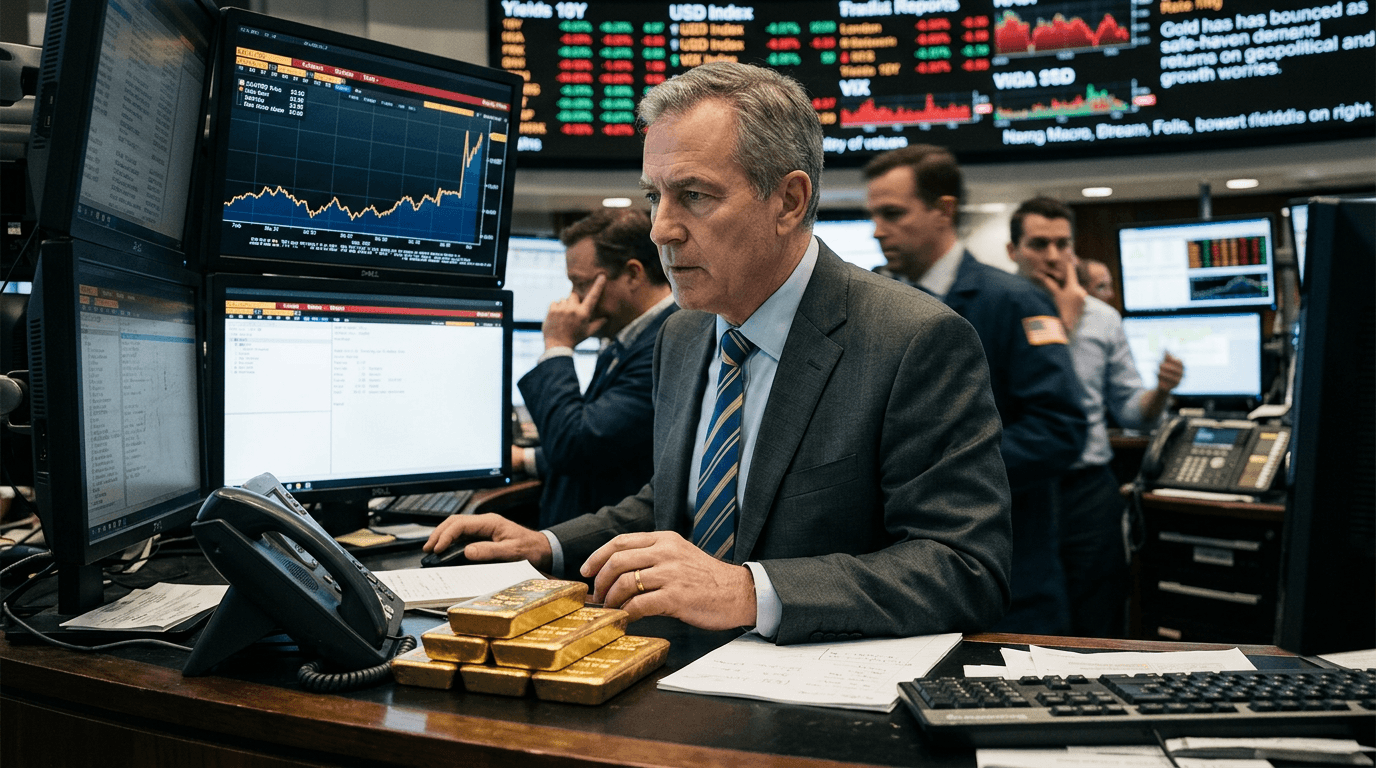
Gold’s latest rebound is a reminder that in markets dominated by uncertainty, investors still reach for the oldest hedge in the book. After a shaky prior session, prices have bounced as geopolitical tensions and renewed worries about global growth pushed traders back into safe-haven assets. The move has supported bullion and related futures while limiting how far real yields and the US dollar can extend their recent gains.
Safe-haven Flows Return To Gold
Safe-haven demand is one of the most powerful drivers of gold, and it usually intensifies when two ingredients are present: geopolitical risk and doubts about the economic outlook. Both are in play again.
On the geopolitical side, elevated tensions—whether from regional conflicts, trade frictions, or sanctions headlines—push investors to seek assets that are less exposed to any single government or financial system. Gold, with no default risk and no reliance on corporate earnings, naturally attracts capital when the news cycle turns risk-averse.
At the same time, growth concerns are resurfacing. Mixed macro data, softer manufacturing indicators, and cautious corporate guidance have all revived the narrative that the global expansion could be slowing. In that environment, equity risk premia need to rise, credit spreads can widen, and investors start reassessing how much risk they truly want to hold. Gold delivers diversification and psychological comfort when those questions arise.
The combination of these drivers explains why gold managed to recover prior-session losses despite a backdrop that, on paper, still includes relatively firm yields and a strong dollar. When fear levels shift quickly, flows can dominate fundamentals over the short term.
The Macro Tug-of-war: Yields, Dollar And Growth Fears
Gold rarely moves in a straight line, because it sits at the crossroads of several macro forces. The latest bounce highlights an ongoing tug-of-war between three key factors: real yields, the US dollar, and safe-haven demand.
Higher real yields—nominal yields minus inflation expectations—are typically negative for gold. Bullion does not pay interest, so when inflation-adjusted returns on bonds rise, the opportunity cost of holding gold increases. Recent periods of firm Treasury yields and a resilient US dollar have often capped gold rallies or triggered pullbacks.
However, safe-haven flows can offset that headwind. When geopolitical risk flares or growth jitters intensify, demand for hedges and diversifiers grows, and gold can rise even as yields stay elevated. That is part of what the market is seeing now: buying interest in bullion is strong enough to support prices and, in turn, to limit how much further real yields and the dollar can climb. Investors rebalancing into gold and Treasuries simultaneously can choke off a runaway move higher in yields.
Another structural force is central bank buying. Over recent years, many central banks—particularly in emerging markets—have been diversifying their reserves away from traditional FX holdings, adding gold as a long-term store of value. That steady demand does not respond to daily headlines, but it creates a supportive backdrop for prices and helps explain why pullbacks often find eager buyers.
For traders, the key is to recognize that gold’s short-term path depends on which side of this tug-of-war is dominating at any given moment. When yields and the dollar surge faster than fear levels, gold can struggle. When risk aversion spikes suddenly, safe-haven flows can quickly overpower the rate environment.
HOW TRADERS CAN INTERPRET GOLD’S BOUNCE
A single bounce does not guarantee a new sustained uptrend, but it does offer clues about market psychology and positioning.
First, the fact that buyers stepped in quickly after a weak session suggests that dips are still being viewed as opportunities rather than warning signs. That indicates underlying confidence in gold’s medium-term role as a hedge, especially while the macro backdrop remains fragile.
Second, the bounce occurring alongside capping in real yields and the dollar hints that some investors are using gold as part of a broader defensive rotation. Rather than aggressively shorting risk assets, they are quietly building hedges—gold, longer-duration bonds, and maybe volatility exposure—against the possibility of weaker growth or a geopolitical shock.
Third, price action matters. If gold’s recovery carries it back above recent resistance levels or key moving averages on the daily or weekly chart, it strengthens the argument that the latest pullback was corrective rather than the start of a deeper reversal. Conversely, repeated failures at nearby resistance would suggest that the safe-haven bid is not strong enough to overcome the macro headwinds.
For active traders, watching intraday correlations is also useful. If gold starts rising while equity indices sell off and the dollar eases, that is a classic risk-off pattern supporting the safe-haven narrative. If gold sells off alongside risk assets, something else—perhaps forced liquidations or shifts in rate expectations—may be in play.
Practical Takeaways For Traders And Simulated Strategies
Whether trading with real capital or on a simulated finance platform, the current environment offers several actionable lessons:
1. Map the drivers, not just the chart. Before placing a trade, define which force you think is in control: yields, the dollar, safe-haven flows, or technical levels. Your thesis should be clear: “I expect geopolitical worries to escalate and safe-haven demand to dominate,” or “I think rate expectations will reprice higher and pressure gold.”
2. Use scenarios, not predictions. Build two or three concrete scenarios—stronger growth and higher yields, deeper slowdown and easier policy, escalation or de-escalation of geopolitical risk. Sketch how each scenario could affect gold, real yields, and the dollar. Then align your trades with the scenario you consider most likely, while knowing in advance how you will react if another scenario begins to unfold.
3. Respect volatility spikes. Safe-haven flows often arrive in waves during fast markets. That can produce sharp intraday swings and stop runs on both sides. Position sizing, wider but well-placed stops, and clear invalidation levels become critical. Risk management should be calibrated to volatility, not just to a fixed dollar amount.
4. Combine gold with other hedges. Gold is a powerful hedge but not a magic shield. In some acute crises, investors may sell gold to raise cash, at least temporarily. Diversifying hedges across assets—such as Treasuries, volatility instruments, or defensive equity sectors—can provide more robust protection.
5. Treat news as a trigger, not a trading system. Headlines about geopolitical developments or growth concerns can explain why gold moves, but they should not replace your process. Use news to update your scenarios and probability assessments, then rely on your rules and technical levels for entry and exit.
CONCLUSION: GOLD’S ROLE IN AN UNEASY MARKET
The latest rebound in gold underscores its enduring role as a barometer of anxiety and a refuge when uncertainty rises. Geopolitical tensions and doubts about the durability of global growth have revived safe-haven demand, supporting bullion even as yields and the dollar remain significant counterforces.
For traders, the opportunity lies not in predicting every headline, but in understanding the interplay between fear, rates, and currency dynamics. Gold’s path will continue to be shaped by this macro tug-of-war, and the current bounce is a timely reminder that defensive positioning can reassert itself quickly when confidence wavers.
In a world where the economic outlook and geopolitical landscape can shift in a single news cycle, an informed, scenario-based approach to gold—backed by disciplined risk management—remains one of the most valuable tools in a trader’s playbook.