
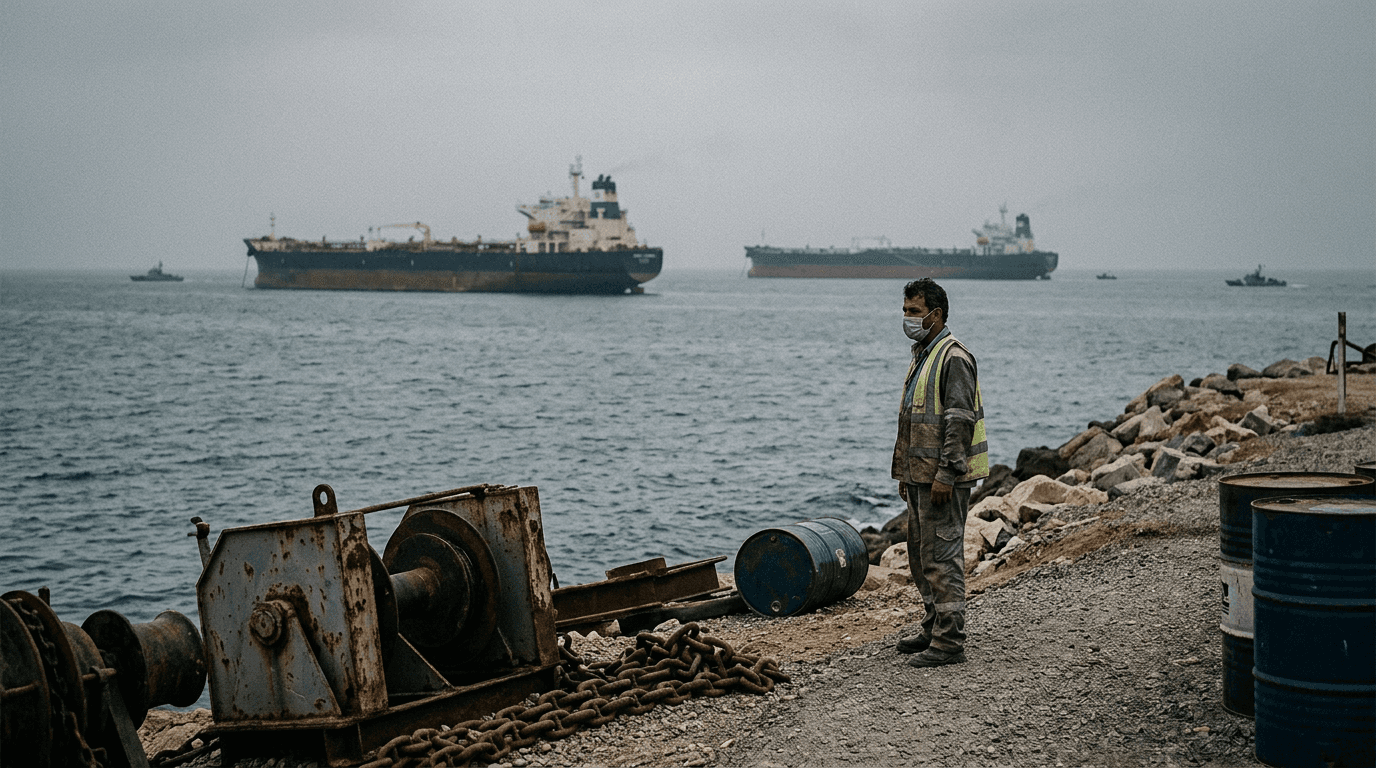
The global oil market is experiencing its largest supply disruption in history as escalating tensions in the Middle East have sent shockwaves through energy markets worldwide. The conflict between the United States, Israel, and Iran has fundamentally reshaped the landscape of oil trading, with the Strait of Hormuz—one of the world's most critical shipping corridors—now operating at a fraction of its normal capacity. For traders and investors monitoring the SimFi markets, understanding this unprecedented supply shock is essential to navigating current volatility and positioning for potential opportunities ahead.
Magnitude Of The Crisis
The scale of the current disruption is staggering. The International Energy Agency estimates that global oil supply is expected to plunge by as much as 8 million barrels per day in March 2026, with nearly 20 million barrels per day of crude and product exports being disrupted overall.[1] The Strait of Hormuz, which is responsible for carrying roughly 20 percent of the world's oil supply, has seen flows collapse from around 20 million barrels a day to what analysts describe as "a trickle."[2]
This disruption represents something unprecedented in modern market history. Major oil-producing nations in the Persian Gulf have been forced to curtail or halt production entirely. Iraq has halted operations at its terminals following attacks on facilities and vessels. Kuwait, the United Arab Emirates, Qatar, and Saudi Arabia have all implemented significant production reductions to cope with the inability to export crude through traditional routes.[1]
KEY TAKEAWAY: The 8 million barrel per day supply loss is being only partially offset by increased output from non-OPEC+ producers like Kazakhstan and Russia, leaving a substantial net supply deficit that cannot be easily replaced.
Market Reaction And Oil Price Dynamics
Brent crude has surged above $100 per barrel as traders price in both the immediate supply shock and uncertainty about how long disruptions will persist. More striking than the price level itself is the volatility characterizing the market. The International Energy Agency noted that oil prices have "gyrated wildly" since the conflict began in late February 2026.[2]
What makes this environment particularly challenging for traders is the unprecedented combination of factors at play. Traditional hedging strategies assume certain levels of supply elasticity and market arbitrage. However, with the Strait of Hormuz effectively blockaded and alternative routes operating at maximum capacity, traditional responses have limited effectiveness. Alternative port loadings from Saudi Arabia's Red Sea facilities have increased by nearly 80 percent week-over-week, but this capacity expansion has clear limits.[1]
Beyond crude prices, the market is grappling with collateral damage to refining capacity. The International Energy Agency estimates that more than 4 million barrels per day of refining capacity is at risk due to lack of available tanker capacity to load refined products.[1] This creates a secondary supply crunch that extends beyond crude oil into finished petroleum products.
KEY TAKEAWAY: The market is pricing in not just the immediate supply loss but also deep uncertainty about resolution timelines, creating sustained volatility that rewards active traders while punishing passive positions.
Ripple Effects Across Global Supply Chains
The oil disruption extends far beyond energy markets. The construction industry is already reporting significant impacts as shipping lines divert vessels away from affected routes and impose "conflict surcharges" to offset increased operational risks.[4] Materials essential to construction—cement, steel, concrete, and aluminum—that are produced or sourced in the Middle East face substantial cost increases and delivery delays.
Shipping costs have become a major component of overall project expenses, with companies forced to secure additional temporary storage and handle increased insurance costs.[4] These supply chain disruptions create cascading effects that touch inflation rates, manufacturing timelines, and ultimately consumer prices across multiple sectors.
KEY TAKEAWAY: SimFi traders should monitor not just energy stocks but also transportation, construction, and materials companies that rely on Middle East supply chains, as supply chain stress translates into earnings pressure across these sectors.
Demand Destruction And Economic Headwinds
Higher oil prices typically trigger demand destruction as businesses and consumers adjust behavior. The International Energy Agency has already cut its forecast for global oil demand growth in April and May by more than 1 million barrels per day, with 2026 full-year demand estimates reduced by 210,000 barrels per day.[1] This represents a significant downward revision reflecting expectations for economic softening.
The inflationary pressure from elevated energy costs compounds existing economic concerns. Combined with what the International Energy Agency describes as "a deteriorating economic outlook," there are legitimate concerns that global product demand will continue to suffer.[1]
KEY TAKEAWAY: Elevated oil prices are now a headwind for economic growth rather than simply energy market news, making this supply shock relevant to macro traders focused on recession probabilities and inflation trajectories.
What Traders Should Watch
US officials expect the conflict to end within four to six weeks, after which energy supplies could rebound sharply.[3] However, this timeline remains highly uncertain, with critics noting that Iran's position also determines the conflict's duration and resolution terms. Reports suggest Iran is negotiating safe passage with multiple countries and may be demanding payment in Chinese yuan rather than dollars, signaling shifting dynamics in global energy trade.[3]
For SimFi traders, the key metrics to monitor are Strait of Hormuz flow volumes, weekly refinery utilization rates, and OPEC+ production decisions. Any indication of negotiated settlement or resumption of normal shipping would likely trigger sharp crude price declines, while any escalation could drive prices substantially higher.