
Hong Kong's Inflation Spike: Unpacking the February Surge
A Closer Look at February's Inflation Surge
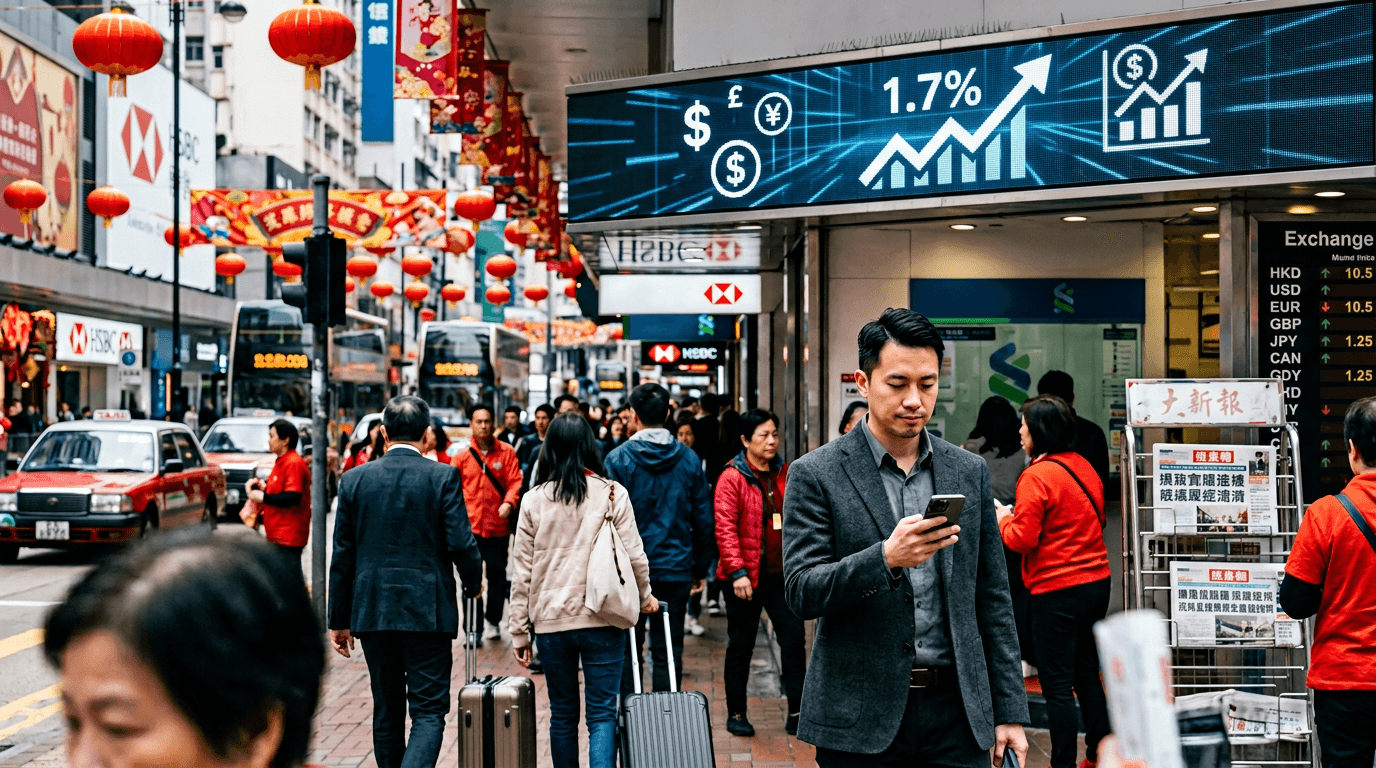
In February 2026, Hong Kong's consumer price inflation surged to 1.7% year-on-year, the highest in nine months, as reported by the Census and Statistics Department on March 20. This jump from January's 1.1% signals renewed price pressures that demand the attention of traders, policymakers, and regional investors. Despite the moderate historical context of this inflation level, the sharp month-on-month increase has ignited notable activity in Asian forex and futures markets. Investors are now re-evaluating regional monetary policy expectations and currency valuations.
Decoding the February Spike
February's inflation exceeded market forecasts of 1.5%, surprising many analysts. The underlying inflation rate—excluding one-off government relief measures—rose to 1.6% from 1.0% in January, indicating intensified price pressures beyond temporary factors. This trend provides a clearer picture of economic momentum, crucial for traders and investors.
The spike is largely attributed to increased charges for package tours and transport fares during the Chinese New Year. The holiday's timing—falling in February 2026, as opposed to January 2025—contributed to a lower base of comparison. Such calendar-driven volatility is common in Asian inflation data, often catching markets off guard and necessitating strategic adjustments.
Sectoral Price Movements
The inflation data reveals key sectoral patterns: miscellaneous services saw a 4.9% annual increase, followed by transport at 4.3% and electricity, gas, and water at 3.5%. These areas directly impact consumer spending power and corporate earnings, making them pivotal for equity and futures traders in Hong Kong and the region.
Conversely, some categories experienced deflation, offsetting overall inflation figures. Clothing and footwear prices dropped by 3.4%, while durable goods decreased by 2.6%. This deflationary trend in goods categories reflects a shift toward services-driven inflation, a factor influencing sector rotation and commodity futures strategies across Asia.
Income-Level Impact on Inflation
The Census and Statistics Department tracks inflation across three income brackets, highlighting its varied impact. In February, lower-income households (CPI-A) faced 1.6% inflation, middle-income (CPI-B) experienced 1.8%, and higher-income (CPI-C) saw 1.9%. This suggests sharper inflation for higher-income groups, likely due to the significant impact of travel and premium services during the Chinese New Year.
Understanding this income-level divergence is crucial for grasping consumer sentiment and spending patterns. If inflation continues to hit higher-income groups harder, cautious consumer behavior among affluent households could dampen luxury spending and affect related equities and consumer discretionary positions.
Market Implications and Currency Strategies
The 1.7% inflation print has immediate implications for regional forex markets and monetary policy expectations. Hong Kong's monetary policy is closely tied to the Federal Reserve due to the Hong Kong Dollar's peg to the US Dollar, limiting the Hong Kong Monetary Authority's flexibility. However, this inflation acceleration raises questions about potential policy tools or external pressure for adjustments.
The data has already influenced Asian forex positioning, with traders reassessing Hong Kong Dollar strategies and regional currency pairs. While higher inflation can support currency values by attracting yield-seeking flows, it also signals economic overheating risks that might necessitate policy tightening. Futures traders have noted increased volatility in regional equity index futures and currency forwards.
Broadening the Perspective
Combining January and February data to eliminate seasonal distortions from the differing timing of Chinese New Year in 2025 versus 2026, the underlying inflation rate for the two-month period is 1.3%. This smoothed approach indicates reasonably contained underlying price pressures. The 12-month average inflation through February 2026 was 1.4%, suggesting moderate long-term inflation trajectories despite February's uptick.
Key Takeaways for Market Participants
- Monitor sectoral breakdown in the coming months to assess the trajectory of service-driven inflation.
- Watch for fiscal policy responses from the Hong Kong government, as additional relief measures could affect reported inflation figures.
- Consider currency positioning carefully, given the complexity added by the inflation data to Hong Kong Dollar strategy amidst currency peg dynamics.
- Track regional inflation data from other Asian economies to determine if this is a localized or regional phenomenon.
- Evaluate consumer-focused equities cautiously, as divergent inflation impacts across income levels could reshape consumption patterns.
The February inflation surge underscores that even modest headline figures can have significant market implications amid regional policy constraints and currency dynamics. Staying informed about these nuanced developments is vital for effectively navigating Asian markets.
NEWSIMPACTSCORE: 6