
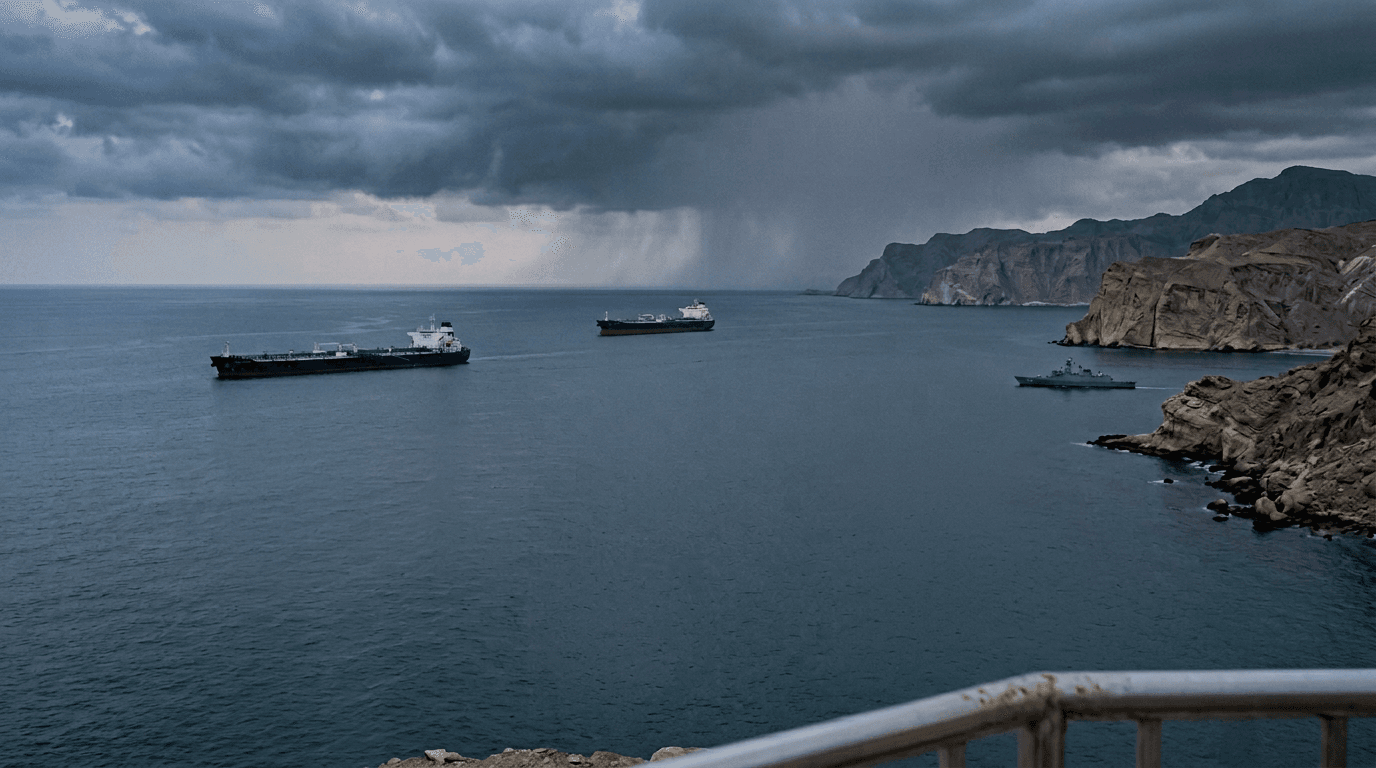
The global energy market is experiencing seismic disruption as maritime traffic through the Strait of Hormuz has collapsed to just 8 percent of normal volumes following military escalation in the Middle East.[1] West Texas Intermediate crude has surged past $90 per barrel, marking a significant move that reverberates across commodities, currencies, and equity markets. For traders and investors, understanding the mechanics of this crisis and its cascading effects is essential for positioning in the current environment.
The Hormuz Shutdown: What Happened
The crisis erupted following US and Israeli military strikes on Iran that killed the country's Supreme Leader and senior officials. In retaliation, Iran's remaining leadership declared it would close the Strait of Hormuz and strike regional energy infrastructure. On March 2, an Islamic Revolutionary Guard Corps adviser announced that any vessel attempting transit would face attack. Within 24 hours, at least five commercial ships were targeted with drones and missiles.[1]
The data tells a stark story. Prior to the conflict, the Strait averaged 153 vessel transits daily, with container ships and oil tankers comprising 88 percent of traffic. By March 2, this number had plummeted to just 13 transits, representing only 8 percent of normal volume.[1] On March 3, just one oil tanker was observed passing through the world's most critical energy chokepoint. Ship-tracking data from Automatic Identification System shows the near-total paralysis of commercial maritime activity in the region.
Notably, Iran has stated it has not completely closed the strait but will bar vessels linked to the United States or Israel.[2] However, the practical effect has been a near-complete shutdown as shipping companies, insurers, and operators have withdrawn from the route entirely due to security concerns, regardless of Iran's official policy.
Oil Markets Respond Decisively
The supply shock has been immediate and dramatic. With approximately 40 percent of China's oil imports and 30 percent of its liquefied natural gas transiting the Strait annually, the closure threatens global energy supplies.[1] Oil prices have responded by surging past $90 per barrel to multi-year highs, reflecting the market's assessment of reduced near-term supply and heightened geopolitical risk.
This oil rally creates a complex trading environment. Higher energy prices directly feed into inflation expectations, which support gold and safe-haven assets. The US dollar strengthens as investors seek safety and as energy prices in dollars rise, supporting commodity-denominated savings. However, this same dynamic pressures equity markets, particularly growth-dependent sectors, as rising energy costs squeeze margins and boost recession concerns.
Energy-dependent currencies like the euro face particular pressure. European economies rely heavily on imported energy, and sustained higher oil prices threaten to reignite inflation concerns just as central banks had hoped to declare victory over this issue. For traders, this creates currency trading opportunities in pairs like EUR/USD as the inflation differential widens.
Global Supply Chain Stress
The Strait of Hormuz handles approximately 21 percent of global petroleum and liquefied natural gas trade, making it arguably the world's most critical energy chokepoint. A sustained closure disrupts not just oil markets but global supply chains dependent on stable energy availability. Dozens of Chinese ships remain trapped in the Persian Gulf, highlighting how quickly commerce can freeze in a geopolitical crisis.[1]
Asian economies face the most acute pressure. China, India, Japan, and South Korea collectively import over 80 percent of the oil and LNG passing through the strait. These economies face potential energy rationing, industrial slowdowns, and elevated input costs. Secondary effects will cascade through manufacturers, transportation networks, and consumer goods pricing across the region.
Interestingly, reports suggest negotiations may be underway between Iranian and Chinese officials regarding safe passage for Chinese tankers, potentially as a bargaining chip for diplomatic or financial support.[1] Traders should monitor any announcements of corridors or agreements that might partially relieve the blockade.
What Traders Should Watch
Several key developments warrant close attention. First, any escalation or de-escalation of military operations will dramatically move energy prices. If military intensity decreases, reduced perceived risk could prompt rapid deleveraging of long positions. Conversely, any expansion of strikes on energy infrastructure could drive another wave higher.
Second, watch for evidence of workarounds. Some shipping may attempt alternate routes or operate with transponders off, as has already been observed with certain tanker movements. Satellite data and shipping intelligence will be crucial for assessing true supply disruption levels versus perceived disruption.
Third, monitor central bank responses. Higher energy prices drive inflation expectations, potentially complicating policy decisions. Any signals from major central banks regarding rate path changes could trigger significant market repricing.
Finally, track negotiations and diplomatic developments. The situation remains fluid, and de-escalation could arrive quickly if political channels open. The market has likely priced in continued crisis, meaning resolution could trigger sharp reversals.
Positioning Implications
This event exemplifies how geopolitical shocks create asymmetric trading opportunities. Long energy exposure, safe-haven assets, and long dollar positions have benefited. Conversely, growth equities, energy-dependent currencies, and risk assets have faced headwinds. The key question for traders is whether current price levels reflect a prolonged crisis or a temporary spike. Historical precedent suggests energy market shocks often reverse sharply once supply alternatives emerge or political resolution occurs.
For SimFi traders, this crisis provides an excellent case study in how correlation structures break down during stress, how real-world constraints on critical infrastructure create urgent market repricing, and how quickly sentiment can shift when new information emerges.