
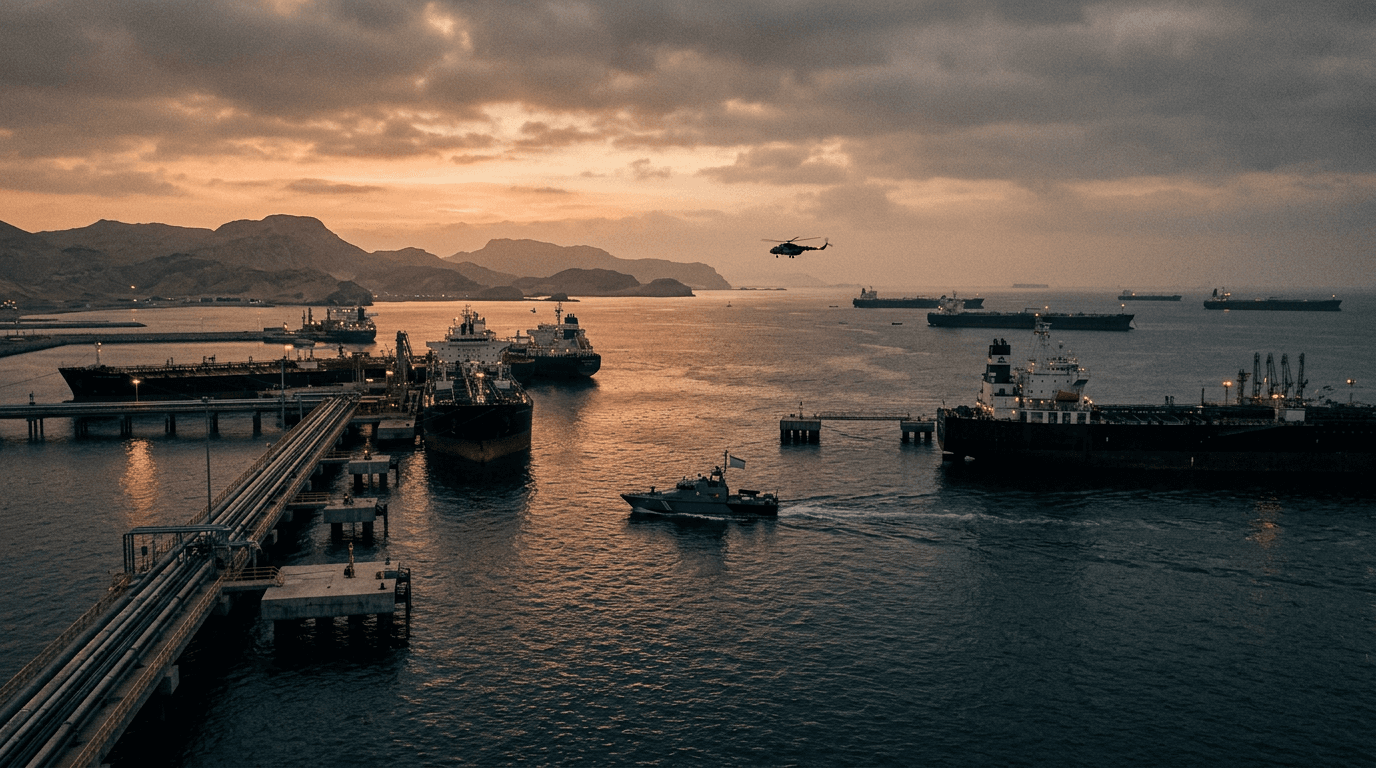
The latest flare‑up in the Middle East has pushed markets back into a geopolitically driven regime, with oil, silver and safe‑haven FX all reacting sharply to renewed tensions around the Strait of Hormuz and a widening US‑Iran conflict.[1][5] Traders now face a sizeable energy risk premium embedded in crude prices, uneven performance across precious metals, and a pronounced rotation into the US dollar and classic safe‑haven currencies.[1][6][7]
Markets Back On War Footing
The Strait of Hormuz is one of the world’s most critical energy chokepoints, and any threat to its stability forces investors to reprice the probability of supply disruptions and shipping delays.[1][5] That repricing is happening in real time: WTI has been pushed back above key technical and psychological levels, with recent moves taking it beyond the high‑$70s as war headlines hit the tape.[1][2] The scale and speed of these moves reflect not just fundamentals, but a growing geopolitical risk premium layered on top of traditional supply‑demand dynamics.[1][6]
This shock is not confined to energy. Risk aversion has spilled across futures curves in crude, refined products and metals, while FX markets are rotating towards safe‑haven and reserve currencies.[1][7] Equities and high‑beta assets have come under pressure as investors demand compensation for higher uncertainty, repricing inflation, growth and policy expectations simultaneously.[2][6] In short, the market is back on war footing: correlations are shifting, liquidity is more fragile, and cross‑asset linkages matter more than single‑asset narratives.[1][6]
Oil: Energy Risk Premium Reprices In Real Time
Crude oil is the most direct transmission channel for Middle East risk, and recent price action underlines how quickly an energy risk premium can build when shipping lanes are in question.[1][5] Following the escalation of the Iran conflict, oil has staged double‑digit percentage rallies at times, with WTI testing ranges last seen in mid‑2025 and Brent spiking toward triple‑digit levels during the most acute Hormuz disruptions.[2][5][6] These moves far exceed what would be implied by near‑term inventory data alone, highlighting the role of scenario‑based “tail risk” pricing.[5][6]
For traders, the key distinction is between structural demand and transient risk premium. Supply forecasts from agencies like the EIA still point to elevated but moderating prices over the coming quarters, suggesting the market expects some normalization once shipping risks ease.[5] However, as long as conflict headlines remain frequent and unpredictable, options markets and front‑month futures are likely to keep a significant geopolitical cushion embedded in prices.[1][5][6] That cushion can expand or contract rapidly with each new development, making intraday volatility and gap risk central features of the current regime rather than exceptions.[5][6]
Silver And Metals: Safe Haven Under Pressure
Silver’s behavior in this crisis is a reminder that “safe haven” status is conditional, not automatic. While earlier phases of the conflict saw silver and gold spike as investors scrambled for protection, recent weeks have brought a notable reversal, with silver prices coming under pressure even as oil remains elevated.[3][4][6][8] Benchmark silver ETFs have dropped by roughly a quarter from their war‑time peaks, and spot prices have retreated toward the $60–$70 range despite ongoing geopolitical stress.[6][8]
Several forces are working against the metal. First, the US dollar has rebounded as the preferred safe‑haven and funding currency, reaching multi‑week highs and tightening financial conditions globally.[2][6][8] Because silver is priced in dollars, a stronger USD mechanically weighs on its price.[6] Second, rising real yields and higher inflation risk premia have made cash and short‑term fixed income relatively more attractive, reducing the appeal of non‑yielding precious metals.[1][6] Third, investors are increasingly worried about slower global growth, which matters for silver’s industrial demand in sectors like electronics and solar.[1][6]
The result is a complex picture: silver is still part of the defensive toolkit, but it is being pulled between safe‑haven demand and macro headwinds from FX and rates.[1][3][6] Traders who treat metals as “always up” in crises risk being caught on the wrong side of these cross‑currents.
SAFE‑HAVEN FX: DOLLAR, YEN AND FRANC IN DEMAND
FX markets are echoing the shift toward safety. The US dollar index has jumped to multi‑week highs at several points during the conflict, reflecting both its role as the world’s dominant reserve currency and renewed demand for dollar liquidity.[2][6][8] Traditional safe‑haven currencies such as the Japanese yen (JPY) and Swiss franc (CHF) have also found support, especially against high‑beta and commodity‑linked currencies that suffer when risk sentiment deteriorates.[7]
Interestingly, the usual “oil up, dollar down” relationship has weakened. Ordinarily, higher energy prices would hurt energy‑importing economies and weigh on their currencies, but in a war‑driven shock the dollar can rise alongside oil as global investors prioritize security and liquidity over textbook macro correlations.[1][6][7] This is visible in USD crosses, where commodity‑linked FX may benefit from stronger terms of trade in theory, yet still lag because capital is retreating to the deepest and most liquid markets.[1][7]
For traders, this means standard playbooks need adjusting. FX moves are being driven less by growth differentials and more by risk appetite, funding needs and expectations for how central banks will respond to imported inflation.[1][6][7] Monitoring policy rhetoric, real yield moves and cross‑asset volatility is therefore as important as tracking traditional economic data.
How Traders Can Navigate The Hormuz Risk
In a headline‑driven environment, the temptation is to trade every news flash. Experience suggests a different approach. First, treat correlations as fluid: during stress regimes, relationships like “higher oil equals weaker dollar” or “war equals stronger metals” can break as risk aversion and policy expectations dominate price action.[1][6][7] Being aware that historical patterns may fail is the first step towards avoiding overconfident directional bets.
Second, prioritize position sizing and scenario analysis over trying to predict the next headline precisely.[1] With risk premia high and liquidity uneven, markets can whipsaw on partial information or misinterpreted developments.[5][6] Mapping out a few clear scenarios—such as prolonged Hormuz disruption, rapid de‑escalation, or a broader regional spillover—and stress‑testing portfolios against each can be more effective than chasing every intraday move.
Third, anchor your views in real‑economy and policy indicators rather than prices alone. Shipping data, tanker tracking, inventory levels, central bank communications and inflation expectations all offer clues about how durable the current energy shock might be.[1][5][6] For simulated and live traders alike, building cross‑asset awareness and robust risk management frameworks is now essential. The Hormuz flashpoint is a powerful reminder that in geopolitically charged markets, it is discipline—not perfect foresight—that ultimately protects capital.