
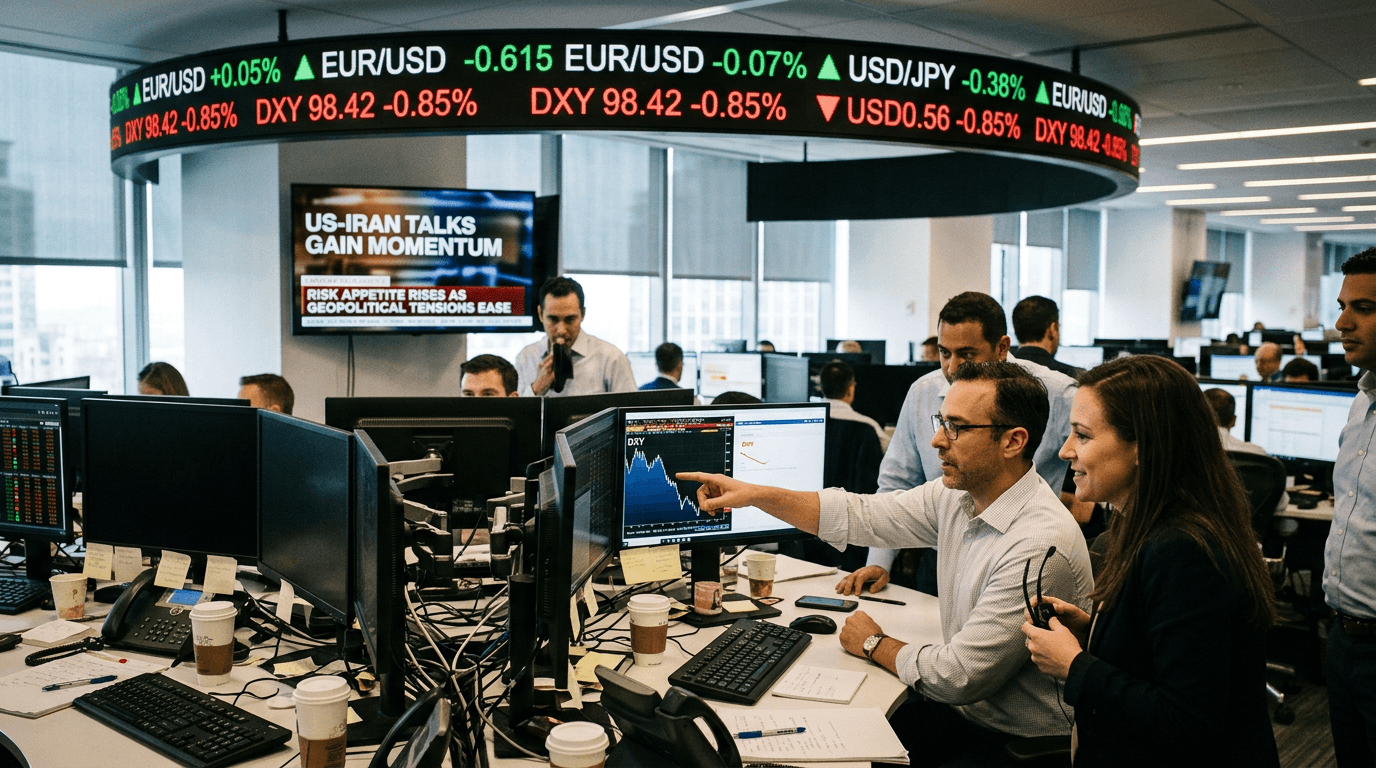
Geopolitical optimism is reshaping currency markets in real time. As peace negotiations between the United States and Iran show renewed momentum, the safe-haven US Dollar is losing its appeal, pushing the Dollar Index below the significant 98.50 threshold. This shift reveals a fundamental principle in forex trading: when geopolitical risks recede, capital flows out of defensive assets and into riskier alternatives. For traders monitoring the E8 Markets SimFi platform, this development offers critical insights into how macro-level political events translate into measurable price action across currency pairs.
The recent progress in US-Iran diplomatic efforts marks a notable shift in Middle Eastern tensions. According to the latest reports, the Trump administration has extended a ceasefire with Iran, expressing cautious optimism about reaching a comprehensive peace accord. Pakistan is reportedly facilitating a second round of negotiations, with US officials indicating they "feel good about the prospects of a deal." While significant hurdles remain—including Iran's nuclear program, the reopening of the Strait of Hormuz, and deeper regional disputes—the very presence of active diplomatic channels has reduced the uncertainty premium that typically drives traders toward dollar safety.
Geopolitical Risk Premium Unwinding
When investors fear conflict or economic disruption, they gravitate toward the US Dollar as a safe haven. This demand pushes the dollar higher, regardless of US economic fundamentals. However, when tensions ease, this protective bid evaporates quickly. The Dollar Index, which measures the greenback against a basket of six major currencies, dropped below 98.50 in response to the Iran peace signals. This technically significant break suggests a broader market consensus that geopolitical risks are genuinely declining, not merely postponed. For SimFi traders, this is a crucial distinction—the difference between a temporary relief rally and a sustained trend shift often hinges on whether the underlying risk factors have materially improved.
The Mechanics Of Risk-off To Risk-on Transitions
When safe-haven flows reverse, capital doesn't simply disappear; it reallocates. Traders and institutional investors begin reducing USD positions and increasing exposure to higher-yielding or cyclically sensitive currencies. The euro and British pound have both strengthened materially, with EUR/USD climbing to 1.1620 and GBP/USD rising to 1.3365. These movements reflect more than just dollar weakness; they represent investor confidence returning to assets tied to global growth. European markets, which are highly exposed to Middle Eastern oil supply disruptions, benefit particularly when conflict risks subside. Lower oil prices from reduced geopolitical tensions also ease inflation pressures in Europe, making European assets more attractive to global capital.
Crude Oil And Currency Linkages
The peace optimism has created a secondary market effect through energy prices. The Strait of Hormuz, through which approximately one-fifth of the world's crude oil flows normally, remains a flashpoint in negotiations. Any agreement that reopens this critical shipping lane would substantially increase global oil supply, potentially pushing prices lower. Lower crude prices reduce inflation concerns, which typically support USD strength when inflation accelerates. However, they also ease economic pressure on oil-importing nations and can support broader growth expectations. This dual-sided impact explains why traders see genuine risk-off conditions lifting, not merely a temporary tactical reprieve.
Trading Implications For Simfi Participants
For those trading on SimFi platforms, this environment presents several actionable scenarios. First, mean reversion traders should monitor whether the Dollar Index stabilizes around 98.50 or continues breaking lower toward 97.50. Technical breaks through key support levels often attract momentum traders, amplifying subsequent moves. Second, pairs traders can explore relative performance between the euro and pound versus other currencies, as their respective economic resilience in a lower-oil-price environment may diverge. Third, this situation highlights the importance of monitoring central bank positioning—if the Federal Reserve acknowledges reduced inflation risks from lower oil prices, USD weakness could accelerate further.
The bond market offers another layer of analysis. Typically, geopolitical risk reduction prompts central banks to consider cutting interest rates as inflation concerns ease. If market expectations shift toward earlier or larger Fed rate cuts, the interest rate differential between the US and other major economies narrows, further reducing dollar attractiveness.
Strategic Considerations Ahead
While current optimism is warranted based on diplomatic progress, traders must remember that peace negotiations are inherently fragile. A breakdown in talks, a new provocation in the Strait of Hormuz, or shifting domestic political considerations in either nation could rapidly reverse these flows. The extended ceasefire has "no specific timeline," according to administration officials, meaning positive sentiment could evaporate as quickly as it emerged.
For SimFi traders, the key takeaway is recognizing how macro geopolitical developments create measurable, tradeable price movements. The unwinding of risk premiums typically follows predictable patterns across correlated assets. By understanding these relationships—USD weakness, commodity price behavior, equity market strength, and yield curve movements—traders can construct scenarios that profit from orderly geopolitical risk transitions or position defensively should negotiations falter unexpectedly.