
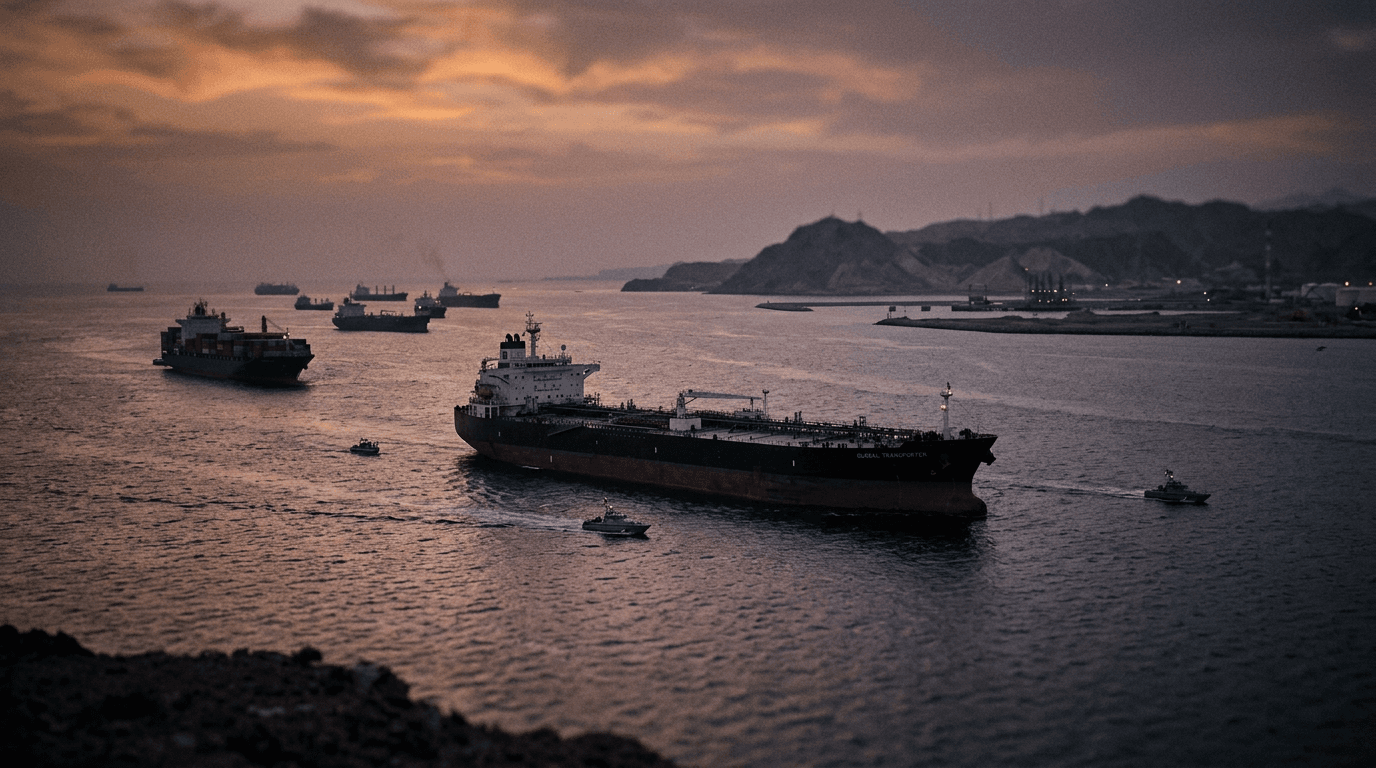
Iran's Strait of Hormuz Blockade: Global Energy Markets in Turmoil
In an unprecedented move, Iran has effectively closed the Strait of Hormuz, a crucial maritime corridor linking the Persian Gulf to the Gulf of Oman. This strategic choke point, through which roughly 20% of the world's oil supply is transported, has become the focal point of a geopolitical crisis that is sending shockwaves through international energy markets. The blockade is no longer a hypothetical scenario; it is a pressing issue that is reshaping global energy security and trade dynamics.
The crisis intensified following the death of Ayatollah Ali Khamenei, Iran's former supreme leader. Bereft of nuclear capabilities as a bargaining chip, Iranian military strategists have turned to their most potent tool—the Strait of Hormuz. The new supreme leader, Mojtaba Khamenei, has pledged to maintain the blockade in response to U.S. and Israeli military actions initiated on February 28. This tactic, rooted in Iranian military doctrine since 2006, employs the Strait's closure as a weapon of last resort in the face of conflict.
Iran's Control Over the Strait
Though the Strait of Hormuz is not under Iranian jurisdiction, Iran wields significant power to disrupt its passage due to its geographic proximity and substantial military presence in the region. Over decades, Iran has developed a formidable arsenal of area denial systems, including anti-ship cruise missiles, submarines, drones, and mine-laying capabilities. Eschewing reliance on its aging conventional navy, Iran's strategy focuses on asymmetric warfare, leveraging the Islamic Revolutionary Guard Corps' maritime forces. These forces, adept in maneuvering small speedboats, patrol boats, drones, and cost-effective Chinese-made cruise missiles, excel at controlling vital shipping lanes.
This asymmetric prowess has proven devastatingly effective. The Strait's rocky coastline, with its cliffs and hidden caves, allows for strategic concealment of weapons and mobile batteries, leaving targeted ships with minimal reaction time. Even U.S. aircraft carriers, such as the Gerald R. Ford and Abraham Lincoln, have stationed themselves roughly 800 kilometers away in the Arabian Sea, underscoring the tangible threat posed by Iran's capabilities. As one analyst observed, the "ease of disrupting the Strait is akin to a nuclear deterrent from Iran."
Immediate Market Impact
Since the conflict's onset, at least 15 tankers have been targeted in the region, causing significant disruption to global oil and liquefied natural gas trade. Tanker traffic has plummeted by approximately 70%, while insurance companies have largely ceased covering war risks as of March 5. This insurance crisis is as consequential as the military threat, effectively preventing most vessels from transiting the Strait.
Only a select few Pakistani, Indian, Turkish, and Chinese bulk carriers and oil tankers have managed to navigate the Strait recently, facilitated by meticulously negotiated bilateral agreements with Iran. This fragmentation of global shipping routes is already impacting international trade. Oil prices have surged to six-month highs, with WTI crude oil reaching unprecedented levels as markets grapple with the potential disruption of 20% of global oil production.
Military Standoff and Escalation Risks
The situation remains precarious. While the U.S. claims to have significantly impaired Iran's naval capabilities—destroying four Soleimani-class missile corvettes on March 11 and approximately 30 of Iran's 200 small attack vessels—Iran retains considerable military assets, including around 20 submarines. In response, the Pentagon has deployed 2,200 troops from the 31st Marine Expeditionary Unit, an elite amphibious force poised to occupy key islands within the Strait to preposition advanced warning systems and thwart mine-laying efforts.
President Trump has escalated rhetoric, threatening to retaliate "twenty times harder" if the blockade persists, and has already targeted Kharg Island, Iran's vital oil export hub. Despite these military assertions, the Strait remains effectively closed, a stark reminder that military superiority alone cannot guarantee the reopening of shipping lanes in confined waters where asymmetric defenders hold significant advantages.
What Lies Ahead
The geopolitical landscape suggests this crisis will endure for weeks or months. Iran has explicitly stated its willingness to mine the Strait if further provoked, a move that would be catastrophic for global trade. Meanwhile, as the Strait remains closed, alternative shipping routes grow more congested, insurance costs remain prohibitive, and the global economy bears the brunt of elevated energy prices.
For traders and investors, vigilant monitoring of this situation is imperative. The Strait of Hormuz blockade is not merely an oil market issue; it is a fundamental challenge to the global trading system that holds the potential to reshape geopolitics and energy markets for years to come.