
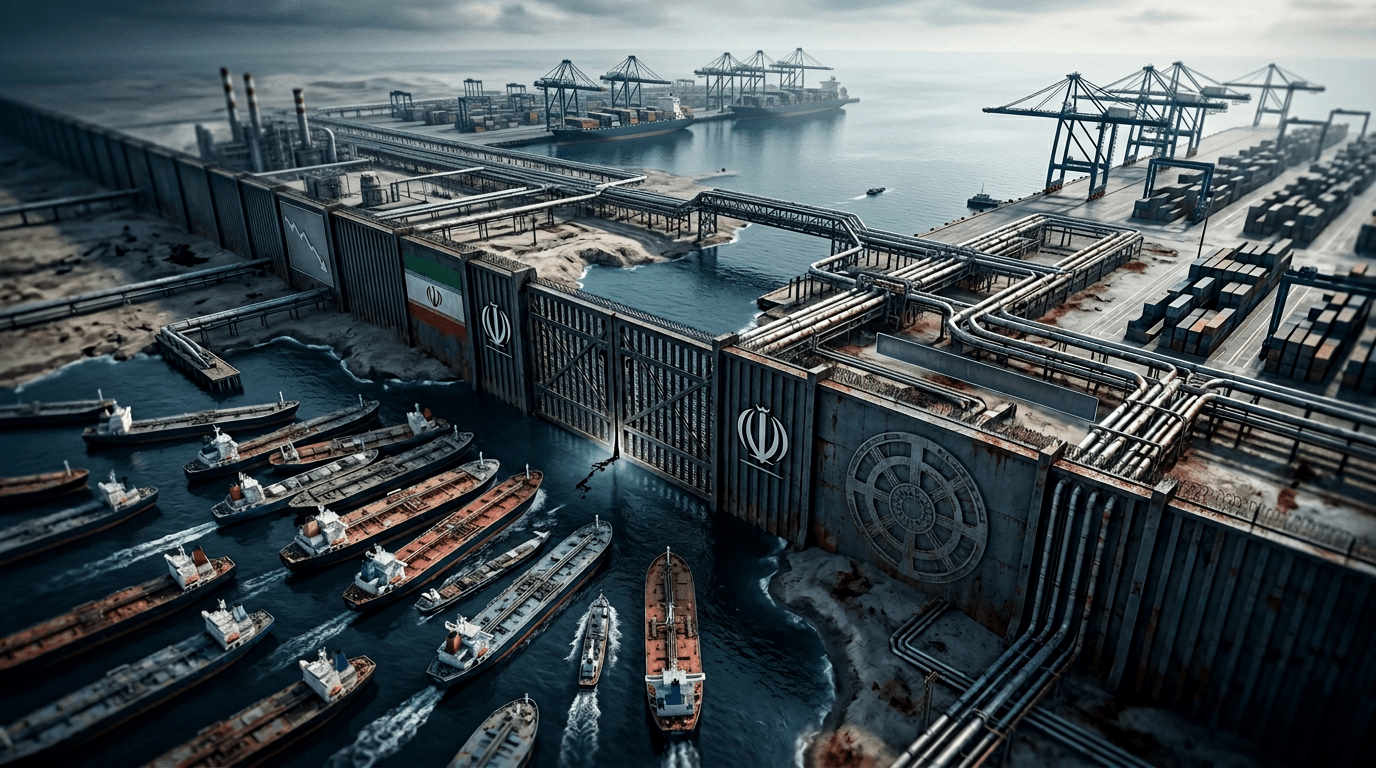
The Strait of Hormuz, one of the world's most critical maritime chokepoints, has become a flashpoint in global geopolitics as Iran blocks the vital passage following escalating military tensions with the United States and Israel. This blockade is sending shockwaves through energy markets, disrupting shipping routes that handle approximately 20 percent of the world's daily oil supply and forcing traders and logistics companies to rethink their strategies. With tanker traffic plummeting and uncertainty gripping commodity markets, understanding the implications of this crisis is essential for anyone involved in trading, shipping, or energy investments.
Understanding The Blockade
In late February 2026, Iran warned that it would close the Strait of Hormuz in response to military strikes in the region.[1] What began as a warning escalated into action when the Islamic Revolutionary Guard Corps (IRGC) took control of the strategic waterway. Iranian officials declared the strait "closed" and threatened to fire upon any vessels attempting to pass through the route.[1] While Iranian Foreign Minister Abbas Araqchi initially suggested the blockade would not apply to civilian vessels, the reality on the ground proved more restrictive. By early March, Iran announced it would allow only Chinese vessels to pass through the strait as an expression of gratitude for Beijing's diplomatic support during the conflict.[3]
The blockade represents an unprecedented challenge to global maritime commerce. Unlike previous regional tensions, this closure has immediate teeth—Iran controls the geography adjacent to the Strait of Hormuz and possesses the military capability to enforce its restrictions. The IRGC's public declaration of "complete control" over the passage signals resolve to maintain the blockade for the foreseeable future.[4]
Impact On Global Shipping And Tanker Traffic
The effects on shipping have been swift and severe. Traffic through the Strait of Hormuz has fallen 86-90 percent compared to average levels, according to initial reports.[1] Major shipping companies including Maersk, Hapag-Lloyd, CMA CGM, and MSC have begun rerouting vessels away from the strait entirely, opting for longer but safer passages.[1] At least 150 tankers became anchored offshore as companies reassessed their options.[1]
For vessels unable to access the Strait of Hormuz, the alternative is neither quick nor inexpensive. Ships must navigate around the Cape of Good Hope at the southern tip of Africa, a detour that extends voyage times by several days and significantly increases operational costs.[2] Industry expert Mahmoud Abuswasel noted that this disruption "effectively diminishes capacity within the system," warning that if major shipping lines limit bookings, "you're adding weeks to global shipping timelines."[2]
Energy Markets And Crude Oil Implications
The blockade's impact on oil markets has been immediate and dramatic. With the Strait of Hormuz handling roughly 20 percent of global oil and gas exports daily, the disruption threatens substantial portions of the world's crude supply.[4] WTI crude oil prices have surged to six-month highs as traders price in supply uncertainty and geopolitical risk premiums. Futures markets are experiencing significant pressure as market participants assess the duration and scope of the blockade.
China faces a particularly acute challenge given its heavy dependence on Gulf energy supplies. Approximately 35 percent of all oil from the Persian Gulf flows to China, making the blockade a critical issue for Beijing.[5] This explains China's diplomatic pressure on Iran to ensure safe passage and its unique exemption for Chinese vessels—a lifeline that underscores just how essential the strait remains for global energy security.
Opec And Supply Chain Responses
In response to the supply disruption, OPEC has begun considering production increases to offset potential shortages and stabilize prices. The cartel recognizes that sustained blockade of the Strait of Hormuz could create a supply emergency that no single producer can manage alone. However, the effectiveness of any production boost depends on whether OPEC members can route their oil around the blockade or negotiate passage through the contested waters.
The crisis also reveals the fragility of global energy infrastructure. While some analysts argue that Iran is unlikely to permanently mine the strait because it too needs access for its own vessels, the current blockade demonstrates that threats alone are sufficient to disrupt markets and force costly workarounds.[5]
Strategic Implications For Traders And Investors
For market participants, this blockade creates both risks and opportunities. Energy sector volatility presents trading opportunities for those who understand the underlying geopolitics and logistics constraints. However, the uncertainty surrounding the blockade's duration complicates longer-term positioning. The current standoff remains "unprecedented" according to industry observers, making historical parallels unreliable guides for price forecasting.[2]
The blocking of the Strait of Hormuz is fundamentally reshaping global trade flows and energy economics. What began as a regional military conflict has evolved into a crisis affecting millions of barrels of oil daily and reshaping shipping routes that have remained stable for decades. Market participants must monitor developments closely while recognizing that the duration and intensity of this blockade will determine whether current disruptions prove temporary or signal a prolonged period of elevated energy prices and constrained global commerce.