
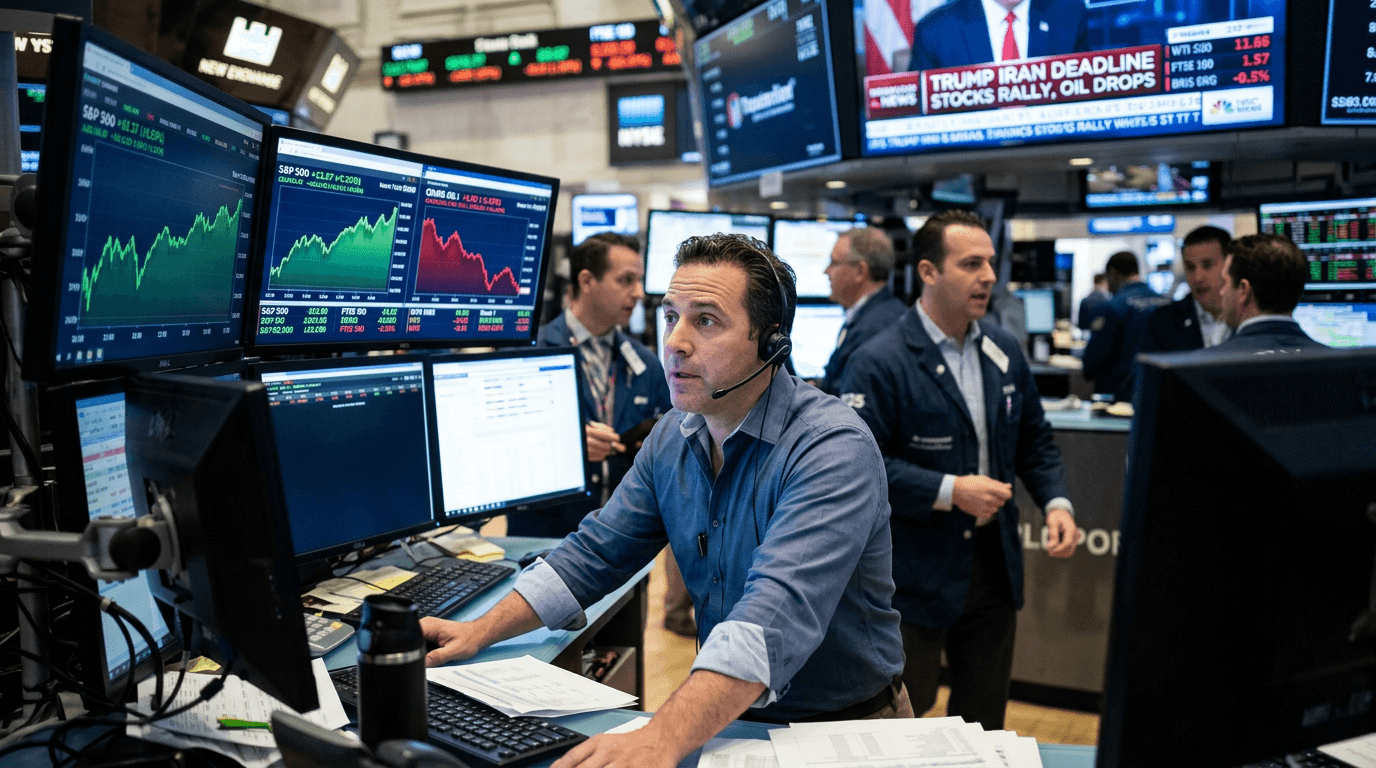
President Trump has set a decisive one-week deadline for Iran to accept a peace deal, injecting fresh optimism into global markets and triggering a notable rally in equities while crude oil prices retreated. The ultimatum comes as negotiations reach what both sides describe as a critical juncture, with diplomatic officials working around the clock to finalize the framework of a memorandum of understanding. For traders and investors monitoring geopolitical risk, this development represents a significant shift in market sentiment and offers valuable lessons about how political developments drive asset price movements across multiple sectors.
The Iran Deal Framework
The proposed agreement centers on a 14-point memorandum of understanding designed to permanently end the maritime conflict and establish foundational terms for broader negotiations. Key provisions include both the United States and Iran lifting their respective blockades on the Strait of Hormuz, a critical chokepoint for global energy shipments. In exchange, the US would remove certain sanctions while Iran commits to a 15-year moratorium on uranium enrichment and agrees to transfer its stockpile of highly enriched uranium outside its borders, potentially to the United States. The agreement would also trigger an initial 30-day negotiation period to address additional issues including Iran's nuclear program and regional security arrangements. Trump characterized his position as cautiously optimistic during discussions with Fox News, noting that both parties have expressed willingness to negotiate seriously. However, Iranian officials have dismissed aspects of the proposal, with some characterizing it as more of a wishlist than a realistic framework. The gap between these positions underscores why Trump has felt compelled to impose a deadline, attempting to force Tehran's various political factions to reach a final decision rather than prolonging indefinite negotiations.
Market Reactions And Trading Implications
The market response to Trump's deadline announcement has been swift and telling. US stock indices surged as investors interpreted the one-week timeframe as a signal that a peaceful resolution is within reach. Korean and Japanese stock markets similarly climbed to multi-month highs, reflecting global appetite for risk assets when geopolitical tensions appear to be easing. The rally makes intuitive sense from a trader's perspective. War and political uncertainty create what economists call a geopolitical risk premium, essentially a discount applied to asset prices due to elevated uncertainty. When that uncertainty begins to diminish, investors become more willing to buy equities, bid up valuations, and shift capital from defensive assets into riskier positions. The flip side of this dynamic appeared in crude oil markets, where West Texas Intermediate crude settled near $95 per barrel, a meaningful decline from recent highs. This decline reflects expectations that a deal would alleviate concerns about supply disruptions from the Strait of Hormuz, one of the world's most critical energy transit points. When geopolitical risk premium diminishes, the price of energy commodities typically falls as the threat of supply shocks recedes.
What This Means For Traders
Understanding the mechanics behind these market moves provides actionable insights for traders working on simulated or real platforms. First, geopolitical developments often trigger correlated moves across multiple asset classes. When political tensions ease, equities tend to rally while commodities like crude oil and precious metals decline. Conversely, when geopolitical risk escalates, investors typically move toward safety. Second, the timing of announcements matters considerably. Trump's ultimatum creates a specific event date around which traders can structure positions. Options traders, for example, might anticipate elevated volatility around the one-week deadline, while swing traders could look to establish positions ahead of potential market moves in either direction depending on how negotiations progress. Third, managing geopolitical risk in a portfolio requires understanding correlation dynamics. During periods of high geopolitical uncertainty, traditional diversification benefits may diminish as seemingly unrelated assets move together. Conversely, when tensions ease, historical diversification patterns reassert themselves.
Looking Ahead
The critical date to monitor is precisely one week from Trump's announcement. Markets will likely price in expectations about the probability of a successful deal well before that deadline arrives. If negotiations progress smoothly, expect further equity rallies and continued downward pressure on crude oil. If rhetoric deteriorates or reports suggest negotiations are stalling, the market could reverse sharply. This creates both opportunity and risk for traders. Iranian officials have already signaled resistance to certain provisions, suggesting negotiations may not proceed smoothly. Additionally, Trump has explicitly warned that military operations would resume at greater intensity if Iran rejects the deal, a threat that could re-inject geopolitical risk premium if diplomacy fails. Traders should also consider that initial market enthusiasm could prove premature. Even if a memorandum of understanding is signed, the framework explicitly contemplates 30 additional days of negotiations on nuclear issues and regional security. A preliminary agreement does not guarantee a comprehensive final deal.
Key Takeaways For Traders
Monitor equity and energy markets for divergent moves, as they typically reveal market expectations about geopolitical risk. Use the one-week deadline as a key event date for position planning. Recognize that initial market rallies on positive news can reverse quickly if negotiations encounter obstacles. Stay alert to Iranian official statements for signals about willingness to compromise. Remember that preliminary agreements often gloss over contentious issues that could derail final negotiations. By applying these principles, traders can better navigate the intersection of geopolitics and markets.