
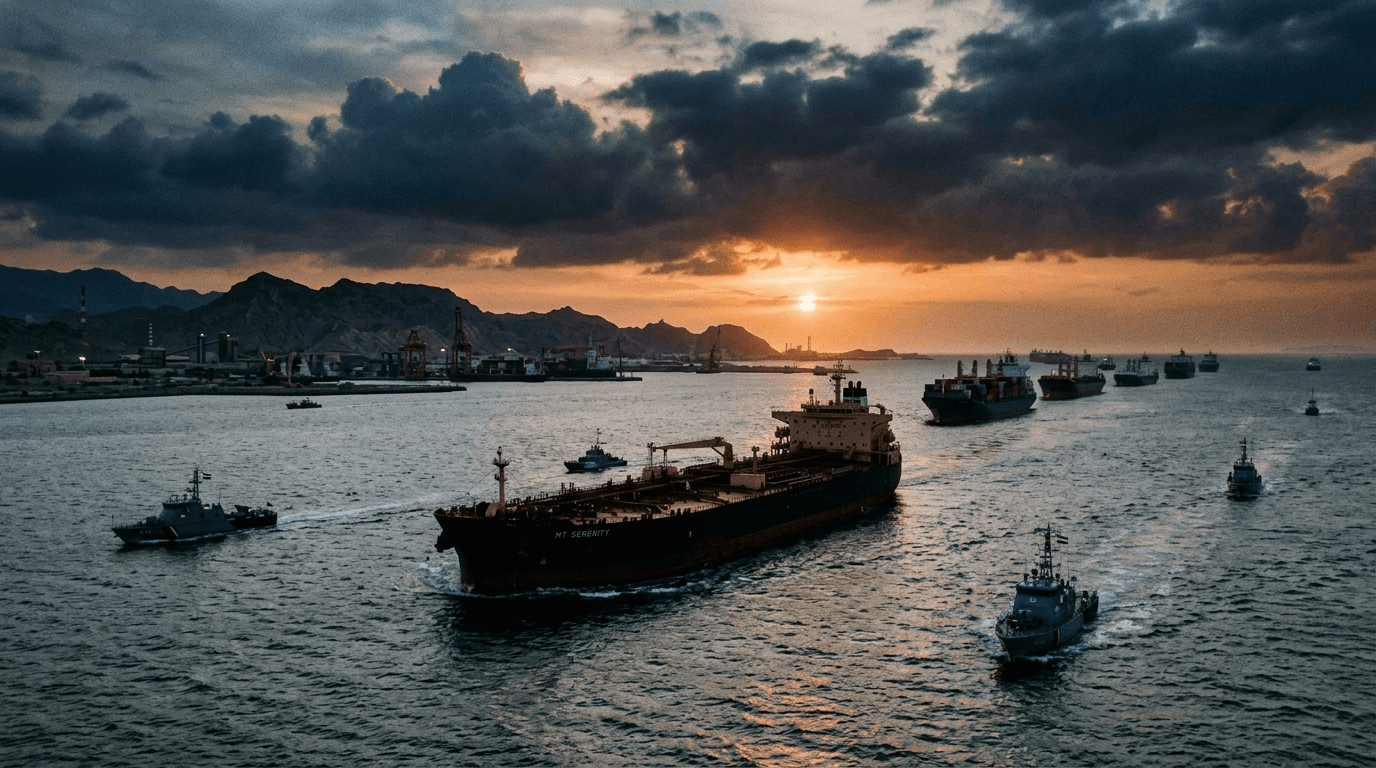
The Strait of Hormuz Crisis: A New Era for Global Energy Markets and Supply Chains
The Strait of Hormuz, a narrow 21-mile stretch between Iran and Oman, stands at the epicenter of a geopolitical storm that threatens to reshape global energy dynamics. Following the February 28, 2026, military strikes by the US and Israel on Iran, tensions have reached a boiling point. As demands and ultimatums escalate, the stakes are high for traders, investors, and businesses worldwide. Understanding the profound implications of this standoff is crucial, as energy prices soar and international commerce grapples with unprecedented uncertainty.
A Critical Energy Lifeline
The Strait of Hormuz is the globe's most crucial energy chokepoint. Handling around 20% of the world's daily oil supply and nearly 20% of its liquefied natural gas shipments, any disruption here sends immediate shockwaves through international markets. With over 14 million barrels of oil expected to transit daily, major exporters like Saudi Arabia, the UAE, Iraq, and Kuwait rely heavily on this corridor. Meanwhile, buyers across China, India, Japan, South Korea, and Europe depend on uninterrupted flows to meet their energy needs.
Market Impact: A Surge in Oil Prices and Energy Volatility
The oil market's reaction has been swift and significant. Prior to the February strikes, crude oil hovered in the mid-$60s per barrel. In just ten days, prices surged by 28-35%, with WTI crude surpassing $86 per barrel and Brent crude nearing $89. Goldman Sachs Research strategists highlight that the current risk premiums add approximately $14 to each barrel, reflecting deep market anxiety over potential supply disruptions.
Analysts caution that prolonged disruptions could drive oil prices beyond $120 per barrel, a level that threatens global economic stability. Goldman Sachs models indicate that a complete four-week halt in Hormuz flows could add $14 per barrel, even with spare pipeline capacity mitigating some losses. Even a scenario with half of normal flows for a month could still increase prices by $4 per barrel.
The crisis extends beyond crude oil, affecting natural gas markets as well. The Strait of Hormuz manages around 80 million tons annually of LNG, representing 19% of global supply. Goldman Sachs estimates that a month-long disruption could push Dutch natural gas prices to 74 EUR/MWh, compared to pre-crisis levels of 31.6 EUR/MWh. Prolonged disruptions exceeding two months could spike European natural gas prices above 100 EUR/MWh.
Shipping Costs and Supply Chain Strain
Beyond the energy sector, the shipping industry faces direct cost pressures. Bunker fuel, which makes up 20-30% of total voyage costs for most vessels, sees immediate price spikes, affecting logistics operators. Current data reveals a 35% rise in Singapore HSFO bunker prices and a more than 40% jump in LNG tanker spot rates in single trading sessions.
War-risk insurance premiums have doubled, climbing from 0.25% to over 0.5% of vessel value per transit through the Persian Gulf. These cumulative cost increases translate directly to higher freight charges and bunker adjustment factors, with industry forecasts predicting BAF increases of 20-40% over the next 30-90 days. For companies reliant on maritime trade, these escalating costs threaten margins and profitability.
Preparing for Supply Chain Disruption
Businesses must act swiftly to shield against ongoing volatility. The International Energy Agency estimates that 4.2 million barrels daily of Hormuz flows could be redirected through existing spare pipeline capacity, leaving approximately 16 million barrels at risk from a full closure. Unlike other maritime disruptions, there is no viable alternative route for the massive volume of oil and gas leaving the Persian Gulf each day.
Companies dependent on international shipping should prioritize updating landed cost models to reflect rising fuel expenses. Confirming freight rates at booking time, reviewing supplier contracts for fuel surcharge clauses, and considering forward bookings to lock in current pricing levels are essential defensive measures. Supply chain teams must maintain vigilant monitoring of geopolitical developments, energy market trends, and freight rate movements.
Broader Economic Implications
The Strait of Hormuz crisis lays bare the fragility of global energy infrastructure. When roughly 20% of the world's oil supply flows through a single, narrow chokepoint, geopolitical instability becomes a universal concern. Europe, for instance, receives about 30% of its jet fuel through this corridor, creating ripple effects across aviation and broader European economies.
This situation underscores why oil markets reacted with such immediacy and magnitude. Traders swiftly integrated worst-case scenarios into pricing, demanding significant risk premiums. Current market positioning suggests expectations of either sustained disruption or the potential for further military escalation.
For traders and investors, this crisis presents both challenges and opportunities. Energy volatility poses obstacles for traditional supply chains but opens doors for strategic positioning in energy markets, shipping equities, and alternative energy producers. Companies hedging against energy costs or holding long energy positions stand to benefit from price surges, while those with exposed supply chains face potential margin compression.
The coming weeks are crucial. The resolution, whether through diplomatic channels or further military action, will determine if current price levels are a temporary spike or a new norm reflecting persistently higher energy costs.
News Impact Score: 8