
---
The assassination of Iran's Supreme Leader, Ayatollah Ali Khamenei, on February 28, 2026, has sent shockwaves through global markets, triggering a geopolitical risk premium that traders have anticipated amid escalating Middle Eastern tensions. Announced by the Trump administration, the operation saw U.S. and Israeli forces conduct coordinated airstrikes, culminating in Khamenei's death at his Tehran compound. The Iranian government confirmed his demise on March 1, declaring 40 days of national mourning, marking a critical juncture for the 47-year-old Islamic regime now facing unprecedented internal instability.
This development transcends mere geopolitical headlines. For traders and portfolio managers navigating currency markets, energy commodities, and regional equities, the assassination signifies a seismic shift in risk assessment. The event has redrawn the map of regional power dynamics, reshaping capital flows in real-time.
Immediate Market Reaction: Safe Haven Surge
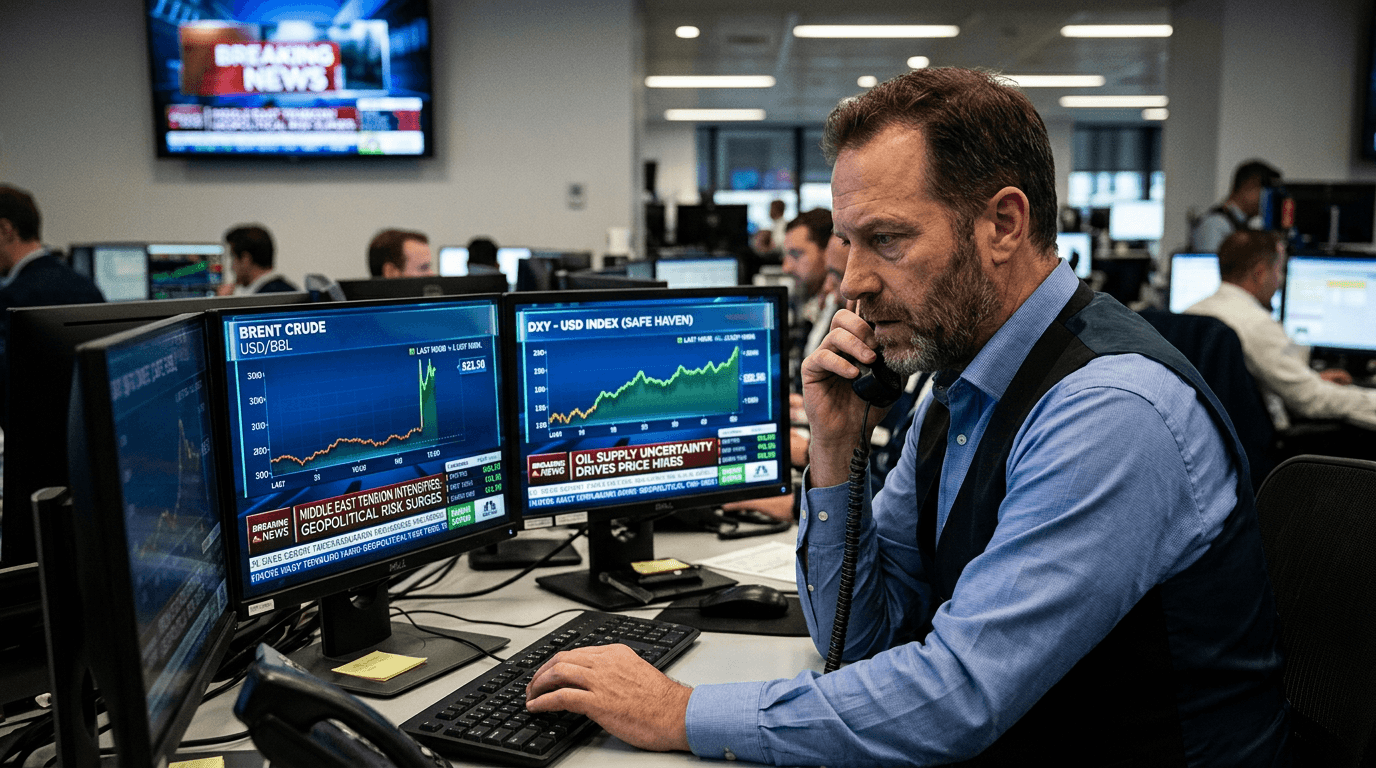
Upon confirmation of Khamenei's death, the U.S. dollar surged, epitomizing the textbook safe haven flow during major geopolitical crises. In times of uncertainty, capital gravitates toward the most liquid, stable asset class—and the U.S. dollar remains the pinnacle of that instinctual response. Institutional investors, hedge funds, and corporate treasurers have been shifting from higher-risk currencies and emerging market assets into dollar positions.
Barclays' market analysis quantifies the relationship between oil price movement and USD strength: for every 10% rise in oil prices, the dollar experiences approximately 0.5-1% upside. This dynamic creates a secondary shock for emerging market currencies and commodities-dependent economies. Nations importing energy and possessing dollar-denominated external debt face currency depreciation precisely when stability is most needed.
Oil Prices Surge on Supply Uncertainty
Crude oil markets have reacted with sharp upward movements as traders factor in sustained supply disruptions and geopolitical risk premiums. As a major oil producer, Iran's conflict escalation—whether through retaliation or further strikes—threatens energy infrastructure across the Persian Gulf. Iran has already responded with missile and drone attacks on neighboring countries, including Saudi Arabia, the United Arab Emirates, Qatar, Bahrain, and Kuwait.
Higher oil prices immediately ripple through global supply chains. Energy companies may benefit, but transportation, shipping, and manufacturing sectors face margin pressure. For traders, the key question remains whether this is a temporary spike or the onset of a structural shift in energy costs. Barclays' analysis suggests prolonged higher oil prices as long as military conflict persists. Energy cost expectations have shifted upward, affecting everything from airline earnings to fertilizer costs and airline hedging strategies.
The Currency Volatility Cascade
Beyond the dollar's strength, regional currencies have witnessed significant volatility. The Israeli shekel initially strengthened on perceived operation success, while the Iranian rial has faced pressure despite capital controls. Central banks across the Gulf region are managing currency pegs as the dollar strengthens and oil price swings create competing pressures.
For forex traders, this volatility presents both risk and opportunity. Currency pairs involving the dollar, euro, and Middle Eastern currencies have widened bid-ask spreads, reflecting uncertainty about future geopolitical moves. Implied volatility across major currency pairs has spiked, raising hedging costs for multinational corporations with regional exposure.
Broader Implications: What Comes Next
The assassination represents a strategic decapitation attempt against Iran's leadership, but the real market risk lies in the response. Iran's security forces and Revolutionary Guard Corps possess significant military capabilities, including missile and drone arsenals. The country's leadership shift from supreme leader to uncertain succession could either foster reformist opportunities within Iran or trigger hardline retaliation through non-state actors.
From a trading perspective, elevated volatility is likely across multiple asset classes. Geopolitical risk premiums are notoriously challenging to price due to unpredictable human decisions and military operations. Traders holding long-dated positions in the region face genuine uncertainty regarding the conflict's duration and scope.
Key Takeaways for Traders and Investors
Monitor dollar strength against emerging market currencies, particularly those of energy importers. Track crude oil prices as the primary barometer of regional stability—prices above $90 per barrel suggest sustained supply concerns. Establish hedges for companies with supply chain exposure to Middle Eastern or Gulf region energy infrastructure. Consider increasing allocations to safe haven currencies and gold.
Ayatollah Khamenei's assassination has accelerated a geopolitical transition in the Middle East that may take months or years to fully resolve. For traders, this suggests the current volatility environment is likely to persist, offering both significant risks and potential opportunities in currency markets, energy markets, and equities with regional exposure.