
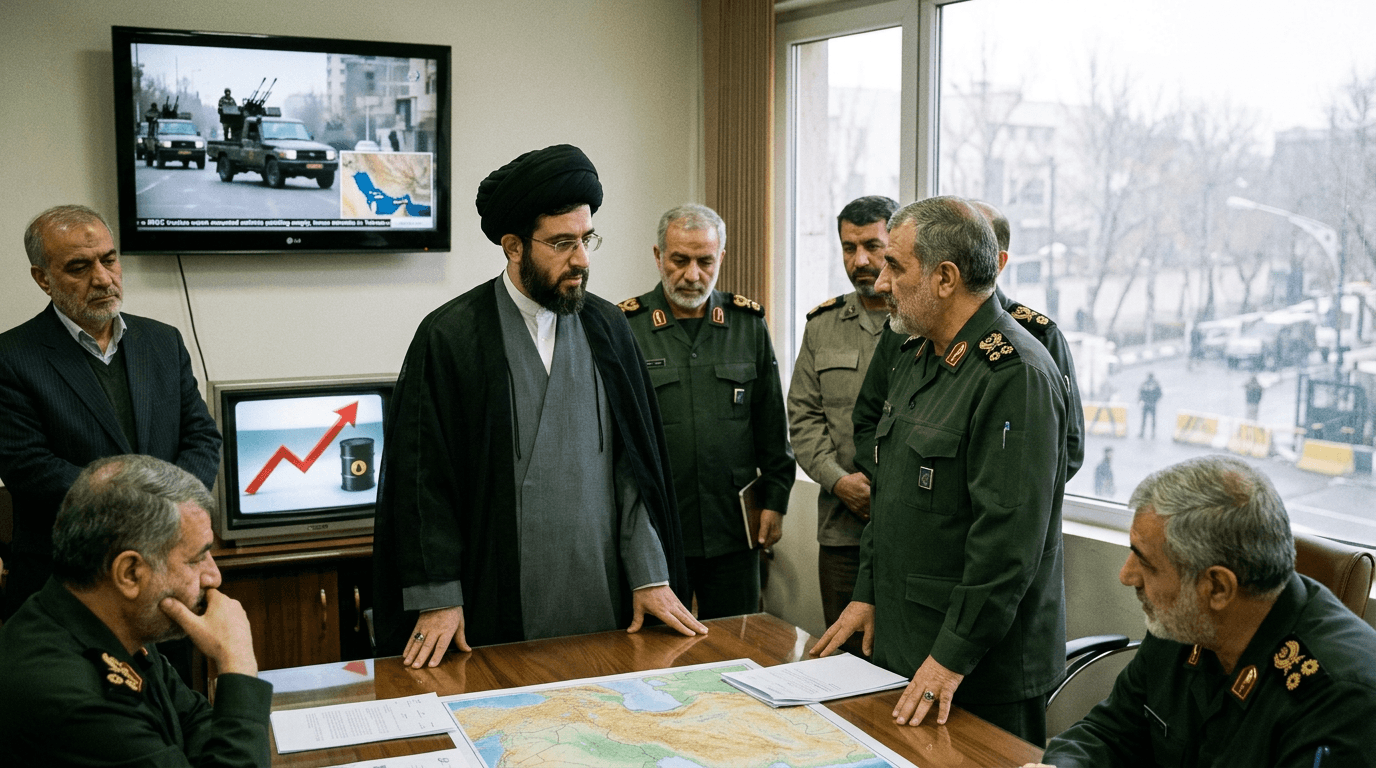
A seismic shift has struck the Middle East. On February 28, 2026, coordinated US and Israeli military operations killed Iran's Supreme Leader Ayatollah Ali Khamenei, a 86-year-old figure who had wielded near-absolute power over Iran for decades. The killing marked an unprecedented escalation in direct Western military intervention in Iran and has triggered a cascade of regional instability that is now reshaping global energy markets and investor risk appetite.
The death of Khamenei didn't resolve tensions—it ignited them. Within days, Iran appointed Khamenei's son, Mojtaba Khamenei, as the new supreme leader. Hours after this succession, Iran fired volleys of missiles and drones at Israel and US military bases across the Gulf region. The exchanges of fire have continued to intensify, with cluster munitions striking Israeli civilian areas and air raid sirens blaring across Tel Aviv and Haifa. By March 9, markets registered the full impact: oil prices surged above $100 per barrel for the first time in two years, while the Strait of Hormuz experienced 70% closure in shipping traffic. For traders and investors, this represents a fundamental repricing of geopolitical risk.
The Operation: Months In The Making
According to Israeli Defense Minister Israel Katz, Prime Minister Benjamin Netanyahu set the goal of eliminating Khamenei back in November 2025, with the strike planned for mid-2026. The joint US-Israel operation, however, moved faster than expected. The timing coincided with Ramadan and the Iranian workweek, catching the regime during a vulnerable window. Trump administration officials justified the operation as necessary to disable Iran's nuclear capabilities and prevent what they characterized as an imminent regional threat.
The scale of the assault was massive. Israeli fighter jets struck hundreds of targets across Iran, including Revolutionary Guard command facilities, air defense systems, missile launch sites, and military airfields. The coordinated strike also killed the commander of Iran's Revolutionary Guard Corps, the country's defense minister, the secretary of the Iranian Security Council, and multiple family members of the late supreme leader. This wasn't a surgical strike—it was a comprehensive decapitation attempt designed to cripple Iran's military and political leadership simultaneously.
Succession And Escalation: The Danger Of Uncertainty
The selection of Mojtaba Khamenei as the new supreme leader introduces a critical unknown. Unlike his father, who had decades to consolidate power and establish precedent, Mojtaba assumes control during active military conflict. Iran's Assembly of Experts rushed the appointment, reportedly delaying the announcement for security reasons—fearing the new leader could himself become a target. This speaks to the perilous position of Iran's new leadership: legitimacy must be established quickly, and hawkish posturing appears to be the chosen strategy.
Israel's Foreign Ministry explicitly warned that anyone involved in appointing or supporting the new supreme leader could become a target, a chilling signal that the conflict is far from over. Within hours of Mojtaba's appointment, Iran unleashed a new wave of missile and drone attacks across Israel and the wider region. Bahrain reported drone strikes on oil infrastructure. Saudi Arabia and UAE face direct threats. This isn't contained conflict—this is regionalization.
Market Implications: Energy And Safe Havens
For traders, the market reaction has been swift and severe. WTI crude oil futures rocketed above $90, hitting 2-year highs. The Strait of Hormuz, through which roughly 21% of global oil shipments pass, saw 70% of its traffic disrupted. This isn't just price movement—it's a fundamental threat to global energy supply. Higher oil prices feed into inflation expectations, currency volatility, and equity market pressure.
The US dollar has strengthened as investors seek safe-haven assets amid uncertainty. Treasury yields have moved higher as traders price in longer-term geopolitical risk premiums. Equity markets globally have faced selling pressure, particularly sectors sensitive to energy costs and emerging market exposure. For SimFi traders, this environment offers both opportunities and hazards: volatility is elevated, correlations are breaking down, and traditional hedging strategies may not perform as expected.
What Traders Need To Watch
The critical variables moving forward include: Whether Iran's new leadership escalates further or seeks to stabilize; the durability of the Strait of Hormuz closure; statements from China, Russia, and other powers regarding the conflict; and any additional US military action. Trump has signaled that "heavy and pinpoint bombing" will continue throughout the week and beyond, meaning we are likely only at the beginning of this military campaign.
Oil prices could spike dramatically if the Strait closes completely or if Iran targets Saudi and UAE oil infrastructure more directly. The USD will likely remain strong if geopolitical tensions persist. Equity markets will face headwinds from higher energy costs and recession fears if oil remains elevated.
Key Takeaways For Traders
First, this is a genuine black swan event with lasting implications. Leadership transitions under military pressure are inherently unpredictable. Second, energy markets will remain volatile and elevated until regional stability improves—expect mean reversion to be delayed. Third, the safe-haven trade (USD, Treasuries, gold) should remain in favor. Finally, any further escalation—whether through Iranian retaliation or additional US-Israeli strikes—will reprrice risk assets immediately.
This conflict is reshaping geopolitics in real time. For traders, that means opportunity exists for those who understand the drivers of energy markets, currency movements, and risk-off sentiment. But it also means traditional assumptions about market correlations and hedging strategies need immediate reassessment.