
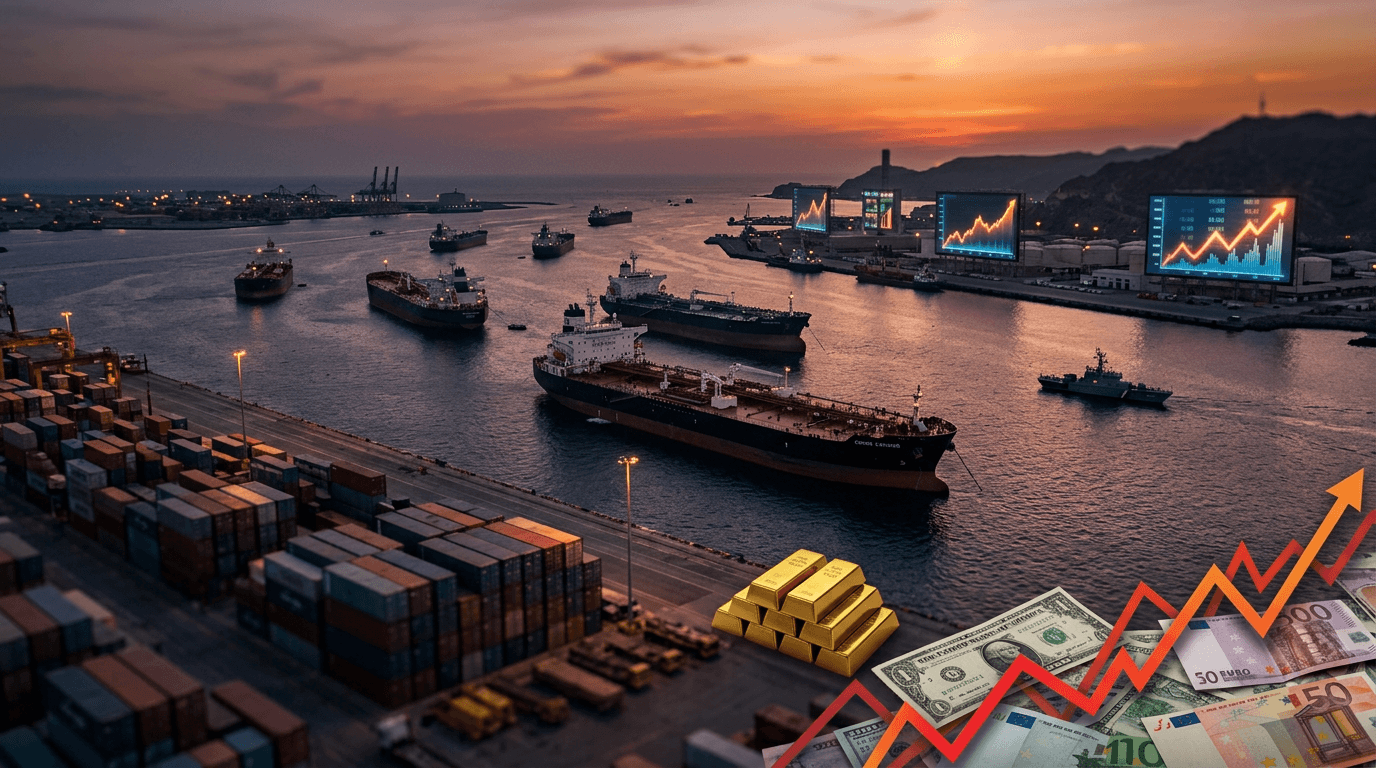
Iran's closure of the Strait of Hormuz marks one of the most significant geopolitical disruptions to global energy markets in recent years, sending shockwaves through financial markets and forcing traders to reassess risk exposure across commodities, currencies, and alternative assets. As of early March 2026, the situation has escalated dramatically, with Iran's Revolutionary Guards declaring the critical waterway closed and threatening military action against any vessels attempting passage. This development represents far more than a regional dispute—it is a direct threat to global energy security and a catalyst for substantial market volatility that is reshaping investment strategies worldwide.
The Critical Importance Of The Strait Of Hormuz
To understand why Iran's blockade matters so profoundly, one must grasp the sheer volume of global commerce flowing through this narrow passage. The Strait of Hormuz, at just 33 kilometers wide at its narrowest point, serves as the gateway for approximately 20 percent of the world's oil consumption—roughly 20 million barrels passing through daily. For context, losing access to 19 billion barrels worth of supply would fundamentally alter global energy dynamics. The strait is not merely an oil highway; it also channels approximately one-third of the world's maritime fertilizer shipments, making any prolonged closure a threat to global food security and agricultural markets.
What makes this bottleneck so strategically vulnerable is precisely its geographic constraints. Over 150 tankers are currently anchored on either side of the strait, unable to proceed. For shipping companies and energy traders, this represents both an immediate operational challenge and a longer-term uncertainty about when normal traffic patterns might resume. The narrow waterway offers no alternative routes for vessels already committed to transit, forcing decision-makers to choose between waiting in limbo or undertaking costly detours around Africa—a journey that would add weeks to transit times and substantially increase operational expenses.
Global Oil Markets And Energy Price Implications
The market reaction to Iran's closure has been swift and significant. Global oil and gas prices have surged to six-month highs as traders reassess supply availability and geopolitical risk premiums. However, notably, prices have not skyrocketed to the catastrophic levels some feared, suggesting that markets are pricing in either the possibility of a negotiated resolution or the capacity of strategic petroleum reserves to absorb some of the supply disruption. Several nations are reportedly drawing down stockpiles to offset the supply reduction, providing temporary relief even as the situation remains unresolved.
Insurance markets have seized on the new realities more aggressively than oil futures. Major insurers have effectively withdrawn coverage for war risks in the Persian Gulf, dramatically increasing the cost of insuring tanker traffic through the region. This insurance shock compounds the problem for shipping companies: they now face both supply chain delays and extraordinary premium increases that fundamentally alter the economics of energy transport. For traders, this dynamic presents both risks and opportunities, particularly in energy sector equities and derivatives.
The Broader Economic Implications
Beyond oil, the implications ripple through multiple asset classes and real economies. Fertilizer disruptions threaten agricultural production globally, with potential cascading effects on food prices and agricultural commodity futures. Developing nations dependent on fertilizer imports face immediate supply constraints, which could trigger food inflation concerns and central bank policy responses.
From a macroeconomic perspective, the uncertainty surrounding duration and resolution has created a classic flight-to-safety dynamic. Safe-haven assets are experiencing sustained demand: the US dollar has strengthened as investors seek currency stability, gold prices have climbed as a tangible store of value, and Bitcoin has benefited from its positioning as a non-correlated hedge against geopolitical turmoil. For SimFi traders, these divergent asset class movements create a complex portfolio environment where traditional correlations may break down.
What This Means For Traders And Investors
The Strait of Hormuz closure presents several critical considerations for trading strategy. First, this is fundamentally a duration problem: the longer the blockade persists, the more severe economic consequences become. Markets are currently pricing in a relatively near-term resolution, but any escalation could trigger sharp repricing across commodities and risk assets. Second, the situation creates significant basis risk—spot prices may diverge sharply from futures contracts as physical supply actually disappears from available markets while financial contracts continue trading. Third, the secondary effects matter as much as the primary energy disruption: watch agricultural commodities, currency movements, and inflation expectations.
For portfolio managers, this environment demands active risk management. Outright energy exposure requires reassessment, while diversification into non-correlated assets like gold and defensive currencies makes practical sense. The situation also highlights why SimFi platforms matter—they provide a laboratory for stress-testing strategies against tail-risk scenarios like this one, allowing traders to understand their exposures and optimize positioning without committing real capital to uncertain outcomes.
The Strait of Hormuz closure remains a dynamic, evolving situation. As long as it persists, it will remain a dominant driver of market volatility and a crucial factor in every trader's risk calculus.
---