
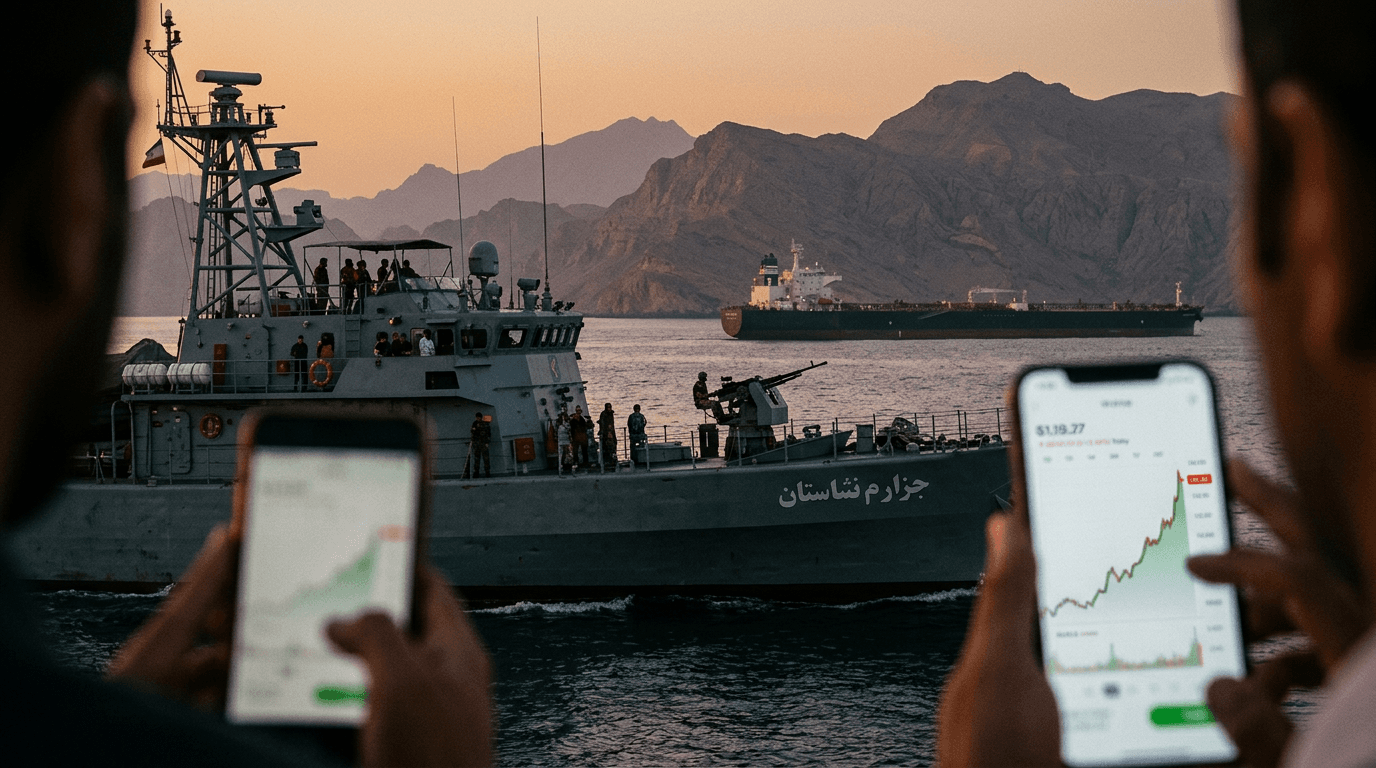
The Middle East erupted into crisis on February 28, 2026, when Iran's Islamic Revolutionary Guard Corps (IRGC) took a dramatic step that sent shockwaves through global energy markets and financial centers worldwide. Following a series of US and Israeli airstrikes on Iranian territory, the IRGC issued a stark warning to commercial vessels: "No ship can pass through the Strait of Hormuz."[1] This announcement, transmitted via radio to ships in the region, threatened to disrupt one of the world's most critical energy chokepoints, raising the specter of economic turmoil not seen since the 1970s oil crisis.
The Escalation And Iran's Response
The tensions that led to Iran's blockade announcement did not emerge in a vacuum. Following coordinated military strikes by the US and Israel against Iranian targets, Tehran responded with a show of force aimed at demonstrating its willingness to use its most powerful economic leverage. The IRGC commander, Ebrahim Javari, told Al Mayadeen TV that "The Revolutionary Guard has implemented the blockade of the Strait of Hormuz following the invasion of Iran."[1] Iranian state media echoed these warnings, declaring that "navigation through the strait is unsafe" due to military aggression and Iran's response.[1]
However, a critical distinction emerged almost immediately. While the IRGC transmitted these warnings via VHF radio, Iran's government stopped short of issuing an official, legally binding declaration of closure.[1] By Sunday, March 1, Iran's foreign minister clarified that the country has "no intention of closing the Strait of Hormuz at present, nor has any plans to do anything that would disrupt navigation in it at this stage."[4] This gap between IRGC actions and official government statements created uncertainty about whether Iran would actually enforce a blockade or simply maintain military pressure through warnings.
Why The Strait Of Hormuz Matters
Understanding the stakes requires grasping the Strait's critical importance to global energy security. The waterway, connecting the Arabian Sea with the Persian Gulf, serves as the main artery for oil exports from Iran, Saudi Arabia, Iraq, and the United Arab Emirates.[1] Approximately 20 to 30 percent of global seaborne oil shipments—roughly 20 million barrels daily—pass through its narrow 24-mile channel.[1] Any disruption to this flow, even temporary, can have outsized effects on oil prices and economic stability far beyond the Middle East region.
This reality explains why Iran has long threatened to close the strait as its ultimate economic weapon. The nation pumped 4.7 million barrels per day last year, accounting for 4.4 percent of global oil supplies,[4] making it a significant energy producer. Yet paradoxically, a complete blockade would also cripple Iran's own vital oil exports, which is why, despite decades of threats, Iran has never before fully carried out such an action.[1]
The Immediate Market Impact
The mere threat of closure triggered immediate and dramatic responses from the shipping and oil industries. Around 750 commercial vessels were transiting through the Strait of Hormuz as of Saturday morning, but the situation rapidly deteriorated.[3] Tanker owners, oil majors, and trading houses suspended shipments via the strait as a precautionary measure, with about 150 tankers dropping anchor in Gulf waters on either side of the waterway.[5]
Oil prices surged 10 percent as trading houses absorbed the blockade risk.[4] Financial analysts estimated that even a single day of full blockade could cause global oil prices to double from $66 per barrel to more than $120.[3] Additional estimates suggest that any Iranian moves to close the strait could send prices to $100 per barrel.[4] Beyond crude oil, insurance rates for ships transiting the Gulf threatened to rise by as much as 50 percent in the coming days, further inflating the cost of energy transport.[3]
Major shipping companies took immediate action. Maersk announced it was suspending all vessel crossings through the strait until further notice, while Greece's shipping ministry advised vessels to avoid the Persian Gulf and surrounding areas entirely.[4] The US Navy told companies it could not guarantee the safety of commercial vessels anywhere in the Persian Gulf.[3]
Key Takeaways And What's Next
The Iran blockade crisis demonstrates how geopolitical tensions in the Middle East can reverberate through global markets within hours. Investors should monitor three critical developments. First, whether Iran escalates from radio warnings to physical enforcement through mines or active naval operations.[5] Second, how quickly oil markets stabilize as traders assess the actual probability of a sustained closure. Third, whether OPEC producers like Saudi Arabia can increase production to offset any disruption to the global supply chain.
For traders and investors, the current situation presents both risks and opportunities. Energy futures markets will likely remain volatile as long as uncertainty persists about Iran's true intentions. Defensive positions in gold and other safe-haven assets may continue attracting capital. Meanwhile, energy stocks and petroleum-focused investments could see significant gains if blockade fears intensify—or sharp declines if tensions ease.
The coming days will be crucial. If Iran and its adversaries find diplomatic off-ramps, markets could reverse these moves quickly. But if military escalation continues, the world economy could face its most significant energy crisis since the 1970s, with far-reaching consequences for inflation, stagflation, and global economic growth.