
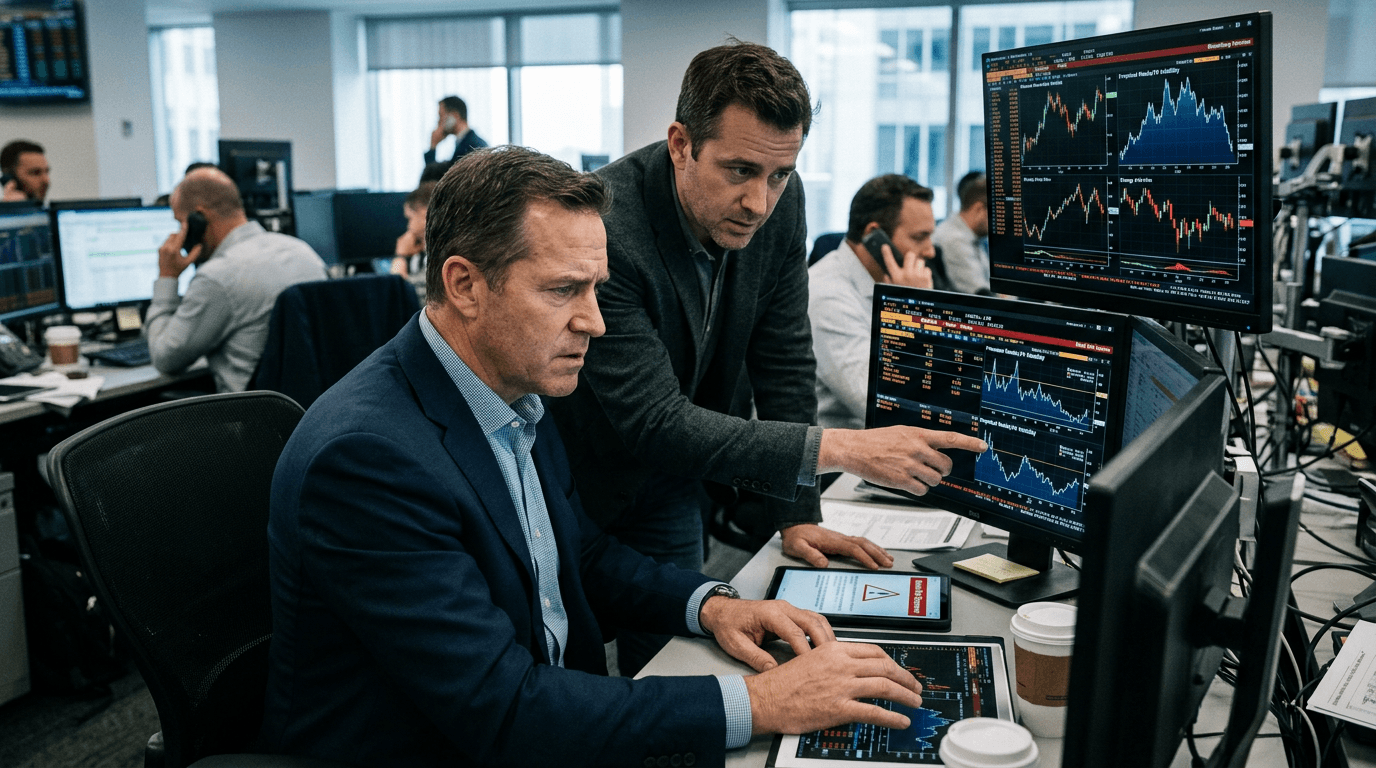
For years, event-driven trading in metals, foreign exchange and energy has largely been the domain of sophisticated futures and options desks. Kalshi’s plan to launch never-expiring derivatives in these asset classes signals a structural shift: retail and institutional traders could soon access targeted, event-linked exposure in FX and commodities without the traditional expiry and roll mechanics that define standard futures.[1][2][3] If regulators approve the expansion, this could reshape how markets trade around macro, geopolitical and seasonal catalysts.[1][2]
WHAT ARE NEVER-EXPIRING DERIVATIVES?
Never-expiring derivatives, often called perpetual futures or “perps,” are futures contracts with no set expiration date.[1][2] Instead of settling on a specific maturity, positions can be held indefinitely, subject to margin requirements and ongoing funding costs.
In traditional futures, traders must roll their positions from one contract month to the next to maintain exposure, which introduces slippage, transaction costs and basis risk. Perpetuals remove that roll, allowing exposure to continue as long as the trader maintains margin and chooses not to close the position.[1][2] In practice, exchanges typically use a funding-rate mechanism, where long and short positions periodically pay each other to keep the perp price anchored near the underlying spot price. That structure matters for event-driven traders: it lets them focus on the catalyst itself, rather than the operational complexity of contract calendars.
KALSHI’S PUSH BEYOND CRYPTO
Kalshi launched the first regulated perpetual futures for crypto in the United States after receiving clearance from the Commodity Futures Trading Commission (CFTC) in May.[1][2] Since launch, trading volumes on these crypto perps have reached roughly $16.1 billion, indicating meaningful appetite for never-expiring exposure in a regulated environment.[1]
Having proven the model in digital assets, Kalshi is now in advanced discussions with regulators to extend perpetuals to metals, FX and energy.[1][2][3] Gold, silver and platinum are early priorities, with the company already seeking approval for perpetual contracts tied to these precious metals.[2][3] Gold in particular is seen as a familiar instrument for both retail and institutional traders, making it a natural bridge from crypto into traditional markets.[2][3]
On the FX side, proposed products would allow traders to take ongoing views on major currency pairs, such as EUR/USD or USD/JPY, without worrying about quarterly expiries. For energy, Kalshi is exploring perps tied to crude oil and other delivered or storable commodities, aligning with a broader CFTC process on how perpetuals should be structured for these markets.[1][2] This places Kalshi directly in competition with established futures exchanges and retail trading platforms that currently dominate commodity and FX derivatives.[2]
Implications For Retail And Institutional Traders
The key implication of Kalshi’s expansion is access. Perpetuals could give a wider range of traders the tools to express views around macro and geopolitical events using metals, FX and energy rather than only stock indexes or short-dated options.[1][2] For example, a retail trader might hold a gold perp heading into a major central bank meeting, expecting policy commentary to move real yields and, by extension, precious metals. An institutional macro fund could run a basket of FX perps around global elections or trade negotiations, adjusting sizing dynamically without dealing with staggered expiries across contracts.
Because positions never expire, these instruments are well suited to themes that evolve over weeks or months: prolonged geopolitical tensions affecting oil supply, extended monetary-tightening cycles impacting currencies, or multi-quarter inflation narratives driving metals.[1][2] Perpetuals make it operationally simpler to stay in those trades as the story unfolds.
At the same time, easier access to leverage and event-driven themes will likely increase liquidity and volatility around key dates. Many perpetual markets permit leverage far above traditional futures, sometimes up to 50 times the contract’s value.[1][2] That amplifies both potential returns and losses when prices react sharply to surprises in data, policy or geopolitics. For active traders, more liquidity and more frequent price swings create opportunity—but also demand tighter risk management.
Event-driven Strategies In Fx And Commodities
Event-driven trading traditionally focuses on discrete catalysts: economic data releases, central bank decisions, elections, OPEC meetings, weather shocks and seasonal demand patterns. Metals, FX and energy are among the most sensitive asset classes to these events, which is central to Kalshi’s thesis.[1][2]
In FX, perpetuals could be used to trade around rate announcements, inflation releases or fiscal policy changes. Instead of choosing between short-dated options, spot positions or rolling futures, traders could hold a perpetual hedge or speculative position that they scale up or down as events approach.
In energy, contracts linked to crude oil or natural gas would allow systematic trading around inventory reports, OPEC+ decisions, hurricane season or shifts in sanctions and supply chains.[1][2] For metals, event-driven flows often follow changes in real yields, inflation expectations and currency strength; gold and silver perps provide a continuous canvas to capture those dynamics.[2][3]
For simulated finance (SimFi) platforms and traders learning in a risk-free environment, these products are particularly instructive. They combine macro analysis with derivatives mechanics, letting traders practice positioning around events, managing margin and understanding leverage and funding in a controlled setting before stepping into live markets.
Risks, Regulation And The Role Of Simulated Finance
The expansion of perpetuals beyond crypto has prompted concern among some regulators and market observers, especially regarding retail participation.[1] High leverage, continuous trading and sharp event-driven moves can be a dangerous mix for inexperienced traders who may not fully appreciate compounding losses or margin-call dynamics.
The CFTC’s decision to seek public input on perpetual contracts tied to energy commodities reflects a cautious approach to design and risk controls.[1][2] Questions include how to manage delivery and storage constraints, how to ensure fair pricing mechanisms, and what safeguards are necessary to protect retail traders engaging in complex, leveraged instruments.
Against this backdrop, SimFi platforms have an important educational role. By mirroring perpetual futures mechanics in a simulated environment, they allow traders to:
- Test event-driven strategies around real-world catalysts without financial risk.
- Experience the impact of leverage, volatility and margin calls.
- Learn how funding rates and position sizing affect long-term P&L.
- Develop rules-based risk management before trading live perps.
For brokers and institutions, Kalshi’s move is also a prompt to rethink product design and client education. As access widens, demand for better margin analytics, scenario modeling and pre-trade risk tools is likely to grow.
Conclusion: Preparing For A New Derivatives Landscape
Kalshi’s push to offer never-expiring derivatives in metals, FX and energy marks a significant evolution in event-driven trading access.[1][2][3] If approved, these products will blend the continuous exposure of spot markets with the leverage and flexibility of futures, but without the hassles of contract expiry.
For traders, the opportunity is clear: more precise ways to express views on macro and geopolitical events across multiple asset classes. The challenge is equally obvious: managing leverage, volatility and complex product mechanics in a way that is sustainable over time. Using simulated finance tools to experiment, learn and stress-test strategies before deploying real capital may be one of the most practical ways to prepare.
As perpetuals move from crypto into the heart of traditional markets, those who invest in understanding them—both their power and their risks—will be best positioned to navigate the next phase of derivatives innovation.