
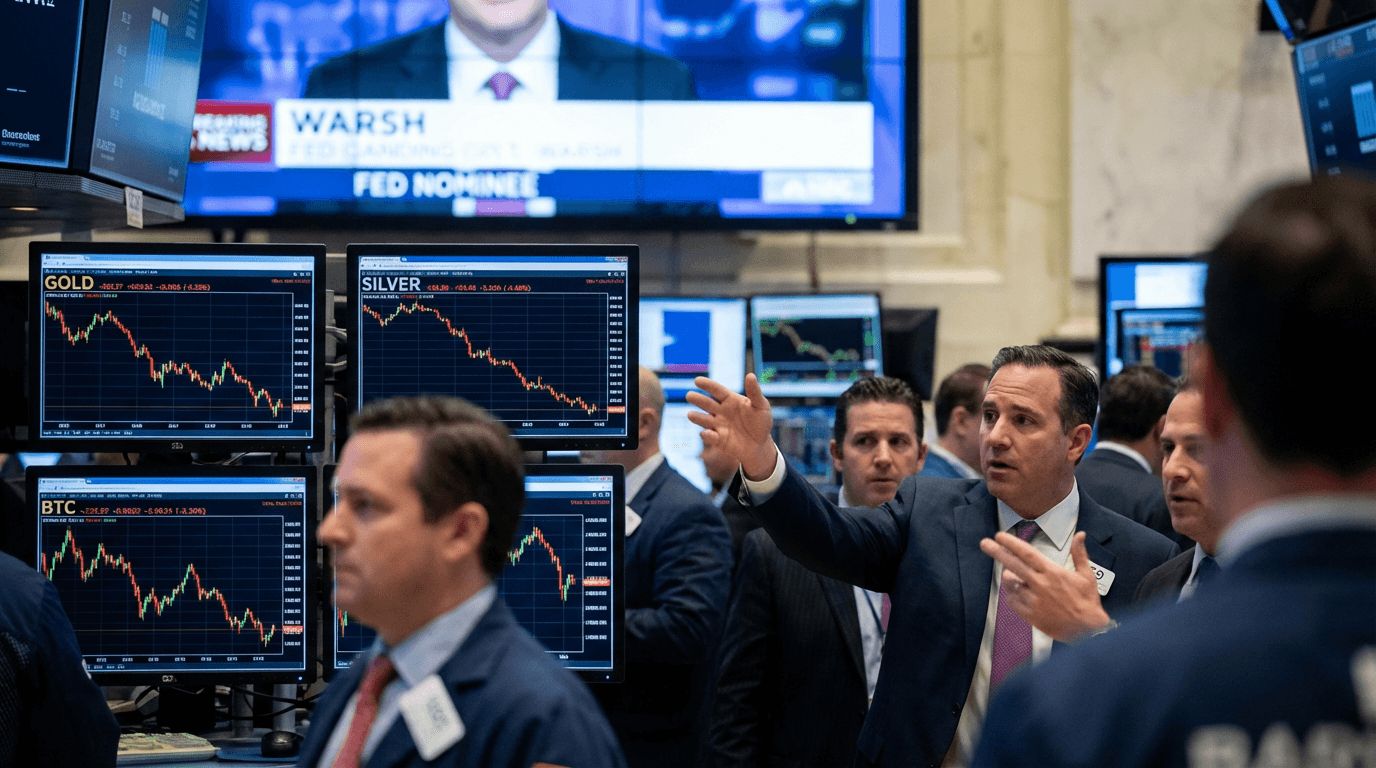
President Trump's nomination of Kevin Warsh as the next chairman of the Federal Reserve sent shockwaves through global financial markets on January 30, 2026. The announcement triggered an immediate and dramatic repricing of risk assets, particularly among commodities and cryptocurrencies that had been riding high on expectations of continued monetary easing. Gold prices plunged from recent record highs, while silver experienced a devastating 31.4% selloff. Bitcoin and other cryptocurrencies also faced significant selling pressure as traders reassessed the outlook for interest rates and the U.S. dollar's strength. This market reaction reveals a crucial shift in sentiment: the "debasement trade" that had dominated markets is now being questioned, replaced by renewed focus on Federal Reserve independence and monetary discipline.
The Man Behind The Nomination
Kevin Warsh brings substantial credentials to this pivotal role. A graduate of Stanford University and Harvard Law School, Warsh served as a Morgan Stanley executive before joining the Bush administration as a top economic advisor. His most relevant experience comes from his tenure as a Federal Reserve Governor from 2006 to 2011, when he played a crucial role in steering the institution through the 2008 financial crisis. This background gives him both the technical expertise and real-world crisis management experience that markets view as credible. According to analysts, Trump selected Warsh precisely because financial markets would view him as a serious, credible choice with strong institutional knowledge of how the Fed operates. This credibility with markets stands in contrast to some other potential nominees who might have faced more skepticism from the financial establishment.
Market Interpretation: What The Selloff Tells Us
The immediate market reaction to Warsh's nomination speaks volumes about investor expectations. Treasury rates climbed sharply, the U.S. dollar strengthened substantially, gold prices plunged, and stock futures fell across the board. These moves suggest that markets are interpreting Warsh as a more hawkish choice than investors had anticipated. The collapse in precious metals particularly stands out, as gold and silver had been benefiting from the "debasement trade"—the bet that the Federal Reserve would continue printing money and keeping interest rates artificially low, thereby eroding the dollar's purchasing power. With Warsh's nomination, that narrative suddenly looks uncertain. His long-standing criticism of quantitative easing and advocacy for Federal Reserve independence have convinced many traders that monetary policy is about to shift toward greater discipline and restraint.
Warsh's Policy Framework: What To Expect
Understanding Warsh's actual policy views is essential for investors looking ahead. In recent months, he has advocated for lower policy rates in 2026, driven by a view that productivity gains could support economic growth without igniting inflation. This alignment with Trump's desire for rate cuts might suggest continuity from the Powell era. However, Warsh's historical record tells a different story. He has been sharply critical of the Fed's "mission creep," arguing that the institution has strayed from its core dual mandate of maximum employment and price stability. He has advocated for updating the Fed's forecasting methodology, which he believes fails at identifying economic turning points. A Warsh-led Fed would likely take a more forward-looking approach to monetary policy rather than the backward-looking, data-dependent approach that has dominated recent years. On the balance sheet, his views are complex. While he is known for hawkish critiques of quantitative easing, he has also expressed openness to using the Fed's balance sheet to address housing affordability—a key priority for the Trump administration.
What This Means For Different Asset Classes
The Warsh nomination reshapes the investment landscape across multiple asset classes. For those holding precious metals as an inflation hedge, the narrative has fundamentally changed. If Warsh pursues the disciplined monetary policy that his background suggests, inflation expectations could moderate, reducing the appeal of gold and silver as portfolio insurance. Bitcoin and cryptocurrencies, which have thrived on monetary expansion narratives, face similar headwinds. The stronger dollar, which typically follows hawkish Fed policy, further pressures assets priced in the domestic currency. Bond investors, particularly those in longer-duration securities, face uncertainty. Initial market moves suggest a stabilization in 10-year yields around the 4.20%-4.30% range, but the forward-looking policy approach Warsh favors could lead to less predictable yield movements. Equity investors should prepare for a Fed chair who may be more willing to tolerate higher rates in service of price stability, potentially constraining valuations.
The Confirmation Process Ahead
Warsh's nomination has received substantial bipartisan support in the Senate, suggesting a smooth path to confirmation. Senate Banking Committee Chairman Tim Scott and other key Republican senators have praised the nomination as an excellent choice. The Wall Street Journal Editorial Board called it "President Trump's best second-term appointment." This political support is crucial, as it suggests Senate confirmation could occur relatively quickly, with Warsh potentially taking the helm when Jerome Powell's current term ends in May 2026. As markets digest this nomination over the coming weeks, investors should monitor economic data carefully and reassess their positioning in commodity and inflation-sensitive assets.