
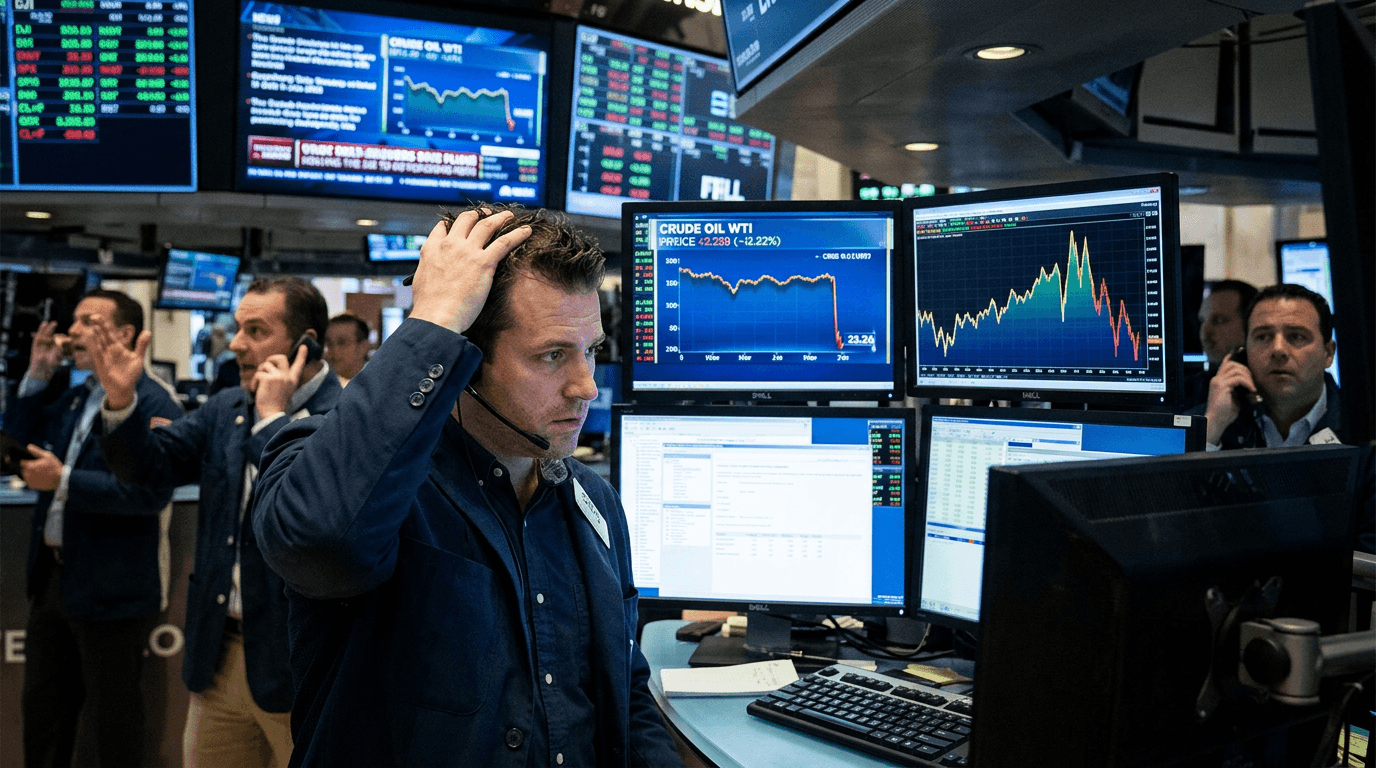
On March 23, 2026, President Trump delivered an unexpected jolt to global markets by announcing the suspension of planned military strikes on Iran's energy infrastructure. He attributed this move to what he described as "very good and productive conversations" with Tehran, aimed at resolving Middle East tensions. The immediate market reaction was dramatic: crude oil prices tumbled by 10 percent, falling below $85 per barrel, while the S&P 500 surged by approximately 200 points, reflecting a swift shift from risk-off to risk-on sentiment. For a fleeting moment, it seemed a significant de-escalation was underway. However, this optimism was short-lived as Iran's leadership quickly refuted the existence of any negotiations, leading to a sharp reversal. Oil prices rebounded to $92, and equities retreated to around the 6,500 mark. This volatility underscores the persistent influence of geopolitical uncertainty on market dynamics and the entrenched skepticism among investors.
The Initial Shock And Market Euphoria
Trump's announcement, made via social media on Monday morning, claimed that the U.S. and Iran had engaged in productive talks over the preceding days. He instructed the Department of Defense to defer military actions against Iranian energy facilities for five days, expressing confidence that a deal was within reach. His remarks about "major points of agreement" and Iran's purported commitment to not pursuing nuclear weapons fueled an optimistic market narrative.
The initial market response was a textbook display of risk-on behavior. Energy traders, concerned about potential supply disruptions from military strikes, quickly adjusted their positions downward. The 10 percent drop in crude prices reflected genuine relief at the prospect of avoiding a broader military conflict. Simultaneously, equities surged, as lower energy costs suggested reduced inflationary pressures and diminished geopolitical risk premiums. This confluence of factors created a powerful momentum, driving the broader market higher during morning trading.
Why Skepticism Rapidly Returned
However, the optimism was short-lived. Iran's Foreign Minister, Abbas Araghchi, issued a categorical denial, stating there had been "no direct or indirect contact" with Trump, dismissing the U.S. president's claims as an attempt to "buy time." Iran's parliament speaker also denied any ongoing negotiations. This created a credibility test between Trump's assertions and Iran's denials, with the market ultimately leaning towards the Iranian position. The gap between Trump's confident claims and Tehran's explicit rejections sowed doubt about the reality of any genuine negotiations or whether this was mere diplomatic posturing.
Several factors fueled trader skepticism. First, the broader context is important: the U.S. and Iran have been engaged in active military conflict following failed negotiations that began in April 2025, with Trump's initial two-month ultimatum. Israel's subsequent attack on Iran had further escalated hostilities. Second, Iran's consistent denials of negotiations, coupled with their firm stance against nuclear weapons development, suggested a strategic choice to present a strong domestic front while potentially signaling openness indirectly. Third, Trump's threat to resume bombing if talks failed within five days added a coercive element, diminishing the credibility of claims about genuine mutual interest in peace.
This ambiguity—was Trump negotiating with legitimate Iranian representatives or secondary figures? Were there actual agreements or merely Trump's interpretation of discussions?—proved toxic to market confidence. Traders cannot sustainably position around contradictory narratives from both sides of a potential conflict.
What Traders Need To Watch
The reversal highlights critical lessons for participants in energy and equity markets. Geopolitical narratives are significant, but only when backed by verifiable facts and consistent signals from credible parties. A single announcement from one leader, however prominent, cannot reliably move markets if it contradicts statements from the other party involved. Furthermore, the sheer volatility—a 200-point S&P 500 surge followed by a retreat, crude swinging from below $85 to $92—demonstrates how fragile conviction remains around underlying assumptions.
In the coming week, several scenarios merit attention. Trump has set a five-day window, meaning critical developments should emerge by approximately March 28, 2026. Will Iran engage in substantive negotiations, or will it continue denying talks to maintain domestic political positioning? Will Trump escalate or seek further diplomatic channels? Will Israel's role evolve, given that Trump specifically did not commit to halting Israeli operations during the negotiating window? The gap between Trump's stated confidence in a deal and Iran's public rejection leaves room for either genuine breakthroughs or dramatic escalation.
Navigating Market Uncertainty
For traders and investors, the prudent approach is to avoid overcommitting to either the peace or conflict narrative based on a single announcement. Instead, position sizing should acknowledge genuine uncertainty, and risk management protocols should account for the possibility of rapid reversals in either direction. The initial 200-point pop followed by a retreat illustrates that while geopolitical risk creates trading opportunities, it also poses genuine risks to portfolios that become too directionally committed too quickly.
Oil prices remain particularly sensitive. A resolution that genuinely reopens the Strait of Hormuz and normalizes energy flows could support additional price declines. Conversely, resumed escalation or failed negotiations could drive oil substantially higher. Equity markets, conversely, benefit most from clarity—whether that clarity points to peace or continued conflict matters less than simply having genuine clarity rather than contradictory claims from both sides.
The week ahead will test whether Trump's optimism reflects actual progress or merely his characteristic confidence in deal-making capacity.
NEWSIMPACTSCORE: 8