
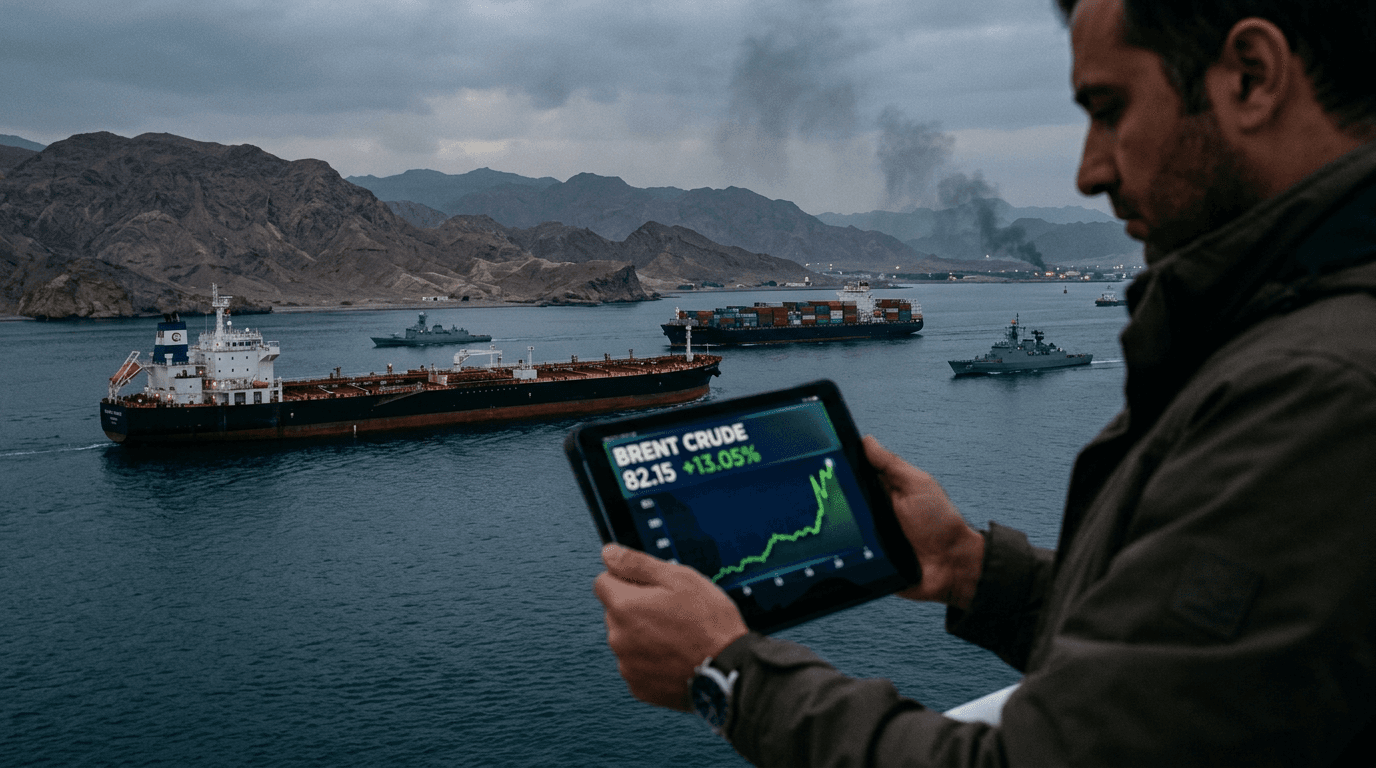
Geopolitical tensions in the Middle East have become a defining driver of global markets in early 2026, with recent escalations triggering swift and significant reactions across energy markets and international trade. The US and Israeli strikes on Iran on February 28 have sent shockwaves through the global economy, demonstrating how quickly regional conflicts can translate into worldwide financial consequences. For traders and investors monitoring simulated finance platforms, understanding these dynamics offers valuable lessons in how geopolitical risk reshapes market behavior and asset allocation strategies.
Immediate Market Reaction To Middle East Tensions
The response in energy markets was dramatic and immediate. Brent crude, the international benchmark for oil prices, surged as much as 13 percent in early trading on March 2, briefly climbing above $82 per barrel as traders rapidly repriced the risk of disrupted energy flows from the Gulf region. This sharp spike reflects a fundamental supply concern: approximately 20 percent of global oil transits through the Strait of Hormuz, the critical shipping lane on Iran's southern border. When geopolitical tensions threaten this vital chokepoint, the entire global energy market feels the pressure within hours.
The scale of the immediate disruption was significant. Around 150 ships had dropped anchor in the Strait of Hormuz at the height of the tensions, including vessels carrying both crude oil and liquefied natural gas. This accumulation of shipping traffic reflects uncertainty and precaution among operators who were unsure whether it would be safe to proceed through the waterway. Additionally, several ports in the Middle East suspended operations following drone strikes, with Jebel Ali port in Dubai, one of the world's busiest container ports, halting operations temporarily due to a fire caused by aerial interception.
Cascading Effects On Global Trade And Inflation
The consequences of this regional escalation extend far beyond oil markets. Energy-importing economies in Europe and Asia face the most acute direct impacts, as they depend heavily on Gulf oil and liquefied natural gas supplies. Analysts have warned that a prolonged closure of shipping routes or continued operational disruptions at major ports could trigger higher inflation and renewed supply-chain volatility on a global scale. This represents the kind of systemic risk that can disrupt multiple asset classes simultaneously.
From a trading perspective, this situation illustrates an important principle: single-point failures in critical infrastructure can have multiplicative effects across the economy. When 20 percent of global oil supply faces potential disruption, it's not just energy traders who react. Shipping companies, airlines, manufacturers reliant on just-in-time supply chains, and insurance providers all reassess their risk exposure within minutes of the escalation becoming clear.
Implications For Portfolio Strategy
Events like these demonstrate why sophisticated traders monitor geopolitical developments closely and maintain awareness of critical global infrastructure vulnerabilities. The speed at which markets repriced risk on March 2 shows that opportunities for quick analysis and decisive positioning exist in the immediate aftermath of such events. Oil price movements, shipping index spikes, and broader market volatility create trading scenarios that reward preparedness and quick thinking.
Safe-haven dynamics typically emerge during periods of geopolitical uncertainty, with investors traditionally rotating toward assets viewed as lower-risk or defensive in nature. While the search results focus primarily on the immediate energy market impact, the broader market response to geopolitical shocks has historically included increased demand for traditionally stable assets and currency movements reflecting changing risk perceptions.
Long-term Trade And Market Considerations
Beyond immediate price movements, this escalation has broader implications for international trade relationships and policy. The disruption to global shipping and energy supplies occurs against a backdrop of shifting trade dynamics, including significant tariff adjustments and evolving relationships between major trading blocs. Energy-dependent economies and those with complex global supply chains face compounded pressures when both geopolitical risk and trade policy uncertainty rise simultaneously.
For traders using simulated finance platforms, events like these provide valuable opportunities to study how multiple market variables interact during crisis periods. The ability to analyze energy prices, shipping indices, currency movements, and equity indices in real-time helps develop the market intuition necessary for understanding how global shocks propagate through interconnected financial systems.
Lessons For Aspiring Traders
This situation underscores several key trading principles. First, systemic vulnerabilities matter significantly for market pricing. When a single shipping lane represents one-fifth of global oil supply, control over that lane becomes a core geopolitical asset. Second, markets react with exceptional speed to tangible supply threats, creating windows where initial price movements may be followed by further repricing as full implications become clear. Third, geopolitical events often create cascading effects across seemingly unrelated markets as traders reassess broader macroeconomic implications.
Understanding how regional conflicts translate into global market movements, recognizing critical infrastructure chokepoints, and maintaining awareness of how energy shocks feed into inflation dynamics all represent essential skills for anyone involved in trading or financial analysis. The Middle East escalation of early March 2026 demonstrates that geopolitical risk remains a powerful and immediate force in financial markets, one that no serious trader can afford to ignore.