
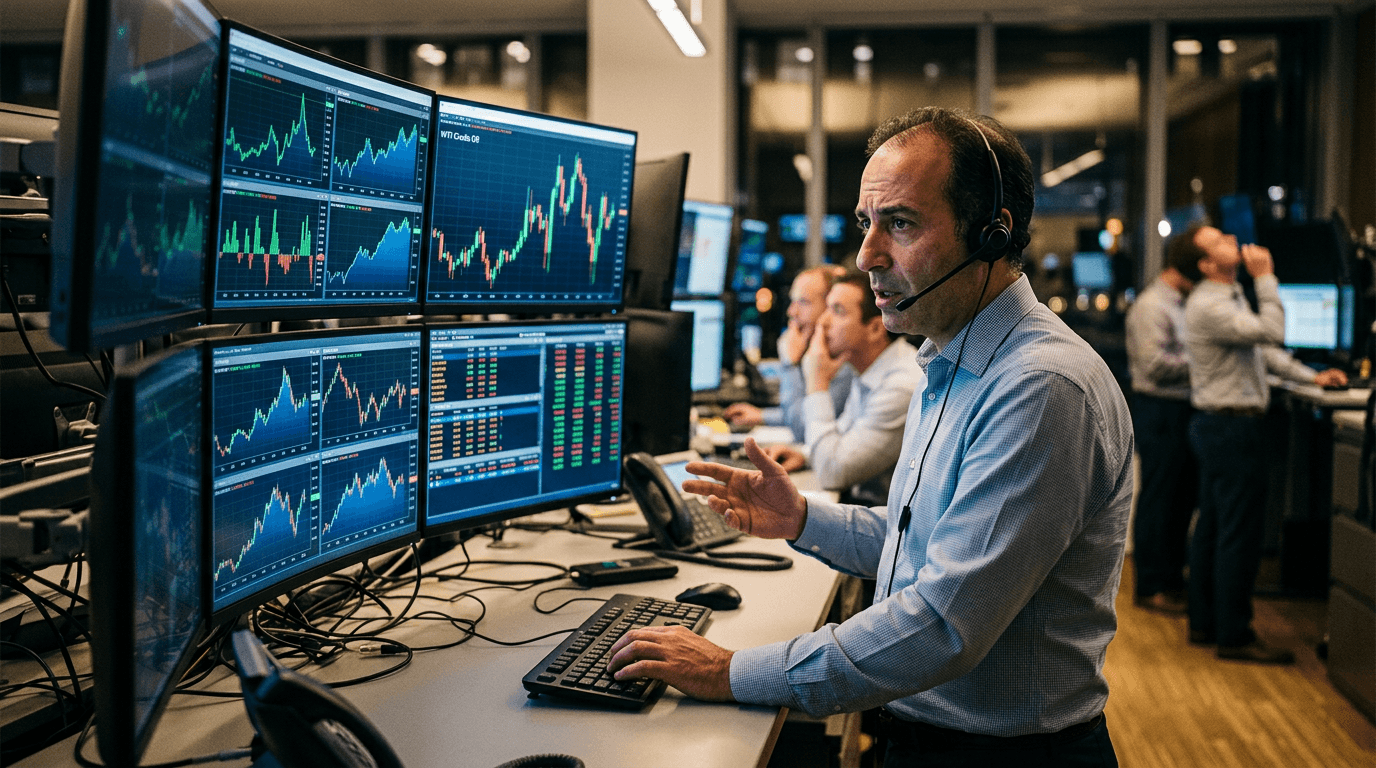
Global markets are once again trading in the shadow of the Middle East crisis, with the Iran conflict keeping volatility elevated across foreign exchange, commodities and futures. Geopolitical risk is colliding with major U.S. data releases like Non‑Farm Payrolls (NFP), creating a powerful mix that drives rapid repositioning in energy futures, safe‑haven assets and high‑beta currencies. For short‑term traders and macro investors alike, this is a regime where headline risk, not just fundamentals, dominates day‑to‑day price action.[2][3][6][13]
Geopolitical Shocks And Why Volatility Stays High
Wars and sudden geopolitical shocks tend to hit markets through a few clear channels: supply disruptions, changes in inflation expectations and shifting risk appetite. The latest escalation involving Iran has pushed up crude oil and natural gas prices as traders reassess the risk of damage to energy infrastructure and disruptions to shipping routes.[2][3][8][13] Higher energy prices feed directly into inflation expectations, forcing markets to rethink central bank paths and discount rates, which in turn lifts volatility across bonds, equities and FX.[8][13]
Evidence from recent months shows a classic risk‑off reaction. Global equity indices have declined, core government bond yields and volatility measures have moved higher, and energy markets have repriced sharply with pronounced price increases in both oil and gas.[3][8][13] Indicators like the VIX have spiked above 30 at points of maximum tension—levels associated with stress events rather than normal market fluctuations.[8] In this environment, volatility is not a brief spike; it becomes a regime that can persist as long as uncertainty about the conflict’s trajectory remains high.[12][13]
FX MARKETS: SAFE HAVENS VS HIGH‑BETA CURRENCIES
Foreign exchange markets typically sit at the center of any global shock, reacting quickly to shifts in risk appetite and energy prices. The current Middle East crisis has driven a broad appreciation of the U.S. dollar against both major and emerging‑market currencies, as investors seek the relative safety and liquidity of the world’s reserve currency.[2][3][10][11] At the same time, traditional safe‑haven currencies such as the yen and, at times, the euro and Swiss franc have benefited when headlines point to de‑escalation, illustrating how FX flows can swing sharply as news evolves.[4][11]
The stress is most visible in emerging‑market FX. An index tracking EM currencies recently logged its worst session since late 2024 as the dollar jumped and traders dumped risk assets amid fears of a prolonged Middle East conflict.[2] JPMorgan’s measure of one‑month EM FX volatility has risen to its highest level since the previous major tariff shock, underlining how carry trades and high‑yield currencies can experience abrupt reversals when geopolitical risk rises.[4][11] Central banks in India, Indonesia and Turkey have intervened in FX markets to stabilize currencies at unprecedented lows, highlighting how policy responses are part of the volatility story.[2][9]
For Asia and Europe, the channel is often energy dependence. A sustained spike in crude prices tends to put pressure on the euro and the yen, as higher import costs worsen terms of trade and weigh on growth expectations.[11] Polls show that investors have scaled back long positions in Asian currencies as Middle East tensions dent risk appetite and drive renewed demand for the dollar.[10] The key takeaway for traders: FX moves in this environment are often driven more by positioning and risk sentiment than by incremental data points.
Energy, Gold And Futures: Where Risk Is Concentrated
Commodities sit at the heart of the current episode. Crude oil prices have been held above key levels—often near or above $100 per barrel—by fears over supply disruptions and the potential for further strikes on energy infrastructure.[8][9][13] This has led to sharp repricing across the energy complex, with both spot and futures curves reflecting higher risk premia. Futures traders are seeing wider bid‑ask spreads, higher margin requirements and more frequent intraday swings in contracts linked to oil, gas and refined products.[3][8]
Gold, the classic safe‑haven asset, has also attracted flows as investors hedge tail risks from the conflict and broader financial instability.[2][3][6][8] At times, however, gold’s behavior has been nuanced: higher real yields and broad dollar strength can cap its upside, producing episodes where gold retraces even in a risk‑off world.[3] That tension creates opportunities for relative value trades—such as long gold vs short high‑beta commodities, or volatility spreads between energy and precious metals.
Beyond commodities, futures on equity indices, rates and volatility are seeing heavy use as institutional investors adjust risk exposure. Credit spreads have widened alongside energy price volatility, and options markets are pricing in larger potential moves across risk assets.[3][6][13] For systematic traders and SimFi users, this is an environment where understanding cross‑asset linkages—oil to inflation to rates to FX—is critical to building robust strategies.
Data Risks: How Nfp Amplifies Geopolitical Volatility
The current volatility is not purely geopolitical; it is amplified by the timing of major U.S. macro data releases. Non‑Farm Payrolls, CPI and other key indicators directly affect expectations for Federal Reserve policy, which is a central driver of global liquidity and the dollar’s path.[5][11][13] When NFP hits at a moment of heightened Middle East tension, the result is often outsized reactions as traders try to digest both a fundamental signal and shifting headline risk at once.
Market commentary has highlighted that traders are closely watching crude oil, gold and key FX pairs heading into NFP, as the combination of geopolitical risk and major U.S. data drives active repositioning in energy futures, safe‑haven assets and high‑beta currencies.[2][3][6] A stronger‑than‑expected NFP print may reinforce dollar strength and weigh further on EM FX and risk assets; softer data could spark relief rallies, but those moves can be quickly faded if conflict headlines worsen again.[4][12] The message for traders is clear: data releases are now volatility events layered on top of an already unstable backdrop.
Practical Takeaways For Traders And Simfi Users
In a market regime where the Middle East crisis keeps global volatility elevated, traders need a playbook that blends macro awareness with disciplined risk management:
- Respect the regime shift: Assume higher average volatility and fatter tails. Position sizing, leverage and stop‑loss policies should reflect that price moves can be sharper and more correlated across assets than in calmer periods.[8][12][13]
- Watch the energy channel: Track crude and gas futures closely, as they remain key drivers of inflation expectations, central bank pricing and FX trends, especially for energy‑importing regions.[3][8][11][13]
- Separate signal from noise: Not every headline is tradable. Focus on confirmed changes in supply, policy or military posture and how they feed into macro variables, rather than reacting to every rumor.
- Use scenarios: Map out different paths for the conflict and associated market responses—persistent escalation, temporary truce, or faster normalization—and plan how your FX, commodity and futures strategies would adapt under each.[11][12][13]
- Practice in a risk‑free environment: Simulated finance platforms allow traders to test how strategies perform under high‑volatility, news‑driven conditions without risking real capital. This can be invaluable for refining execution, stress‑testing portfolios and learning how cross‑asset relationships behave when geopolitics are in the driver’s seat.
In the current environment, volatility is not just a problem; it is also a source of opportunity for those who understand the macro narrative and manage risk with discipline. The Middle East crisis, the Iran conflict and the interplay with U.S. data are likely to keep markets on edge for some time. Traders who stay informed, flexible and scenario‑driven will be best placed to navigate—or simulate—the next wave of global macro shocks.