
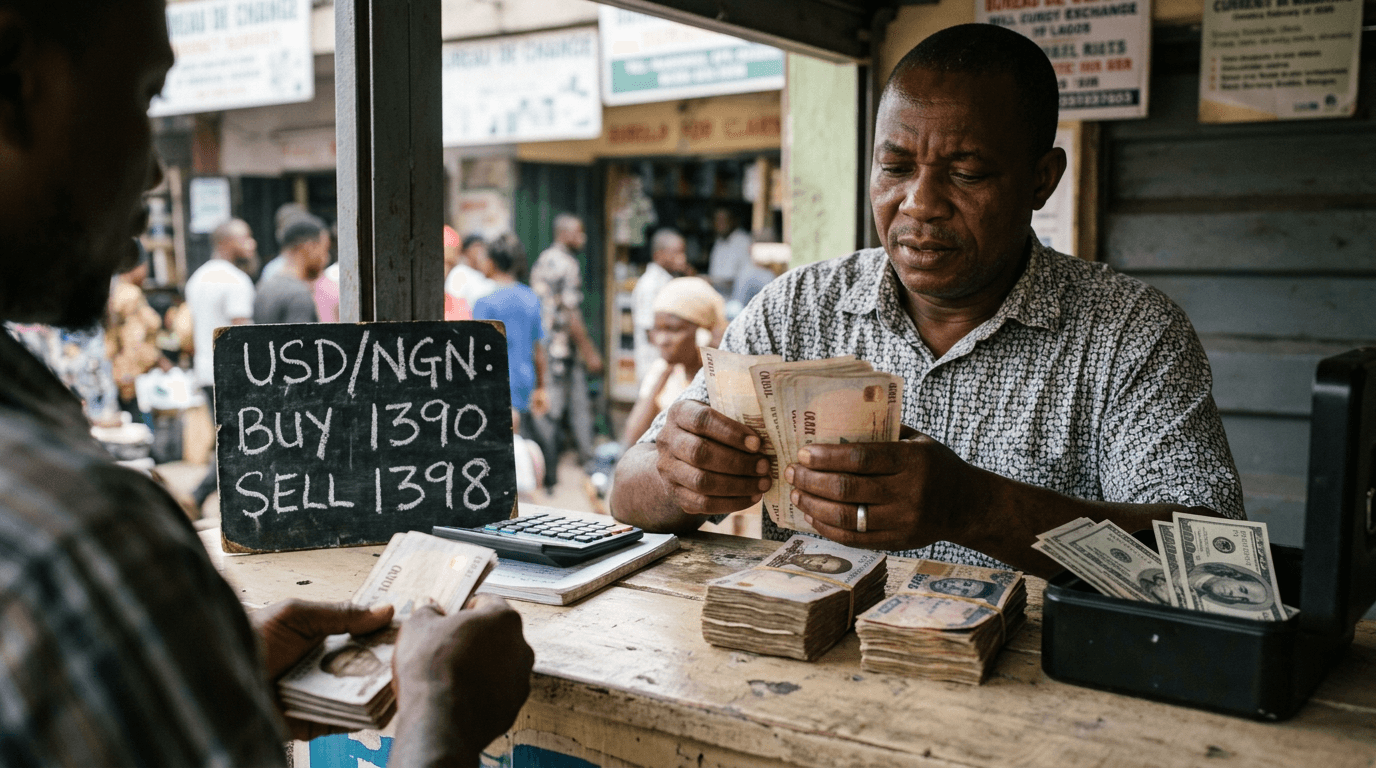
The Nigerian Naira's recent depreciation to N1,398 per US Dollar marks a significant milestone in the country's foreign exchange dynamics, representing the weakest level the local currency has reached since the beginning of 2026. This depreciation signals mounting pressure on the Naira amid ongoing forex market challenges that continue to shape Nigeria's economic landscape and impact both traders and businesses operating within the SimFi and traditional finance sectors.
Understanding the context of this depreciation is crucial for market participants seeking to navigate the complexities of emerging market forex dynamics. In early February 2026, the Naira weakened substantially as demand for foreign exchange surged across multiple sectors. The movement toward N1,398/$ occurred during a period when the Central Bank of Nigeria (CBN) faced competing pressures from various market forces, illustrating the delicate balance the institution must maintain between supporting economic growth and stabilizing the currency.
Factors Driving The Depreciation
Multiple macroeconomic and market-specific factors contributed to the Naira's weakness during this period. The CBN's recent monetary policy adjustments, including a 50-basis-point cut to the Monetary Policy Rate (MPR) bringing it to 26.50%, signaled a shift toward supporting economic growth. While this move was necessary for stimulating economic activity, currency markets often interpret interest rate cuts as potentially weakening for domestic currencies, as they can reduce the attractiveness of local currency assets to foreign investors.
Corporate demand for foreign exchange intensified as manufacturers began preparing for the second quarter of 2026, replenishing inventories and securing necessary imports. This seasonal pattern, while predictable, creates upward pressure on the dollar exchange rate during specific periods of the year. Additionally, the parallel market's spread widened during this time, with informal trading rates reaching between N1,375 and N1,382 per dollar, indicating that even outside official channels, depreciation pressures were evident.
The Divergence From January Peaks
Comparing the Naira's performance across early 2026 provides valuable insights into currency volatility patterns. The year began with extraordinary weakness, as the Naira hit N1,445.70 per dollar on January 1, 2026, marking the most significant depreciation of the period. The subsequent movement toward N1,398 in early February represented a partial recovery in the currency's value, suggesting that interventions and market adjustments were having some moderating effect.
However, the fact that the Naira returned to N1,398 levels just weeks later demonstrates the persistence of underlying depreciation pressures. This pattern indicates that improvements in the Naira's valuation may be temporary without sustained structural changes in the factors driving forex demand. For traders and investors, this volatility underscores the importance of understanding both short-term technical movements and longer-term fundamental drivers.
Implications For The Broader Market
The Naira's weakness at N1,398/$ carries meaningful consequences for Nigeria's economic participants and has ripple effects across emerging market forex dynamics. For importers and businesses dependent on foreign inputs, weakening exchange rates increase the cost of goods and services, potentially fueling inflationary pressures. Manufacturing companies that rely on imported raw materials face higher production costs, which they may pass on to consumers or absorb as reduced margins.
For traders operating within SimFi platforms and traditional forex markets, depreciation creates both challenges and opportunities. The wider spreads between official and parallel market rates can create arbitrage opportunities, while the volatility itself generates trading opportunities for those with appropriate risk management frameworks. Understanding these dynamics helps traders position themselves effectively as currency movements unfold.
The depreciation also affects Nigeria's external reserves and the CBN's capacity to intervene. However, officials have noted that external reserves remain at multi-year highs, providing the central bank with sufficient ammunition to smooth temporary currency fluctuations. This buffer is critical for maintaining market confidence and preventing further depreciation spirals.
Forward Outlook And Market Positioning
As the Naira navigates pressures toward weaker levels, market participants should monitor several key indicators. Nigeria's stable oil production at approximately 1.46 million barrels per day continues to provide a steady stream of petrodollars, which remains the primary source of foreign exchange inflows. Any disruptions to oil production or changes in global oil prices would significantly impact future exchange rate trajectories.
The convergence trend between official and parallel market rates, which has been successful over the longer term, helps demonstrate that market fundamentals rather than pure speculation are driving most movements. This suggests that while depreciation may continue, dramatic swings driven by panic or capital flight appear less likely given the current market structure.
For businesses and traders, the lesson from the Naira hitting N1,398/$ is clear: volatility remains a defining characteristic of emerging market currencies. Implementing robust hedging strategies, maintaining adequate foreign exchange reserves, and staying informed about central bank policy decisions are essential for managing exposure to ongoing currency fluctuations in Nigeria's forex market.