
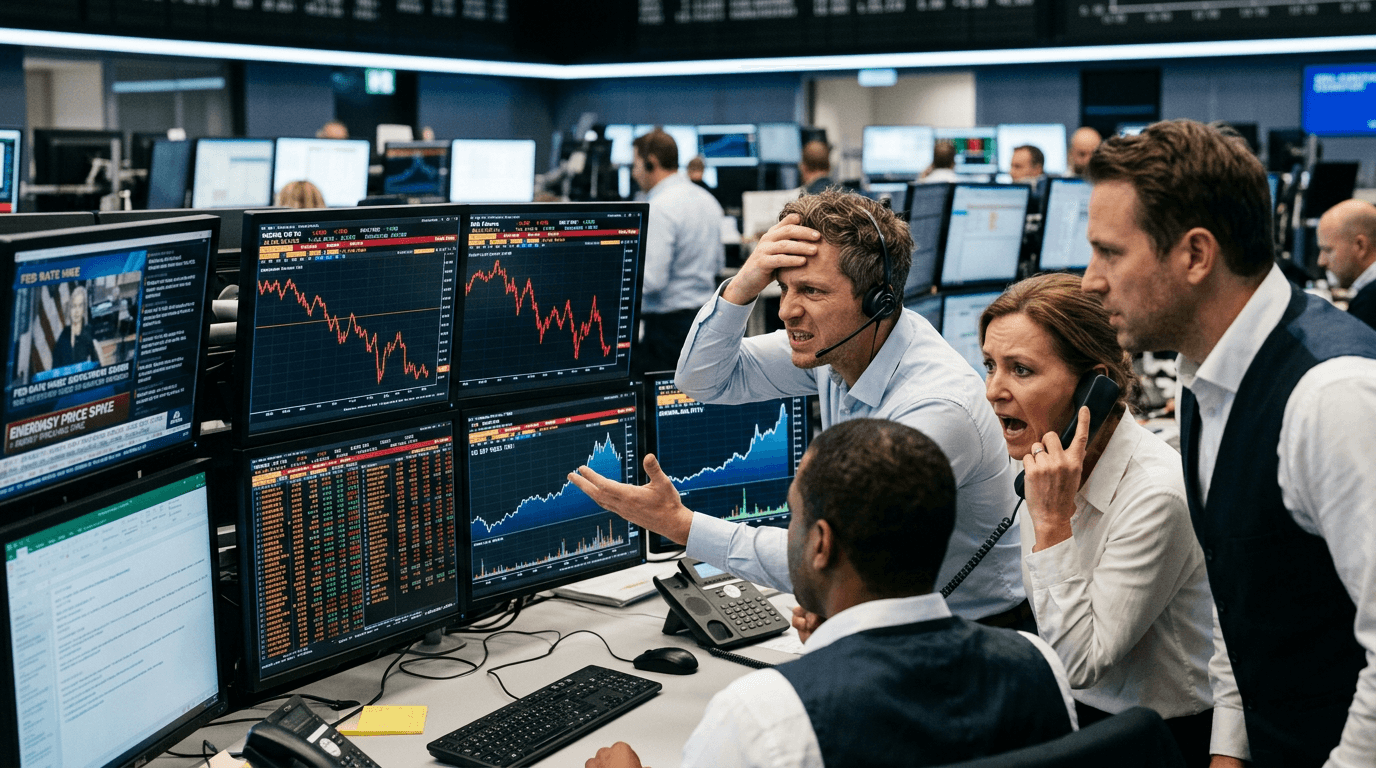
Navigating the Turbulent Waters of NASDAQ 100 and DAX Futures Amid Rate Hikes and Energy Volatility
As US interest rates surge and geopolitical energy pressures mount, equity futures markets are caught in a whirlwind of volatility. Traders must now navigate a landscape where the NASDAQ 100 and DAX indices are buffeted by these macroeconomic forces, leading to frequent intraday rallies followed by sharp selloffs and persistent overnight weaknesses testing support levels.
Decoding the Rate-Driven Turbulence
In 2024 and beyond, rising US interest rates stand as a formidable challenge for equity markets. Higher borrowing costs undermine the valuation multiples of technology stocks and growth companies that dominate the NASDAQ 100 index. As risk-free rates escalate, the present value of future earnings diminishes, making high-priced growth stocks less appealing compared to fixed-income alternatives. This repricing is especially pronounced in the NASDAQ 100, which is heavily weighted with companies bearing elevated valuations and uncertain near-term profitability.
The Federal Reserve's policy decisions have become the epicenter of market focus. Each rate decision and economic data release reverberates through equity futures, prompting traders to swiftly adjust their expectations for future monetary policy. The March E-mini Nasdaq futures capture this sensitivity, with market participants continuously realigning their positions based on emerging inflation data, employment reports, and Fed communications. The emotional rollercoaster is palpable: a favorable inflation report may trigger a rally, only to be reversed when traders anticipate prolonged higher rates.
Energy Costs and European Sensitivity
The energy aspect of this volatility narrative looms large, especially for the DAX. The German blue-chip index is acutely sensitive to energy price fluctuations due to Europe's manufacturing sector's reliance on stable and affordable power supplies. War-induced energy price spikes inject uncertainty for companies grappling with volatile input costs while managing customer relationships. The DAX, fluctuating around the 17,000-18,000 range during volatile periods, significantly reacts to energy futures and geopolitical risk sentiment.
In contrast to the NASDAQ 100, whose companies often pass costs to consumers or operate with lesser energy intensity, European industrial firms face constrained profit margins when energy costs soar. This structural difference explains the DAX's choppier price action and the need for European traders to constantly reassess their exposure to cyclical versus defensive positions. Volatility in DAX futures stems not only from macro uncertainty but also from sector rotation as investors abandon energy-dependent industrials.
Interpreting Volatility Data
Recent volatility indices offer crucial insights into understanding market sentiment. The Nasdaq-100 Volatility Control Index, which gauges implied volatility and manages risk exposure automatically, has shown significant fluctuations throughout 2024. These movements indicate that professional investors are actively managing downside risks and reducing exposure to outsized moves. Rising volatility indices signal that options traders are pricing in elevated uncertainty, often preceding substantial intraday swings in equity futures.
March E-mini Nasdaq futures have exhibited daily swings ranging from -1.45% to +1.83% during individual sessions, reflecting the tension between positive economic data supporting equity valuations and hawkish Fed signals that push rate expectations higher. Intraday volatility clustering presents opportunities for tactical traders but poses challenges for those holding overnight positions.
Strategic Insights for Traders
The current environment favors traders who understand that volatility clusters around specific economic releases and Fed communications. Notably, opening gaps between overnight and daytime trading sessions have been pronounced as European and Asian sessions react to energy price movements before North American markets open. This creates vital entry and exit signals for systematic traders who monitor overnight market movements.
Institutional buyers are drawn to dips, believing equity valuations can stabilize at lower levels, but rallies are consistently suppressed due to persisting rate concerns. This dynamic suggests a market in search of equilibrium, with buyers and sellers vying for control at key technical levels. The NASDAQ 100, sensitive to rates, tends to move more dramatically than the DAX during macro-driven sessions, while the DAX experiences sharp swings linked to energy-specific news.
Essential Takeaways for Simulated Traders
Grasping these volatility drivers offers valuable lessons for virtual traders in SimFi environments. First, macro headwinds necessitate conviction and active risk management rather than passive holding. Second, index composition plays a crucial role in navigating volatile markets—NASDAQ 100's tech focus contrasts with DAX's exposure to European industrials. Third, overnight gaps and volatile opening sessions provide key trading opportunities for those ready to act swiftly. Lastly, volatility itself isn't detrimental for traders; it's the unpredictability that demands careful position sizing and disciplined stop-loss management.
As rising rates intersect with energy pressures, a complex yet manageable trading environment emerges for those who comprehend the underlying mechanics.