
NASDAQ 100 Futures: Navigating the Storm of Rising Rates and Energy Costs
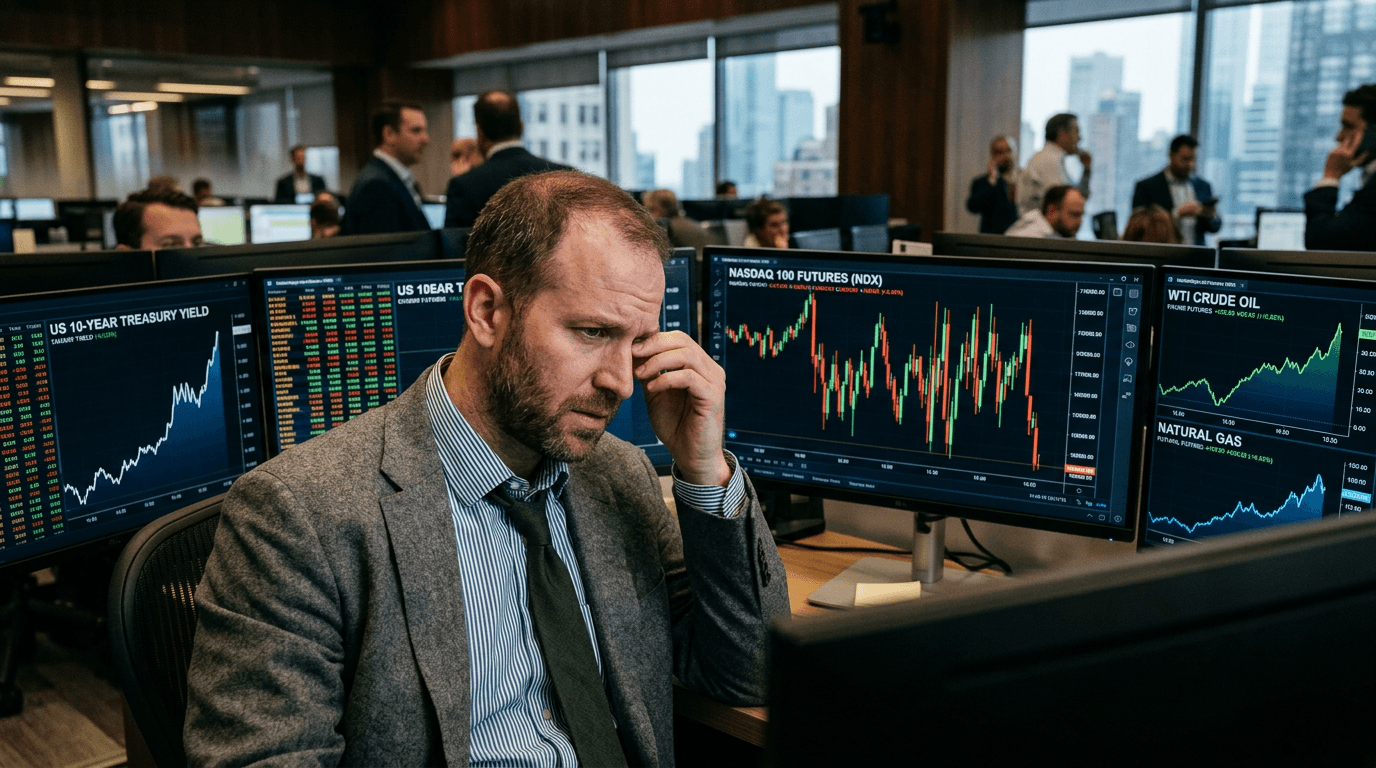
As the NASDAQ 100 Futures market weathers a storm of heightened volatility, investors find themselves grappling with a landscape shaped by formidable macroeconomic forces. Recent trading sessions have seen technology and AI-related stocks under significant pressure, with the Nasdaq 100 Index sliding by 1.91% in a single day amid broader market sell-offs. This turbulence is born of a complex interplay between rising interest rate expectations and surging energy costs, both of which heavily impact the high-growth stocks that dominate the NASDAQ 100. For traders utilizing simulated finance platforms, these conditions offer a real-world laboratory to explore how macro forces influence index futures.
The Macroeconomic Forces At Play
The current market climate is rife with uncertainty for NASDAQ 100 futures traders. Rising interest rates apply pressure on growth-oriented equities, diminishing the present value of future earnings. Concurrently, soaring energy costs ripple through the economy, squeezing corporate profits and increasing operational expenses across the board. These dual challenges are particularly pronounced for tech companies and AI-focused firms, which had previously soared to lofty valuations. As a result, traders in NASDAQ 100 futures are facing a reevaluation of risk, contrasting sharply with the optimism of past market cycles.
This volatility is not mere noise; it is a reasoned response to real questions about valuation and economic trajectory. Rising rates necessitate recalibrations in valuation models, while energy costs, driven by geopolitical factors or supply issues, directly impact corporate earnings. For those practicing strategy in simulated markets, this scenario underscores the dominance of macroeconomic factors in shaping short-term price movements.
Tech And Ai Stocks Under Scrutiny
The pressure on NASDAQ 100 futures is not evenly distributed. Semiconductor and software giants have suffered particularly steep declines, with some chipmakers experiencing drops exceeding 11% in a single session. These downturns stem from lackluster sales guidance and the absence of robust AI revenue forecasts that once buoyed valuations. Analysis from Goldman Sachs highlights significant year-to-date declines in mega-cap tech stocks like Microsoft and Amazon, driven by investor skepticism over AI spending returns and the viability of substantial infrastructure investments.
This selective weakness creates a pronounced divergence within the NASDAQ 100, influencing futures pricing. With the index heavily tilted toward technology, sector-specific weakness disproportionately affects overall performance. Traders must remain vigilant to individual stock dynamics and sector rotation risks. The current environment illustrates how index futures prices are shaped not only by broad market trends but also by the specific composition of underlying stocks.
Volatility Metrics Indicate Heightened Uncertainty
The CBOE NASDAQ 100 Volatility Index reveals significant uncertainty surrounding near-term market moves. Historical volatility has spanned from lows of 9.01 to peaks near 47.52, indicating expectations for substantial price swings in NASDAQ 100 futures. Volatility typically heightens during periods of valuation disagreements or when new data prompts investors to reassess assumptions. This environment confirms that current market choppiness reflects genuine macroeconomic adjustments rather than temporary trading noise.
For traders in simulated finance settings, elevated volatility presents both challenges and opportunities. Greater price swings increase the stakes for entry and exit decisions, but also offer opportunities for those who can spot oversold conditions or identify price detachment from fundamentals.
Strategic Insights For Nasdaq 100 Futures Traders
Firstly, it is crucial to understand that current market volatility is a rational response to macroeconomic pressures, not a product of panic. Rising interest rates and energy costs are real factors influencing valuations. Secondly, the technology sector's weakness has an outsized impact on NASDAQ 100 futures due to the index's structure. When mega-cap tech stocks struggle, the entire index feels the pressure. Thirdly, elevated volatility brings both risk and opportunity, necessitating careful position sizing and risk management to handle wider price fluctuations.
Fourth, distinguish between short-term volatility and medium-term trends. While current weakness reflects valuation adjustments, it does not guarantee a sustained downward trend. Many traders view market dips as chances to acquire assets at more appealing valuations. Fifth, keep a close eye on macroeconomic data releases. Reports on inflation, interest rates, and energy markets will continue to drive NASDAQ 100 futures volatility.
This market environment serves as a reminder that index futures prices are a complex amalgam of interest rates, sector fundamentals, and macroeconomic conditions. By comprehending these dynamics through simulated trading, participants can refine their analytical skills and navigate real market conditions with increased sophistication and disciplined decision-making.