
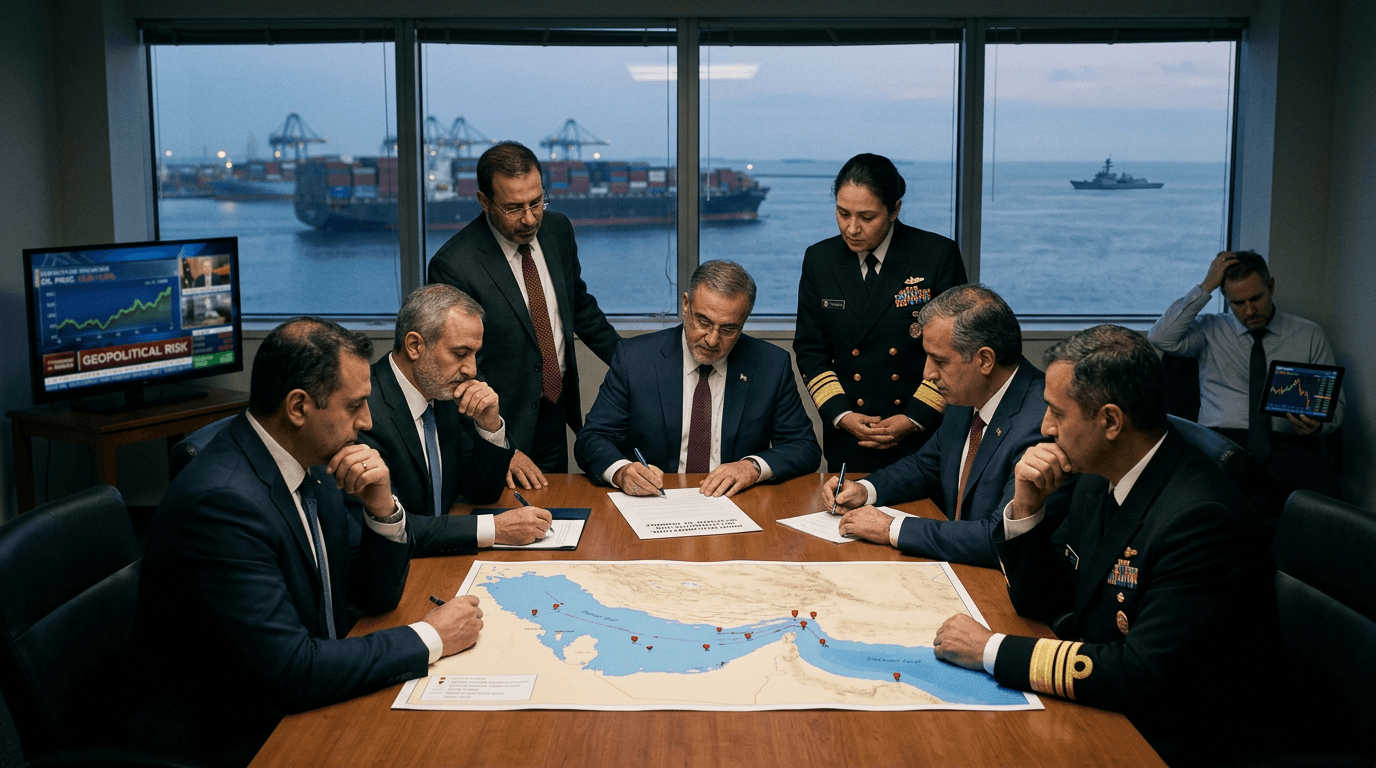
The geopolitical scene has been shaken as seven key U.S. allies have thrown their weight behind a potential coalition to reopen the Strait of Hormuz, a crucial maritime route for global trade. This joint declaration is a symbolic nod to President Trump's efforts to tackle the shipping crisis, yet it comes with significant conditions and uncertainties that could influence trading dynamics in the coming weeks.
The Coalition Takes Form
On March 19, 2026, the United Kingdom, Germany, Italy, the Netherlands, Canada, France, and Japan collectively denounced Iran's aggressive actions against commercial vessels and the blockage of the Strait of Hormuz. NATO Secretary General Mark Rutte confirmed active discussions among allies to restore the critical passage, which has seen disruptions threatening global trade. This marks the first unified diplomatic response to a significant tension point in global energy markets. However, the declaration stops short of committing any nation to deploy military forces, highlighting a key distinction for market observers.
For traders evaluating geopolitical risk premiums, this announcement serves more as a political statement in response to Trump administration pressures than a concrete commitment to military action. Nations such as France, Germany, Italy, and Japan have explicitly stated their unwillingness to send warships to the strait amidst ongoing conflict, creating a gap between symbolic support and actual military engagement that could fuel volatility in energy futures, currency markets, and risk assets.
The Political Pressure Behind The Support
President Trump has been outspoken about his expectations for NATO allies to assist with reopening the strait. His public critiques of nations reluctant to offer military support, coupled with warnings about NATO's future, have exerted considerable pressure on European governments. The U.S. strategy combines military strikes on Iranian installations with diplomatic efforts to forge a multinational coalition for naval support.
The timing of Trump's involvement is critical for market positioning. With administration statements indicating the operation could continue for several weeks, the prolonged closure of the strait could drive up global energy prices and heighten geopolitical risk premiums in currency and commodity markets. Traders are already factoring in extended disruption scenarios, with crude oil price trends reflecting growing uncertainty about when normal shipping might resume.
What The Declaration Really Means
The joint statement calls on Iran to cease its threats, including mine-laying and missile attacks against commercial shipping. While allies expressed willingness to aid safe passage and initiate planning, the language remains intentionally vague about specific military commitments. The United Kingdom has taken the most definitive step by sending officers to U.S. Central Command in Tampa for coalition planning, indicating a genuine but limited operational commitment.
This cautious approach reflects the complex political landscape European allies face. After tensions over military spending, Ukraine policy, and Greenland pursuits, European leaders encounter domestic limits on military deployment to a conflict they had little role in starting. Thus, signing a symbolic declaration allows these nations to show support for U.S. leadership while postponing substantial military involvement.
Trading And Risk Management Implications
For forex, futures, and risk market participants, the Strait of Hormuz situation remains a consistent source of volatility and opportunity. The coalition's announcement offers some comfort that diplomatic efforts are advancing, potentially easing catastrophic scenarios where the strait stays blocked indefinitely. However, the gap between political rhetoric and military action keeps the situation highly uncertain.
Energy markets are directly impacted, with oil prices staying elevated due to shipping disruptions and supply concerns. Progress in coalition preparations could lead to a significant price drop, while delays or failed talks might push prices higher. Currency traders should watch how nations fulfill their vague commitments, as this could signal broader geopolitical and trade policy shifts under the Trump administration.
The reopening timeline is crucial for macroeconomic forecasts and central bank policy. Extended energy flow disruptions could prompt policymakers to reevaluate inflation and growth projections, impacting monetary policy across major economies. This creates systematic risk to leveraged positions and hedging opportunities for savvy traders.
What Lies Ahead
The council's declaration is more of a diplomatic milestone than an endpoint. Real progress indicators will emerge as the U.K.-led planning with U.S. Central Command progresses. If substantial commitments to naval assets or operational readiness develop, risk premiums might decrease. Conversely, further delays or public disputes among coalition members could trigger new volatility spikes in energy and currency markets. Traders should closely watch statements from key nations, especially France and Germany, about any shifts in their stance on warship deployments.
The Strait of Hormuz scenario illustrates how geopolitical uncertainty can lead to tangible trading implications. While the coalition's announcement offers limited reassurance, the practical path to reopening this vital waterway remains unclear.
NEWS IMPACT SCORE: 6