
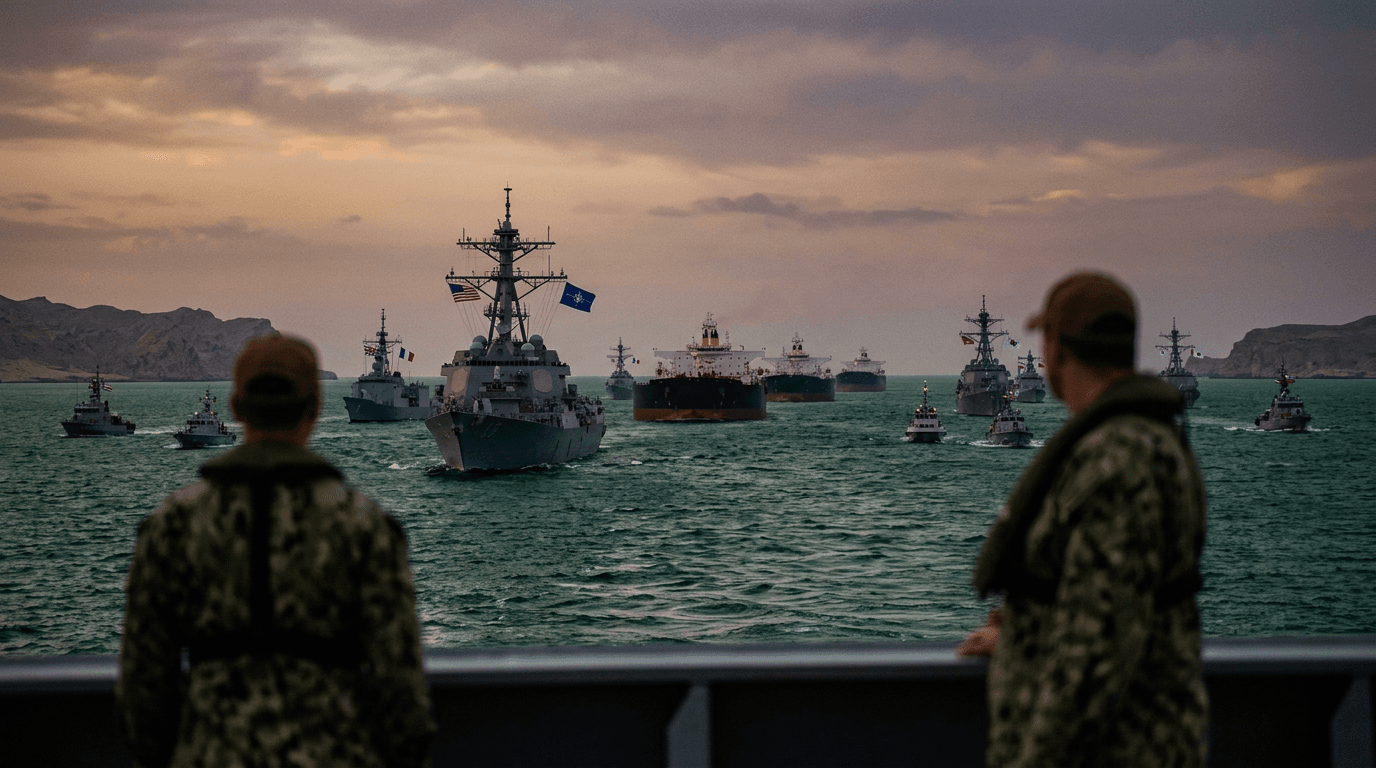
As geopolitical tensions rise in the Middle East, a formidable coalition of 22 nations has united under NATO's leadership to address one of the world's most crucial maritime chokepoints. On March 22, 2026, NATO Secretary General Mark Rutte announced this diverse alliance, which includes NATO members alongside key players such as Japan, South Korea, Australia, New Zealand, the UAE, and Bahrain. Their mission: to reopen the Strait of Hormuz, a strategic move with far-reaching consequences for global energy markets, forex trading, and the broader geopolitical landscape that traders are closely monitoring.
The Strategic Importance Of The Strait
The Strait of Hormuz is a critical artery for global commerce, facilitating the flow of about 20 percent of the world's oil and liquefied natural gas. When Iran blocked the strait using drones, naval mines, and direct strikes on commercial vessels, it sent shockwaves through energy markets and ignited immediate economic concerns. Global oil prices skyrocketed to their highest levels since 2022, with ripple effects impacting commodity futures and inflation expectations worldwide. For traders, this closure marked a black swan event, fundamentally altering risk assessments and driving demand for defensive assets like USD/JPY pairs.
The strait's narrow geography makes it inherently susceptible to disruption. Unlike other shipping lanes with alternative routes, the Strait of Hormuz lacks a workaround. This concentration of strategic importance means that even temporary closures or threats to shipping can create immediate market volatility. Thus, the coalition's effort to restore passage is not merely a political gesture but an economic imperative with direct consequences for inflation, energy security, and financial market stability across all asset classes.
Nato's Coordinated Response Framework
The formation of a 22-nation coalition is an unprecedented diplomatic and military endeavor. Secretary General Rutte emphasized that this alliance extends beyond traditional European partnerships, incorporating vital Pacific and Middle Eastern players. It recognizes that modern security challenges demand global coordination that transcends traditional alliance structures.
However, the European allies initially hesitated. Trump's sharp criticism, calling NATO a "paper tiger," spurred European commitment. European nations cited the need for time to calibrate their response, having had no advance warning of the initial US-Israeli military operations against Iran. This delay underscores a persistent tension within the alliance: the balance between rapid military response and the deliberative processes necessary for multinational coordination. For traders assessing political risk, this friction adds another layer of uncertainty to geopolitical projections.
Challenges To Sustained Passage And Long-term Security
Beyond the immediate military operation to reopen the strait, experts emphasize that maintaining secure passage presents an even greater challenge. Garret Martin, a senior lecturer at American University's Transatlantic Policy Center, raises a critical question: "How do you keep it open afterward if the fighting continues?" This question strikes at the core of the sustainability issue facing the coalition.
The strait's narrow geography and Iran's naval and drone capabilities mean that any sustained reopening would likely require a continuous military presence. Unlike a one-time military operation, maintaining freedom of navigation demands a long-term commitment, resource allocation, and a willingness to engage in ongoing security operations. This requirement has proven controversial among European allies who are already reluctant about deeper military involvement. The prospect of permanent or semi-permanent military deployments raises questions about cost, domestic political viability, and the risks of escalation.
Market Implications For Traders
The coalition's pledge carries significant market implications across multiple asset classes. Energy futures have already reacted to expectations of reopened passage, though volatility remains high given uncertainties about timelines and sustainability. Oil price expectations hinge critically on confidence that the coalition can maintain the strait's accessibility once reopened.
In forex markets, the geopolitical risk premium has bolstered safe-haven demand, particularly for USD/JPY pairs as traders seek protection against further escalation. Should the coalition successfully restore and maintain passage, risk sentiment could shift sharply, potentially weakening yen pairs as investors rotate from defensive positioning back toward risk-on allocations. Conversely, any indication of coalition implementation difficulties or further Iranian disruption attempts could trigger volatility spikes and renewed safe-haven flows.
What Traders Should Monitor
The timeline for reopening is fluid. NATO's commitment to coordinate logistics, military capabilities, and rules of engagement suggests the operation will take weeks rather than days. Traders should monitor official statements from coalition members for signals about deployment readiness and funding commitments. President Trump's ultimatums and public pressure tactics add unpredictability that can cause sudden market movements independent of actual security developments.
Watch for divergence between coalition members regarding risk tolerance and resource commitment. Any defections or public disagreements could signal implementation challenges and trigger renewed energy price volatility. Additionally, monitor Iranian responses and statements about potential counteractions, as further escalation could undermine confidence in the coalition's ability to maintain secure passage long-term.
NEWSIMPACTSCORE: 8