
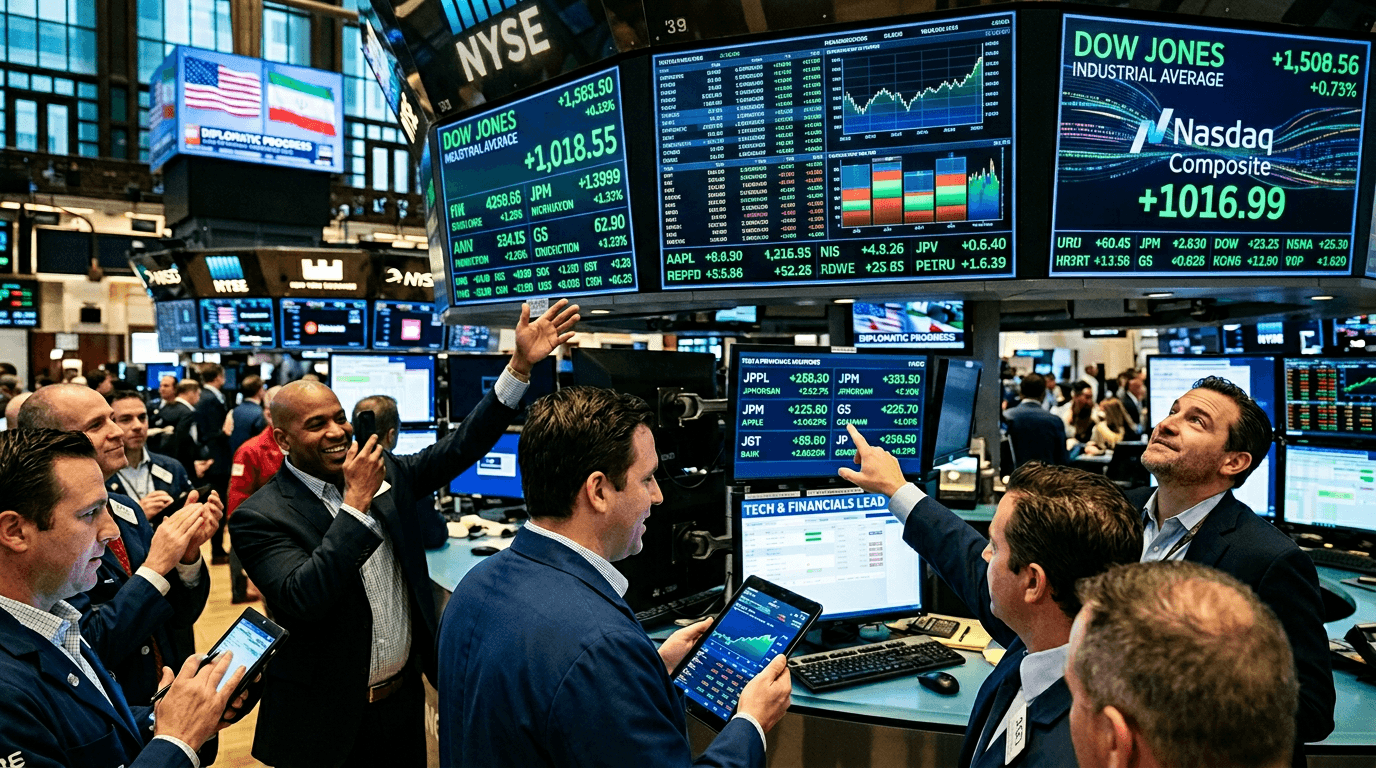
Markets have reached a pivotal moment as new hopes for a US-Iran peace deal propel US equities to unprecedented heights. In a dramatic shift from the geopolitical tensions that dominated markets in late February and March, investors are now embracing a risk-on sentiment that has sent the S&P 500, Nasdaq, and Dow Jones Industrial Average to fresh record highs. This surge reflects a fundamental recalibration of how market participants are pricing in geopolitical risk, corporate earnings resilience, and the potential for continued growth in key sectors like technology.
The Remarkable Rally In Equity Indices
The numbers tell a compelling story. The S&P 500 has surged past previous record levels, with the index gaining 0.8% to 6,886.24 on one of the recent trading sessions and continuing to extend gains into early May. The tech-heavy Nasdaq Composite has been even more resilient, advancing 1.23% to 23,183.736, while the Dow Jones Industrial Average added 0.63% to 48,218.25. These aren't isolated gains—they represent part of a dramatic two-week surge that began in late March as market participants reassessed the trajectory of US-Iran conflict resolution. What makes this rally particularly noteworthy is its persistence despite intermittent setbacks in peace negotiations, suggesting that investors remain fundamentally convinced that a breakthrough is likely.
The breadth of this market advance provides additional confidence in its sustainability. Nine of the eleven primary S&P 500 sectors ended trading in the green, with financials and technology leading the way by adding 1.73% and 1.72% respectively. This broad-based strength across sectors indicates that the rally isn't merely a concentrated bet on a handful of mega-cap technology stocks, but rather reflects genuine improvement in risk sentiment across the entire market landscape.
Sector Performance And Corporate Earnings Momentum
Technology stocks deserve particular attention as they've been at the forefront of recent gains. The Magnificent Seven tech giants, including Microsoft, Apple, Oracle, and Alphabet, have seen particularly strong performance as peace deal hopes have lifted some of the uncertainty that weighed on this sector. Microsoft surged 4.6% in one session, while Oracle posted a 4.2% gain. These companies, which are key drivers of market indices, have benefited from a combination of improving sentiment and strong corporate earnings results that have exceeded investor expectations.
Financial stocks have similarly rallied sharply, with major institutions like Bank of America and Morgan Stanley posting significant gains fueled by strong equity trading revenue. This performance in financial stocks is particularly revealing because it indicates that institutional investors and traders are actively increasing their risk exposure, placing new trades, and rebalancing portfolios in anticipation of sustained market strength.
The improvement in sector performance is accompanied by meaningful developments in energy markets. While oil futures initially spiked higher on uncertainty, West Texas Intermediate crude settled at 99.08 per barrel with Brent crude at 99.36, indicating a normalization of energy prices as peace hopes have reduced the risk premium associated with potential supply disruptions from the conflict. This moderation in energy prices, while still elevated historically, removes a headwind that had been pressuring consumer sentiment and corporate profitability.
The Mechanics Behind The Market Surge
The shift in market dynamics reflects investors pricing out the conflict risk premium that had been built into valuations since February. When uncertainty about geopolitical events is elevated, investors typically demand higher returns to compensate for additional risk. As peace deal hopes have gained credibility—with reports of extended ceasefires and serious negotiations in Pakistan—that risk premium is being systematically removed from prices. This creates a powerful tailwind for equities, as the same company earnings now justify higher valuations in a lower-risk environment.
Safe-haven demand has shifted as well. As risk sentiment improves, investors are rotating away from defensive assets like utilities and consumer staples—the only two sectors that declined during recent trading sessions—and toward more economically sensitive sectors. The US dollar has also come under pressure as investors reduce their demand for the traditional safe-haven currency, further supporting equity prices and making foreign investments more attractive to US-based investors.
What This Means For Your Trading And Investment Strategy
Understanding the drivers of this rally is crucial for positioning your portfolio effectively. The sustained strength in equities suggests that investors have substantial conviction in a positive outcome for peace negotiations. However, this creates a scenario where any negative developments in talks could trigger sharp reversals, as has happened multiple times during this conflict.
For traders and investors, the key consideration is whether to view current prices as representing a sustainable new equilibrium or a position vulnerable to profit-taking. The breadth and consistency of gains suggest the former, but prudent risk management remains essential. The strong performance in technology and financial sectors indicates where market participants are placing their bets on economic recovery and stability.
Looking Ahead
The continuation of record highs on US stock indices reflects genuine progress toward resolving Middle East tensions and sustained confidence in corporate earnings. As negotiations continue and peace proposals circulate between Washington and Tehran, markets will likely remain elevated but potentially volatile around specific developments. The key takeaway for investors is that geopolitical risk premiums don't disappear overnight—they gradually compress as confidence builds, which is precisely what we're witnessing now.