
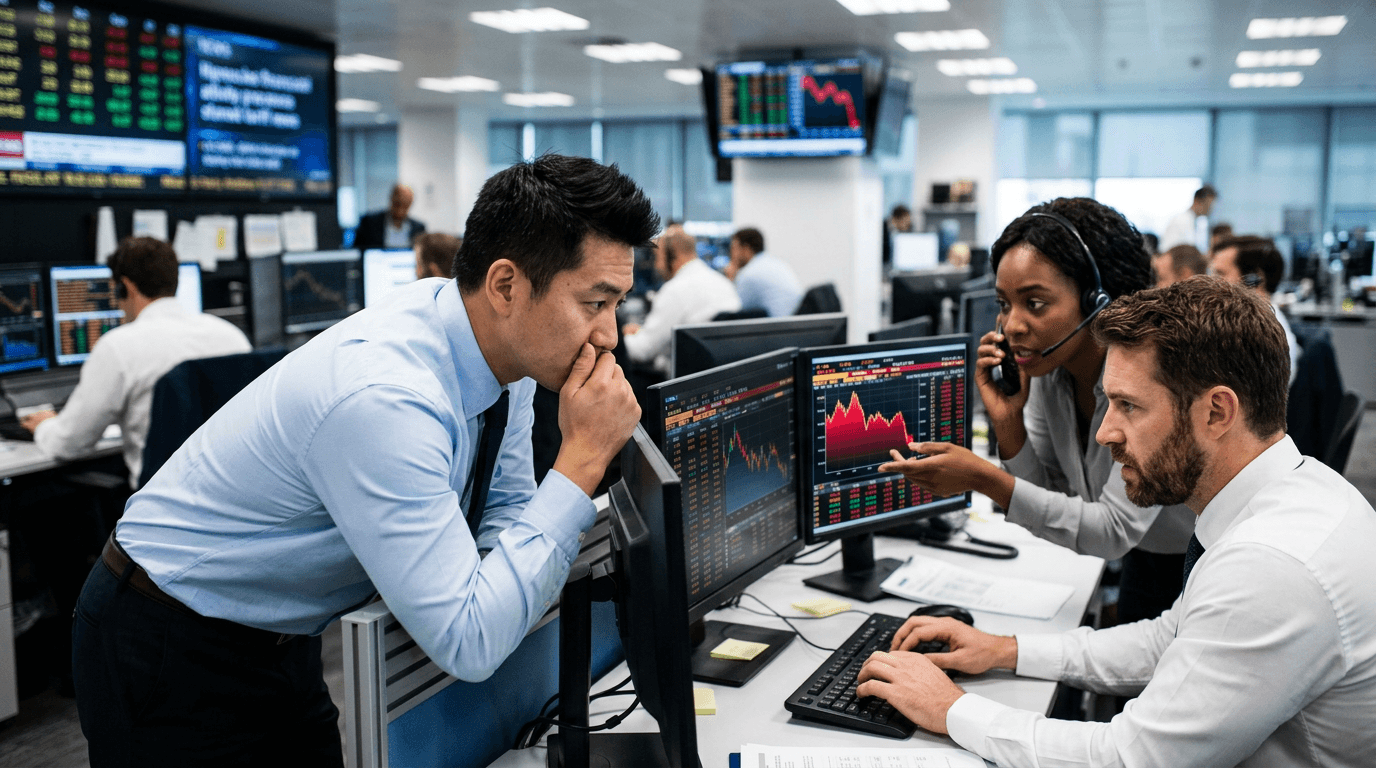
US-China Trade Tensions Escalate: Navigating the New Tariff Landscape
On April 11, 2025, the US-China trade narrative reached a pivotal point. China's Ministry of Finance announced a steep increase in tariffs on American imports, raising the rate to 125% effective April 12. This sharp escalation from the previous 84% marks a critical juncture, signaling a tit-for-tat strategy following the US's recent hike to 145% on Chinese imports. For global traders and investors, this isn't just another news item—it's a fundamental shift that necessitates immediate strategic adjustments.
A Rapid Escalation Timeline
To grasp the magnitude of China's move, one must look at the rapid sequence of preceding events. Earlier in April 2025, the US imposed a 34% duty on Chinese goods, dubbed "Liberation Day" tariffs, atop existing measures like the 20% "fentanyl tariffs." China reciprocated with equivalent tariffs on US products. This standoff intensified when the US introduced an additional 50% hike on April 9, elevating tariffs to 104% on Chinese imports. China mirrored this escalation, bringing its tariffs to 84%.
However, this fragile stability unraveled quickly. On April 10, the US cited national security and fentanyl trafficking concerns to justify another hike to 145%. In a swift response, China declared its 125% tariffs, effective within two days. This rapid back-and-forth underscores the fragility of current trade relations, with both nations seemingly locked in a cycle of retaliation that lacks a clear endpoint.
China's Strategic Stance
China's decision is portrayed not as mere retaliation but as a calculated economic response to unsustainable market pressures. The Ministry of Finance stated that the market cannot sustain American goods under the current tariff regime, indicating that 125% is the limit of what the Chinese market can bear. This reframes the conflict from geopolitical posturing to economic necessity.
Beijing's rhetoric has sharpened, accusing US policies of violating international trade rules and labeling them as "unilateral bullying." Nevertheless, China's State Council signaled a willingness to engage in diplomatic talks, reflecting a dual approach of aggressive escalation paired with strategic openness to negotiation. This duality creates complex information asymmetries for market participants assessing future escalations or de-escalations.
China has not confined its response to tariffs alone. The government added 11 US firms to its "unreliable entity list," citing military technology cooperation with Taiwan, thereby broadening the scope of its retaliatory measures beyond tariffs alone.
Implications for Traders and Investors
The leap from 84% to 125% tariffs introduces a significant policy shock, disrupting markets and offering opportunities for astute traders. Firms heavily reliant on US-China trade must now recalibrate profit margins and realign business strategies promptly, potentially prompting earnings revisions and sector repricing. The heightened uncertainty in supply chains demands investors reassess sourcing strategies and pricing models.
Sectoral pressures will vary. Technology companies and manufacturers dependent on Chinese components face new challenges, as do agricultural exporters reliant on Chinese markets. Meanwhile, defensive sectors and domestically-oriented businesses could gain relative strength. Currency markets may exhibit volatility as trade tensions disrupt bilateral flows, with equity index futures in both US and Chinese exchanges reflecting this uncertainty through increased volatility and potential sector shifts.
For traders using simulated finance platforms, this scenario provides a rich case study in how macroeconomic shocks ripple through global markets. Analysts must consider multiple scenarios—short-term tactical moves around the April 12 tariff implementation, medium-term outcomes based on diplomatic progress, and long-term adjustments to enduring shifts in US-China trade dynamics.
Looking Ahead
Despite branding the 125% tariff as its "final retaliatory measure," China has warned that further US tariff hikes could halt negotiations entirely. This signals both nations' awareness of the precarious threshold they are approaching—a further escalation could lead to a damaging trade war with few negotiation options left.
The situation remains fluid, sensitive to fresh developments. Both nations have selectively excluded certain products from tariff lists, suggesting a nuanced approach rather than all-out economic warfare. These exclusions provide a foundation for future negotiations, indicating that despite fierce rhetoric, there remains some commitment to resolving tensions.
For market participants, the strategic focus should be on monitoring escalation signals and potential diplomatic breakthroughs. Watch for corporate announcements, supply chain developments, and critical public statements on diplomatic progress. Position sizes should reflect the heightened uncertainty, and risk management strategies should prepare for possible 5-10% market swings resulting from trade developments.
Conclusion: Navigating the New Reality
China's announcement of 125% tariffs marks a decisive moment in the US-China trade conflict, highlighting a transition from negotiation tactics to genuine economic confrontation. The rapid escalation timeline, paired with China's stated limits and open diplomatic channels, creates a complex environment demanding sophisticated analysis. Close attention to supply chain impacts, sector rotation, and diplomatic developments will be crucial in determining whether this tariff level results in temporary disruption or signals a deeper trade war.
---
NEWSIMPACTSCORE: 8