
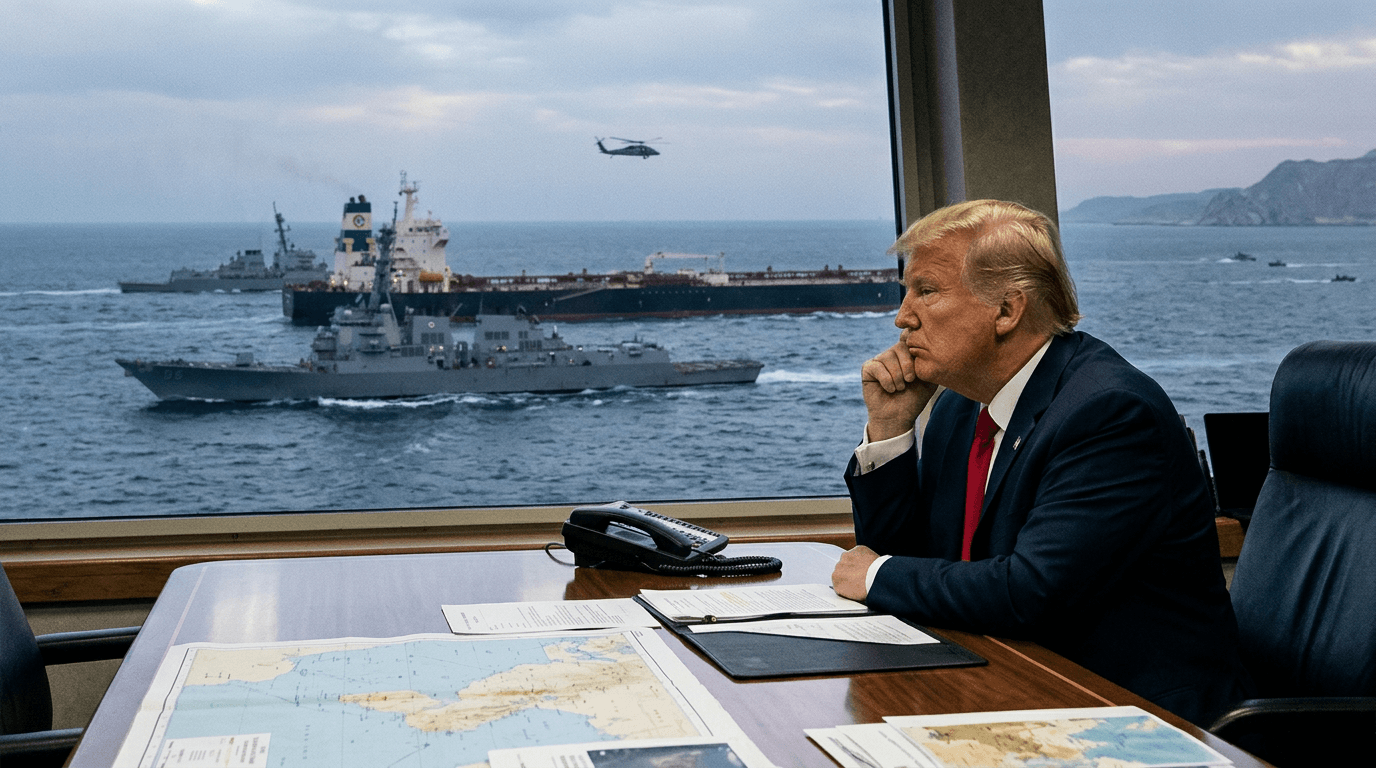
Unprecedented Energy Crisis as Strait of Hormuz Closes: A Deep Dive into Global Market Turmoil
The Strait of Hormuz has rapidly become the focal point of a geopolitical upheaval threatening to overhaul global energy markets and economic stability. As tensions surge between the United States, Israel, and Iran in late March 2026, President Trump's strategic maneuvers ripple through trading floors globally. Understanding this crisis is crucial for investors, traders, and anyone concerned with energy security and market volatility.
The Pivotal Closure of the Strait
The closure of the Strait of Hormuz marks one of the most severe energy supply interruptions in recent memory. This narrow waterway, a conduit for nearly 20% of the world's oil and liquefied natural gas, is now effectively blocked following orchestrated US-Israeli strikes on Iranian targets. Approximately 21 million barrels of oil traverse this channel daily, making its closure a monumental threat to the global energy framework. The strategic importance of this passage cannot be overstated, serving as the primary export route for major oil producers, including Saudi Arabia, Iraq, Kuwait, Iran, and the UAE.
Immediate Shockwaves Across Energy Markets
The closure has ignited dramatic price surges across energy markets. Brent crude oil skyrocketed past the crucial $100 per barrel mark on March 8, 2026, peaking at $126 within days of the conflict's onset. Dubai crude soared even higher to $166.80 per barrel, underscoring the acute vulnerability of Asian markets reliant on Middle Eastern oil. These shifts signify a nearly 50% increase from pre-crisis levels of around $85 per barrel, highlighting the market's sensitivity to supply disruptions at this critical juncture.
The speed and scale of these price jumps not only reflect immediate supply fears but also the substantial risk premium traders demand amid extreme uncertainty. Goldman Sachs adjusted its oil price projection for Q2 2026, expecting Brent crude to average $76 per barrel, up $10 from prior estimates. However, the bank warned that if the disruption extends beyond the anticipated recovery period, prices could escalate to $100 per barrel, illustrating the tail risks embedded in current market pricing.
President Trump's Calculated Response
President Trump's response intertwines diplomatic and military strategies. Instead of escalating military actions immediately, Trump declared a 10-day delay in targeting Iranian energy sites while diplomatic talks continue about potentially reopening the Strait. This cautious pause signifies an awareness that further escalation could propel oil prices to economically disastrous heights, potentially inducing stagflationary pressures worldwide.
Concurrently, Trump instituted measures to stabilize energy markets and maritime trade. He directed the US International Development Finance Corporation to offer political risk insurance and financial guarantees for maritime trade, reducing the risk premium shippers require for navigating contested waters. Most notably, Trump committed the US Navy to escort tankers through the Strait of Hormuz, signaling a determination to keep this vital shipping lane open despite security threats.
Regional Economic Fallout
Asian and developing nations bear the brunt of the immediate impact. Myanmar imposed fuel rationing for private vehicles, with authorities threatening legal action against those hoarding fuel for resale at inflated prices. Japan announced the release of 45 days' worth of strategic oil reserves, acknowledging its high dependency on Middle Eastern crude compared to other developed nations. The country faces the prospect of significantly reduced crude oil imports from late March onward, threatening manufacturing competitiveness and energy-intensive industries.
India anticipates a 70 billion rupees loss in government revenue from the Strait's closure, given that the waterway channels 40% of India's crude oil imports. These nations are implementing emergency measures, including excise duty reductions and strategic reserve releases, demonstrating the urgent economic pressure created by the supply disruption.
Ripple Effects Across Supply Chains
Beyond crude oil, the crisis disrupts liquefied natural gas shipments, refined product exports, and petrochemical feedstock deliveries. Approximately 20% of global LNG trade passes through the Strait, intensifying energy security concerns for import-dependent nations across Asia and Europe. The simultaneous disruption of multiple energy commodities has amplified price volatility and created complex logistical challenges as market participants scramble to find alternative sources and reroute supplies through longer, costlier routes around the Arabian Peninsula.
Refinery operations face severe disruptions, with Asian refiners particularly vulnerable due to feedstock shortages. European and American facilities contend with shifting demand patterns and widening price differentials between regional benchmarks, creating both risks and arbitrage opportunities for sophisticated market participants.
Investment Ramifications
This crisis underscores several critical investment themes. Energy security has re-emerged at the forefront of government policy agendas worldwide, with nations reassessing strategic reserve levels and import diversification strategies. The crisis demonstrates that geopolitical risks to fossil fuel supplies remain substantial, suggesting that energy security considerations will continue influencing investment decisions for decades. Simultaneously, the spike underscores the urgency of renewable energy deployment and the long-term risks of concentrated dependence on hydrocarbon infrastructure in geopolitically volatile regions.
For traders and investors, the current environment presents both significant risks and opportunities as markets grapple with geopolitical uncertainty, supply disruptions, and dramatic price volatility across energy markets.
News Impact Score: 9