
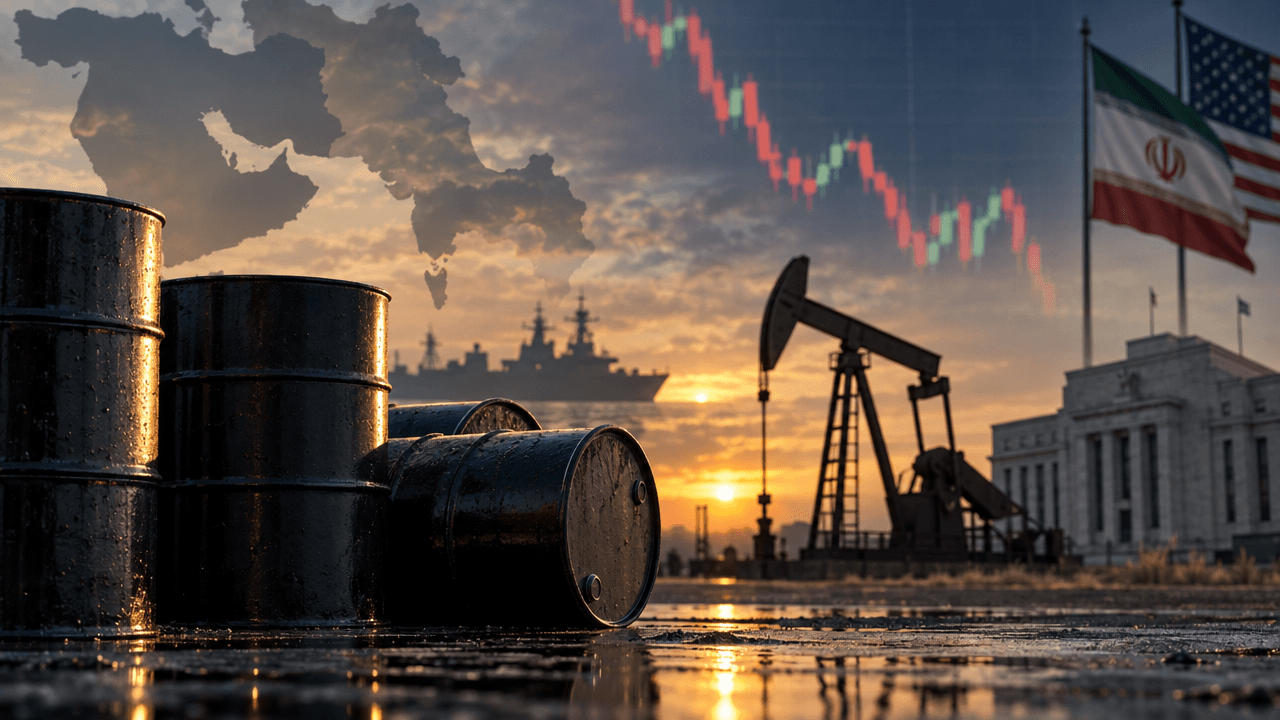
Oil edges lower despite continuing geopolitical risk, highlighting one of the defining tensions in today’s energy market: supply fears remain elevated, but traders are increasingly weighing whether economic uncertainty can offset the threat of disruption.
Brent crude slipped approximately 0.25% to around $105.82 a barrel, while West Texas Intermediate moved in the opposite direction during the session. The relatively modest decline shows that the market is not dismissing geopolitical risks. Instead, traders are balancing potential supply interruptions against the possibility of weaker demand, additional supply and tighter financial conditions. [10]
Geopolitical Risk Supports The Market
Oil prices remain highly sensitive to developments across the Middle East. Reports of attacks involving Saudi Arabia, Yemen’s Houthi forces and shipping routes have kept the risk premium embedded in crude prices. Any escalation that threatens production facilities, export terminals or major maritime corridors could rapidly change the market’s direction.
The Strait of Hormuz is particularly important because it is one of the world’s most critical energy chokepoints. Disruptions in or around the waterway could affect the movement of crude and refined products, forcing buyers to compete for alternative supplies. Even without an actual interruption, the possibility of one can encourage refiners, governments and commercial users to build precautionary inventories.
That risk helps explain why Brent remains above $100 a barrel despite the latest decline. Traders are not responding only to current physical supply. They are also pricing the probability of future disruption and the potential cost of replacing barrels that may become temporarily unavailable.
Why Prices Are Still Edging Lower
The bearish pressure comes from several sources. One important factor is the possibility that the United States could ease restrictions on certain “shadow fleet” tankers linked to sanctioned oil-producing countries, including Russia, Iran and Venezuela. If more vessels and crude become available to global buyers, the additional supply could reduce some of the market’s immediate tightness. [1]
The prospect of emergency fuel releases has also influenced sentiment. Measures designed to increase near-term availability can calm the market, even when underlying geopolitical tensions remain unresolved. Traders often react to expected policy responses before those measures materially affect physical inventories.
Macroeconomic uncertainty is another restraint on prices. Higher energy costs can intensify inflation, while restrictive monetary policy can slow economic activity. If businesses and consumers reduce spending, fuel demand may weaken. That creates a difficult balance for oil traders: geopolitical events point toward higher prices, while concerns about economic growth point lower.
The result is a market that can remain elevated without moving sharply higher. Prices may need confirmation of a real supply loss before sustaining a major rally.
What Traders Should Watch Next
The next phase of the oil market will depend on whether geopolitical headlines begin affecting physical flows. Traders should monitor shipping activity, insurance costs, export schedules, refinery operations and official inventory data rather than relying on headlines alone.
A temporary attack may generate a short-lived price spike if shipments continue normally. By contrast, a confirmed disruption to production or transportation could create a more durable rally. The distinction is crucial because headline volatility and fundamental changes do not always occur at the same time.
Inventory data also deserves close attention. Falling crude stocks can reinforce supply concerns, while rising inventories may suggest that demand is weakening or that alternative supplies are reaching consumers. Refinery utilization is equally important because strong refinery demand can support crude prices even when broader economic indicators appear soft.
For SimFi traders, this is an opportunity to separate event risk from trend risk. Event risk refers to the possibility of a sudden move caused by a new headline. Trend risk concerns the broader direction created by supply, demand, inventories and monetary policy. A disciplined strategy should account for both.
Practical Lessons For Simfi Traders
First, avoid treating every geopolitical headline as an automatic buy signal. A market can initially rise on fear and then reverse when traders conclude that supplies remain intact or that policymakers can respond effectively.
Second, manage position size carefully around major news events. Oil can move quickly, and leverage can magnify both gains and losses. A smaller position with a clearly defined risk limit may be more effective than attempting to predict every headline.
Third, compare Brent and WTI behavior. Brent reflects international supply conditions and shipping risk more directly, while WTI is more closely connected to North American production, storage and infrastructure. Divergence between the two benchmarks can offer clues about which regional forces are dominating price action.
Finally, watch the dollar and interest-rate expectations. Because crude is priced in dollars, a stronger dollar can weigh on demand from buyers using other currencies. Expectations for prolonged restrictive monetary policy can also pressure commodities by raising financing costs and increasing concern about economic growth.
The Bigger Market Picture
Oil edging lower in the face of continuing geopolitical risk is not a contradiction. It reflects a market attempting to price two competing realities at once. Supply could become tighter if conflict spreads or shipping is disrupted, but demand could weaken if high prices, inflation and restrictive financial conditions slow the global economy.
For now, the market appears to be assigning a meaningful risk premium without fully pricing a lasting supply shock. That leaves crude vulnerable to sharp moves in either direction. A credible de-escalation or increase in available supply could push prices lower, while a confirmed disruption could quickly send them higher.
The most effective approach is to remain focused on evidence: actual supply flows, inventory changes, policy decisions and demand indicators. In a headline-driven market, patience and risk management can be just as valuable as a correct forecast.