
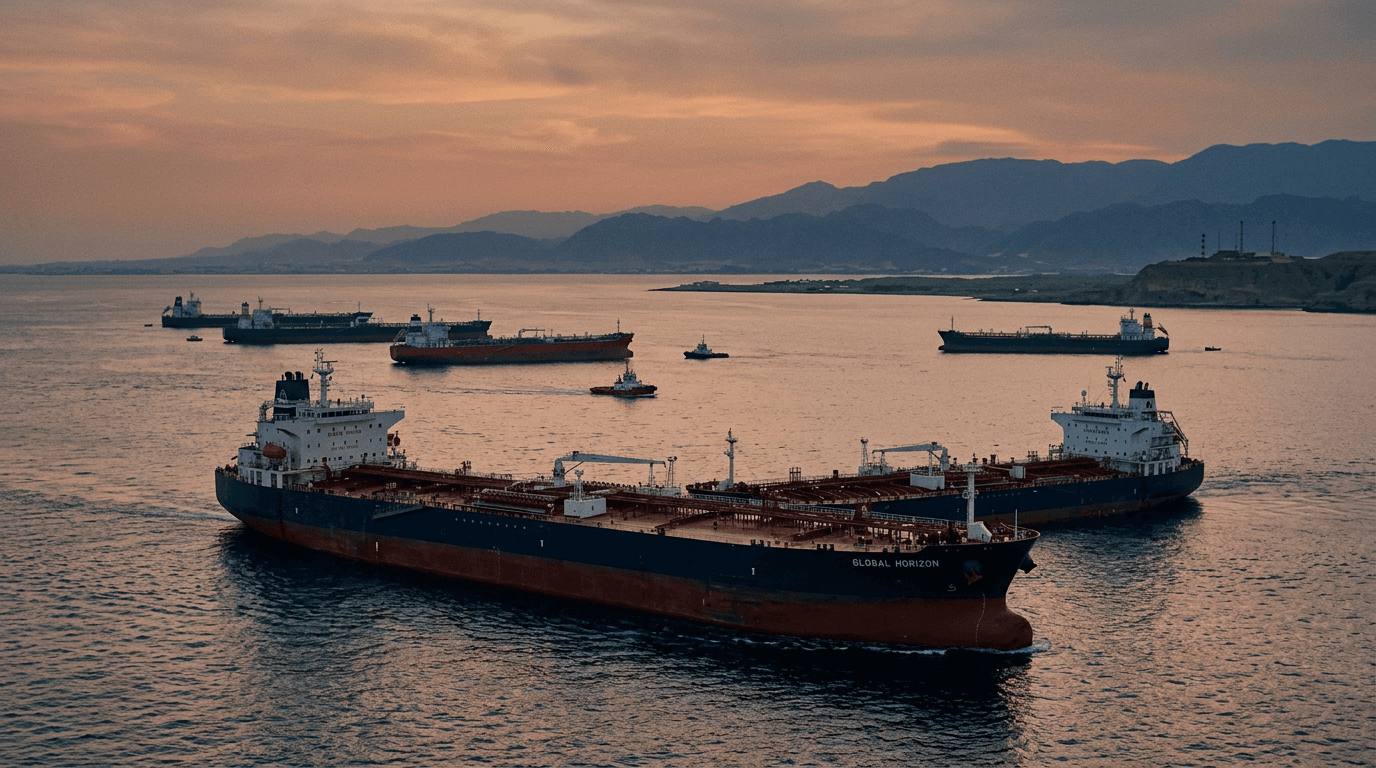
Oil futures are drifting lower as the market cautiously reprices geopolitical risk around one of the world’s most critical energy chokepoints: the Strait of Hormuz. Reports of a temporary corridor deal involving Iran and Oman have eased fears of a prolonged disruption in Gulf crude shipments, dialing back some of the risk premium that had recently been built into Brent and WTI futures.
Market Backdrop: Why Oil Futures Are Softening
For much of this year, oil prices have traded with an embedded “Hormuz premium,” reflecting the possibility of extended disruptions to shipping through the strait, which handles roughly a fifth of global oil flows. Elevated geopolitical risk translated into higher futures prices as traders anticipated potential shortages, higher transport costs, and knock-on inflation pressures in energy-intensive economies.
Recent headlines suggest Iran and Oman have agreed in principle on a temporary shipping route that would restore more predictable two-way traffic through the Strait of Hormuz, albeit under tight monitoring and within Iranian territorial waters.[7][9][13] While this is not a full reopening under normal conditions, it is enough to reduce the probability of severe bottlenecks, leading traders to trim long positions built on worst-case supply scenarios.[14][15]
As a result, front-month Brent and WTI futures have given back part of their earlier gains, with prices settling modestly lower in choppy sessions as investors reassess the balance of risks.[5][14][15] The key point is not that oil has collapsed, but that the market is transitioning from “panic premium” to a more measured view of supply security.
What A Temporary Hormuz Deal Really Means
For traders, the word “temporary” is doing a lot of work in this narrative. Officials have described the proposed Hormuz corridor as a time-limited route—potentially two to four months—subject to review and dependent on the broader political context, including commitments made under interim peace arrangements.[9][13] That means the deal dampens immediate disruption risk but does not permanently remove geopolitical uncertainty from the market.
Operationally, the corridor would be a defined, roughly seven-mile-wide passage, with entry and exit routed through Iranian waters and oversight from Iranian and Omani authorities.[9][13] Tanker traffic can move more predictably, but the framework still relies on cooperation between regional and global powers and remains vulnerable to political setbacks.
This nuance is crucial for futures pricing. The market is not pricing a return to business as usual; instead, it is pricing a lower probability of extreme outcomes. That typically translates into softer volatility, narrower risk premia, and more emphasis on fundamentals—like demand growth, inventory levels, and broader macro conditions—rather than purely geopolitical headlines.
Inflation Expectations And Macro Market Ripple Effects
Energy prices feed directly into inflation expectations, especially in economies where fuel and transport costs are major components of consumer price baskets. When crude benchmarks fall on reduced supply risk, breakeven inflation rates and market-based measures of future price pressures often edge lower.
The recent easing in futures prices has therefore been accompanied by a subtle shift in macro sentiment. Lower perceived energy inflation can:
1) Reduce expectations of aggressive central bank tightening. 2) Support risk assets that are sensitive to real yields and growth. 3) Weigh on commodity-linked currencies whose valuations are closely tied to terms of trade.
In practice, the initial reaction has included pressure on energy equities and a cooling in the most bullish commodity narratives, as the market recalibrates from “energy shock” to “managed risk” scenarios.[8][14] FX markets have also reflected this shift, with traders reassessing positions in currencies like CAD, NOK, and some emerging-market petro currencies, where oil-linked revenues are an important macro driver.
For SimFi participants, this environment is ideal for exploring how inflation expectations and yield curves respond to energy shocks versus energy relief. Scenario-based simulations that link crude futures, breakeven inflation, and policy-rate expectations can help traders understand cross-asset transmission mechanisms without real-world capital at risk.
Implications For Simulated Futures And Fx Traders
On a platform like E8 Markets, the softening in oil futures amid Hormuz headlines is an opportunity to practice trading the interplay between geopolitics, commodities, and FX rather than simply reacting to price moves.
Several practical angles stand out
1) Risk-premium decay: Traders can model how quickly geopolitical risk premia tend to unwind once the market believes that a tail-risk event—such as a prolonged strait closure—is less likely. Observing changes in futures term structures (contango vs backwardation) during such episodes is particularly instructive.
2) Correlation shifts: As oil eases, correlations between crude and risk assets (equities, high-yield credit, cyclical FX) can change. Simulated trading allows users to test strategies that rely on dynamic correlations, such as long oil and long petro FX vs short defensives, and see how those relationships evolve when the narrative shifts from scarcity to stabilization.
3) Volatility regime change: Geopolitical relief often brings implied volatility lower in energy options and related assets. Traders experimenting with options or volatility-based systems can simulate how strategies like volatility selling or spread trades behave when a headline risk starts to normalize.
4) Event-driven playbooks: This episode is a textbook case for building an event-driven playbook—mapping out potential market paths for “deal announced,” “deal delayed,” and “deal breaks down.” SimFi environments enable testing these branches in a structured way, helping traders refine reaction functions for future real-world events.
Actionable Takeaways For E8 Markets Participants
For traders using simulated environments to build skills around macro and commodity themes, several actionable lessons emerge from this Hormuz-driven move:
1) Separate probability from narrative The most dramatic headlines often focus on worst-case scenarios. Futures markets, however, price probability-weighted outcomes. Practice quantifying how a shift from “high disruption risk” to “moderate disruption risk” affects your valuation framework for crude.
2) Track term structure, not just spot Price softening at the front of the curve can mask important information deeper out. An improving outlook for Hormuz might flatten backwardation or even move the curve toward contango, signaling how the market views longer-term supply stability. Simulate strategies that explicitly target curve shape, not just outright direction.
3) Link commodities to FX and rates When oil moves, commodity currencies, inflation expectations, and rate futures often move with it. Use multi-asset simulations to test whether your trade thesis is consistent across crude, FX, and rates. For example, if you are short oil on reduced risk premiums, does that align with your stance on CAD or on front-end rate futures?
4) Prepare for reversals Because the Hormuz arrangement is temporary and conditional, the risk premium can rebuild quickly if talks stall or commitments are perceived to be broken.[9][13][14][15] Design simulated strategies with explicit contingency plans—such as predefined levels where you would reverse or hedge positions if headlines turn negative again.
Conclusion: Trading In A Fluid Geopolitical Landscape
The softening of oil futures on talk of a temporary Hormuz deal is a reminder that markets constantly reprice geopolitical risk, often in sharp, event-driven bursts. Rather than treating such moves as isolated anomalies, traders can use them as live case studies in how supply risk, inflation expectations, and cross-asset correlations interact.
For E8 Markets participants, this is a valuable learning window. By simulating strategies across oil, FX, and macro futures, traders can build robust frameworks that distinguish between transient risk relief and structural shifts in the energy landscape. The Strait of Hormuz may remain a source of uncertainty, but disciplined scenario planning and structured practice can turn volatile headlines into opportunities to deepen market understanding and refine trading edge.