
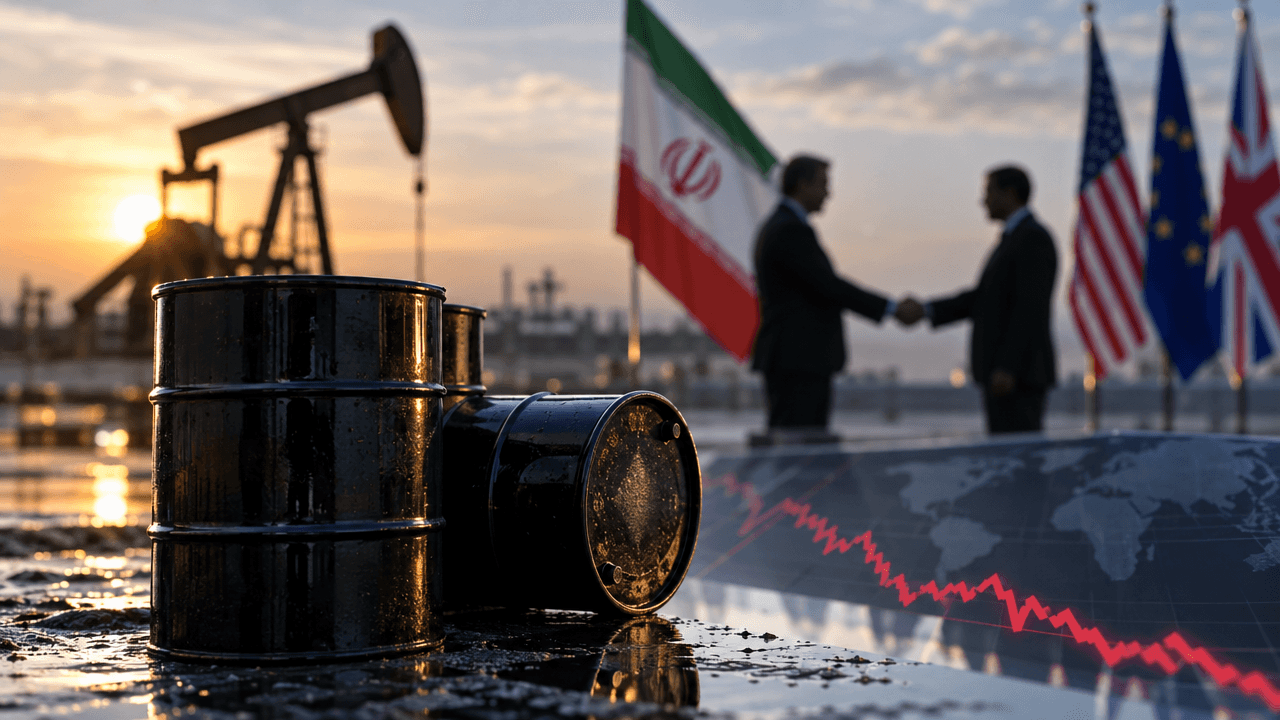
Oil futures fell sharply as renewed diplomatic engagement involving Iran reduced fears of an immediate disruption to Middle Eastern energy supplies. Brent crude declined about 2.7% to $110.40 per barrel, while West Texas Intermediate, the U.S. benchmark, dropped roughly 2.9% to $101.10. Reports of continued discussions aimed at ending the conflict encouraged traders to reduce the geopolitical risk premium that had pushed prices higher. [6]
The decline matters beyond the energy market. Oil is a foundational input for transportation, manufacturing, agriculture and consumer goods. When crude prices rise quickly, businesses often face higher operating costs and may pass those increases to customers. Lower prices, even if temporary, can ease some immediate inflation pressure and influence expectations for interest rates, currencies and equity markets.
Why Diplomacy Moved Oil Prices
Oil futures reflect expectations about future supply and demand, not just the amount of crude being produced today. When conflict threatens major oil-producing regions or important shipping routes, traders price in the possibility of supply interruptions. That additional uncertainty is known as a geopolitical risk premium.
Renewed diplomacy can reduce that premium almost immediately. Traders do not need a final peace agreement to adjust positions. The possibility of negotiations, a pause in military activity or improved access to critical infrastructure can be enough to lower expectations of a severe supply shock.
Recent reports indicated that Iranian and Qatari officials had held multiple days of talks focused on ending the conflict. That development helped ease supply concerns, although oil remained elevated compared with levels before the latest escalation. [2] The market reaction therefore represents a partial reversal of risk pricing rather than a complete return to normal conditions.
Why Brent And Wti React Differently
Brent and WTI are both widely followed crude benchmarks, but they represent different physical markets. Brent is the primary global reference price and is particularly sensitive to developments affecting seaborne oil shipments. WTI reflects conditions in the United States, including domestic production, inventories, transportation capacity and refinery demand.
Brent’s global role explains why diplomatic developments in the Middle East can have an especially pronounced effect on its price. Even countries that do not directly purchase Iranian crude can be affected if conflict threatens regional exports or maritime transit.
WTI can also move sharply because global events influence U.S. fuel prices and the competitiveness of American crude. However, domestic inventories and pipeline infrastructure may sometimes soften or amplify its reaction relative to Brent.
The reported move left Brent near $110.40 and WTI near $101.10, a sizable one-day decline but not evidence that supply risks have disappeared. Earlier market coverage showed Brent still trading above $110 and WTI around $102 as traders assessed the diplomatic developments. [1]
The Inflation Connection
Oil prices affect inflation through several channels. The most visible is gasoline and diesel. When crude becomes more expensive, refiners generally face higher input costs, which can feed into prices at the pump. Transportation companies also face higher expenses, raising the cost of moving goods.
Energy-intensive industries, including chemicals, plastics, aviation and manufacturing, may experience pressure on profit margins. Over time, those costs can spread through supply chains. A sustained decline in crude prices can work in the opposite direction by reducing fuel expenses and slowing the pace of price increases.
However, one daily move does not guarantee lower inflation. Retail fuel prices may adjust with a delay, and other factors—including refinery margins, taxes, currency movements and regional supply constraints—also matter. In addition, if diplomacy fails and tensions return, oil could quickly regain its risk premium.
For central banks, the key issue is persistence. A temporary oil decline may provide short-term relief without changing the broader inflation outlook. A prolonged drop, by contrast, could improve household purchasing power and reduce pressure on policymakers to maintain restrictive interest rates.
What Traders Should Watch Next
The next market reaction will depend on whether diplomatic headlines become concrete progress. Traders should monitor statements from the governments involved, evidence of a ceasefire or agreement, and any changes affecting sanctions, exports or shipping routes.
The Strait of Hormuz is another critical variable. Any threat to this major energy transit route could overwhelm the positive effect of diplomatic news. Even without a complete closure, higher insurance costs, vessel rerouting and delayed shipments could support crude prices.
Inventory data and demand indicators also deserve attention. If economic activity weakens, demand expectations could push prices lower even if geopolitical risks remain. Conversely, strong fuel consumption, falling inventories or limited spare capacity could keep prices supported.
For SimFi traders, this event is a useful example of why risk management matters more than predicting a single headline. A trader who assumes diplomacy guarantees lower prices may be vulnerable if negotiations stall. A trader who ignores the diplomatic shift may remain overexposed to a risk premium that is already unwinding.
Practical steps include defining a maximum loss before entering a position, using smaller size during geopolitical events and considering scenarios rather than relying on one forecast. Traders can map a bullish case involving renewed conflict, a bearish case involving a durable agreement and a range-bound case in which negotiations continue without resolution.
The Bigger Market Lesson
The fall in oil futures demonstrates how quickly markets can reprice uncertainty. Diplomacy does not instantly create new barrels of crude, but it can change expectations about future supply disruptions. That change is enough to move billions of dollars across energy, currency, bond and equity markets.
For investors and simulated traders, the central lesson is to separate immediate price action from lasting fundamentals. The decline toward $110.40 for Brent and $101.10 for WTI reflects improved sentiment, but the outlook remains dependent on diplomacy, supply routes, inventories and global demand.
Lower oil prices offer welcome relief for inflation-sensitive economies, yet the market is still vulnerable to renewed escalation. The most disciplined approach is to track both the headlines and the underlying data, manage exposure carefully and treat every geopolitical rally or selloff as a changing probability—not a guaranteed trend.