
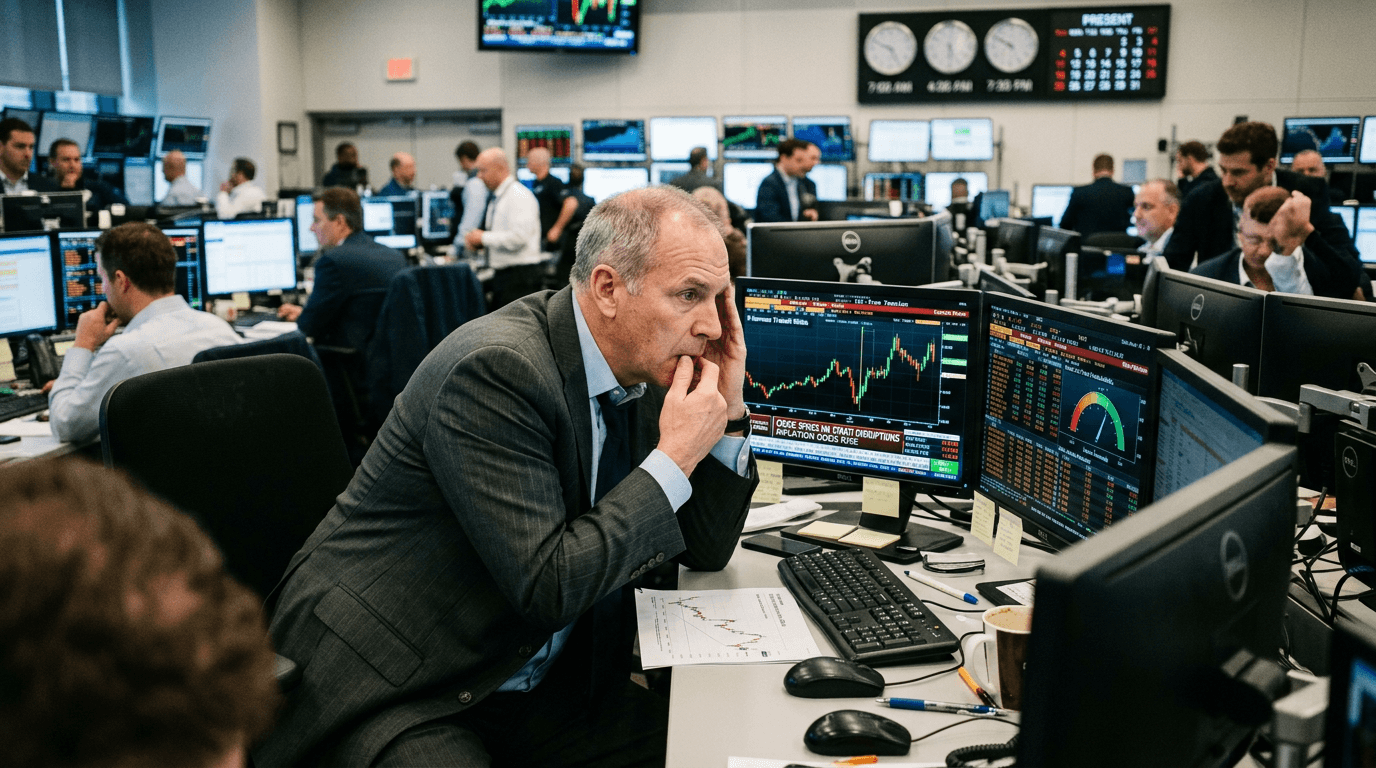
Oil futures traders have been riding a rollercoaster as escalating US–Iran tensions and renewed worries over the Strait of Hormuz have injected a fresh geopolitical risk premium into crude prices. Sharp intraday swings, gap openings, and sudden reversals are increasingly driven less by traditional supply–demand data and more by headlines, with knock-on effects for energy equities, inflation expectations, and the market’s odds of central bank rate cuts.[1][2][3][6]
Why The Strait Of Hormuz Matters
The Strait of Hormuz is one of the most critical chokepoints in the global energy system, with roughly a fifth of the world’s oil supply passing through this narrow waterway each day.[5] Any threat to shipping lanes here—real or perceived—can abruptly reprice crude futures as traders reassess the probability of supply disruptions and the severity of potential outages.
Recent episodes show that markets do not wait for physical barrels to go offline before adjusting prices. Analysts have previously estimated that US–Iran tensions added roughly $4–6 per barrel to crude as a geopolitical risk premium, even when actual supply had not yet been interrupted.[1] That premium reflects the cost of uncertainty: insurers, shippers, refiners, and speculators all demand compensation for the possibility that flows could be disrupted at short notice.
Importantly, this dynamic means price volatility can be driven primarily by perception of risk rather than actual loss of supply, especially in the early stages of a crisis.[1] As a result, oil futures often overshoot in both directions as markets swing between worst‑case scenarios, diplomatic progress, and shifting military narratives.
How Geopolitics Drives Futures Volatility
In the latest flare‑up, crude futures have repeatedly gapped higher on open as traders react to overnight headlines about US–Iran hostilities, ceasefire claims, and military incidents involving vessels transiting Hormuz.[2] One recent session saw the market jump at the open, spike to fresh highs on news of alleged ceasefire violations, then reverse sharply as officials signaled talks were still ongoing—ultimately ending the day higher but well off the peak.[2]
This is not an isolated pattern. US crude futures recently closed above $105 per barrel, gaining over 4% in a single session as tensions and supply‑disruption fears escalated.[6] In another move, crude surged around 3% as renewed strikes and hostile rhetoric reversed the prior week’s more optimistic, diplomacy‑driven decline.[3] These are classic examples of headline‑driven markets: the same contract trades in a wide range within hours, with price action dominated by news flow rather than scheduled macro data.
Forward‑looking assumptions are also shifting. Some analysts and rating agencies have built scenarios that assume an effective closure or severe restriction of Hormuz flows for weeks or months, projecting Brent crude in a $100–$110 band while the bottleneck persists and expecting OPEC to push production toward capacity to compensate.[2][5] As new information emerges, futures curves adjust rapidly, repricing both nearby and deferred contracts.
The Broader Ripple Effect: Equities, Inflation, And Rates
Volatile oil futures do not stay confined to the energy complex. Crude is a major input into fuel prices, and a $1 move in oil typically translates into roughly a 2.4‑cent‑per‑gallon change in diesel prices in the US.[1] Since crude accounts for about 45–55% of the final diesel price, sharp moves in futures can quickly filter through to freight, logistics, and ultimately the broader price level.[1]
That matters for inflation expectations and central bank policy. Higher and more volatile energy prices can keep headline inflation elevated or rekindle inflation scares just as markets are pricing in potential rate cuts. Market commentators have noted that oil spikes linked to Middle East tensions can influence bond yields and force investors to reassess how quickly central banks might ease.[4] If traders begin to expect “higher for longer” policy rates due to persistent energy‑driven inflation, that affects everything from equity valuations to currency trends.
Equity markets also respond quickly. Energy producers and oilfield services firms often rally on higher price expectations and wider margins, while fuel‑sensitive sectors such as airlines, shipping, and certain industrials can sell off as their input costs rise. Financials and growth stocks may also reprice based on shifting rate expectations. In periods of intense oil volatility, cross‑asset correlations can spike, making portfolio construction and risk management more challenging.
Implications For Traders And Simulated Strategies
For active oil futures traders, this environment offers both opportunity and elevated risk. Wide intraday ranges and gaps can reward those who manage entries and exits with discipline, but they also increase the likelihood of slippage, stop‑outs, and emotional decision‑making. Headlines can flip sentiment in minutes, turning winning positions into losers (and vice versa) before traditional technical levels fully play out.[2][3]
This is precisely the type of regime where simulated trading environments can be especially valuable. On a SimFi platform, traders can practice navigating gap openings, news‑driven spikes, and abrupt reversals without risking real capital. They can test how their strategies behave when volatility jumps, whether they trade intraday breakouts, mean‑reversion around key levels, or trend‑following approaches across the curve.
Scenarios to consider include: a short‑lived spike that fades as diplomacy stabilizes; a prolonged standoff that keeps a risk premium embedded in prices; or a more severe supply shock where flows through Hormuz are materially reduced and inventories draw down faster than expected.[1][2][5] Each scenario implies different behavior for the term structure, crack spreads, and related assets like energy equities or currencies of oil‑exporting countries.
Practical Takeaways For Risk Management
First, position sizing becomes critical in this kind of market. The same nominal contract size now carries greater dollar risk as daily ranges expand, so traders may need to reduce size or tighten risk limits while still allowing enough room for normal volatility.
Second, event awareness is non‑negotiable. Keeping an eye on geopolitical headlines, official statements, and scheduled policy communications is as important as monitoring EIA inventory reports or OPEC meetings. Seemingly small diplomatic signals can trigger big moves when the market is already on edge.[2][3][7]
Third, traders should stress‑test their strategies for gap risk and overnight exposure. In highly headline‑sensitive markets, many of the largest moves occur outside regular trading hours. That raises questions about whether to hold positions through the close, how to set stop levels, and when to reduce leverage ahead of known risk windows.
Finally, it is worth remembering that geopolitical risk premiums can both build and unwind faster than fundamentals alone would justify. The same fear that pushes crude sharply higher can dissipate quickly if talks progress or tensions de‑escalate, leading to equally violent downside moves. Maintaining a flexible framework—where you update probabilities as new information arrives—is essential.
In short, escalating US–Iran tensions and the associated Hormuz risk are not just a regional security story; they are a live stress test for how well traders understand geopolitical risk, volatility, and cross‑asset linkages. Whether you are trading live capital or refining your playbook in a simulated environment, the current backdrop offers a powerful lesson in how quickly the oil market can reprice when a key chokepoint is in the line of fire.