
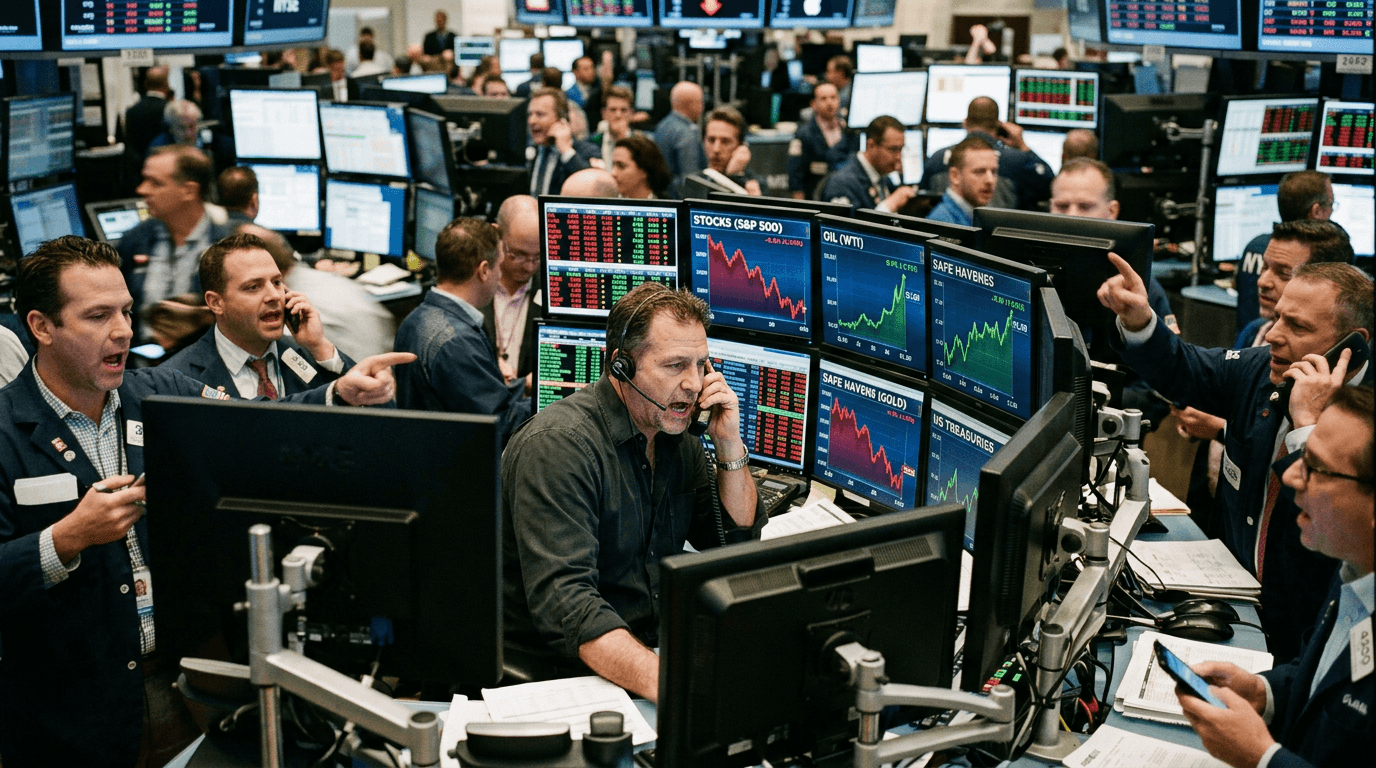
Oil markets have been jolted by the latest escalation in the U.S.–Iran conflict, with crude prices spiking as much as 9% and key benchmarks like WTI and Brent nearing recent highs.[3] Brent has pushed above $85 per barrel, while WTI trades close to its post‑war peaks as traders rapidly price in the risk of prolonged disruption in Middle East supply routes.[3][4] The move is reverberating across global markets, unsettling equities, boosting safe‑haven demand, and forcing investors to rethink inflation and central‑bank policy trajectories.[3][4]
Global Oil Shock: Why Conflict Hits Crude Prices So Hard
At the center of this latest surge is the strategic importance of the Strait of Hormuz, the chokepoint through which a large share of global seaborne oil flows.[3][4] Renewed U.S. strikes on Iran and talk of retaliatory action have revived fears that shipping lanes could be disrupted or partially closed, constraining supply.[2][3] Each headline about missile strikes, tanker attacks, or sanctions waivers being revoked adds another layer to an already elevated “risk premium” embedded in oil prices.[2][3]
Recent reports highlight how quickly markets react when the ceasefire narrative breaks down. When the U.S. signaled that a prior truce with Iran was “over” and resumed strikes following attacks on commercial vessels, WTI and Brent jumped sharply from earlier in the week.[3] Similarly, earlier U.S. attacks combined with the revocation of a temporary sanctions waiver on Iranian oil immediately pushed Brent higher, reversing a prior decline back toward pre‑war levels.[2] In each case, traders are not just reacting to current supply changes, but to the probability of worse outcomes—such as wider regional conflict or a sustained blockage of Gulf exports.
The physical backdrop amplifies the market’s sensitivity. Mines in key shipping lanes must be cleared, tankers re‑routed, and insurance premia adjusted before flows can normalize, even in the event of a diplomatic breakthrough.[8] That lag between geopolitics and logistics is why energy strategists expect prices to “remain elevated” for some time whenever risk in the Strait of Hormuz spikes.[2]
MARKET REACTION: STOCKS, SAFE HAVENS AND CROSS‑ASSET VOLATILITY
The oil shock has hit global equity markets, where higher energy costs and geopolitical risk translate into lower risk appetite and pressure on earnings.[1][3] Recent episodes of U.S.–Iran escalation have seen broad declines in major European indices and U.S. benchmarks, with initial sell‑offs in stocks as traders reassess growth and margin outlooks.[1][9] Cyclical sectors—such as airlines, consumer discretionary, and industrials—tend to be particularly vulnerable when fuel costs jump and confidence wobbles.
At the same time, safe‑haven assets typically see inflows. Government bonds, gold, and defensive currencies often catch a bid as investors look to hedge geopolitical tail risk and market volatility.[3][4] When oil spikes on conflict headlines, rate, FX, and commodity futures markets move in tandem: bond yields can become more volatile as inflation fears rise, currency pairs tied to commodity exporters and importers reprice, and volatility indices tick higher.[3][4]
However, these reactions are not always one‑way or persistent. In past episodes, initial stock market declines have sometimes reversed within the same day as new information emerged—for example, when officials suggested negotiations might still be possible despite hard‑line rhetoric.[1] For traders, this underscores that geopolitics‑driven moves are often fast and headline‑dependent, demanding clear risk management rules rather than attempts to predict every twist.
Inflation Expectations And Central Bank Policy Paths
Because energy is a core input to transportation, manufacturing, and everyday consumer spending, sharp oil price spikes quickly feed into inflation expectations.[3][4] Gasoline prices have already risen markedly during the conflict, with the average cost per gallon jumping double‑digits in a single week when crude moved above $90.[4] In Europe, natural‑gas prices have climbed even more sharply, hinting at broader energy pass‑through to inflation.[4]
Market participants in rates and FX are now repricing the trajectory of central‑bank policy. Higher expected headline inflation can delay or reduce the scope for interest‑rate cuts, or even revive speculation about further tightening if price pressures appear persistent.[3][4] Inflation‑linked bonds, breakeven rates, and short‑dated interest‑rate futures become key instruments for expressing views on how oil‑driven price shocks will influence monetary policy.
That said, central banks tend to distinguish between temporary energy spikes and broad‑based, demand‑driven inflation. If policymakers believe the oil shock is short‑lived or likely to reverse once supply normalizes—as seen after prior U.S.–Iran agreements to reopen shipping channels—they may try to “look through” the initial impact on headline inflation.[7][8] For traders, the critical question is whether the current 9% move in oil marks the start of a structurally tighter energy market or a geopolitical shock that could ease with diplomacy.
What Traders Can Do: Practical Strategies And Simulated Scenarios
For active traders and portfolio managers, this environment calls for disciplined scenario analysis. Simulated trading and risk‑free environments are particularly valuable for stress‑testing strategies against macro shocks like a sudden 9% jump in oil.[3] By modeling how portfolios respond to spikes in energy, widening credit spreads, or shifts in rate expectations, traders can identify vulnerabilities before capital is at risk.
Several practical angles to explore
Position sizing and risk limits: Geopolitical events can produce gaps and intraday swings that dwarf typical volatility. Testing tighter stops, smaller position sizes, and robust diversification can help avoid forced liquidations during extreme moves.
Cross‑asset relationships: Oil shocks ripple through equities, bonds, FX, and commodities simultaneously. Simulated strategies can explore relative‑value trades—for instance, comparing energy sector equities versus broader indices, or examining commodity‑linked currencies against import‑heavy economies.
Inflation hedging: Futures on crude, gasoline, and inflation‑linked instruments can act as hedges against a spike in headline CPI. Back‑testing how these behave in prior U.S.–Iran episodes offers insight into their effectiveness under stress.[3][4]
Time horizon discipline: As several analysts and commentators have emphasized during the Iran war, long‑term investors benefit from focusing on multi‑decade goals rather than trying to time short‑term swings in geopolitics‑driven markets.[6] Simulated portfolios can help investors practice staying invested while adjusting only their risk posture and diversification.
Key Takeaways For Investors
The latest U.S.–Iran escalation illustrates how quickly oil can move and how deeply those moves can affect broader markets: a single conflict‑driven shock has pushed crude up as much as 9%, unsettled stocks, and forced a rethink of inflation and policy expectations.[3][4] For investors, the lesson is not to predict every headline, but to understand the transmission channels from geopolitics to energy, inflation, and asset prices.
Short‑term, higher energy costs weigh on growth expectations and corporate margins, boost safe‑haven demand, and complicate central‑bank decision‑making. Medium‑term, the response of policymakers and the durability of supply disruptions will determine whether the current surge becomes a sustained regime shift or a transitory spike followed by normalization. Long‑term, diversified and well‑risk‑managed portfolios have historically weathered geopolitical shocks, but only when investors avoid over‑concentration in any single sector or narrative.
Using simulated environments to rehearse these scenarios is an effective way to build skill and resilience. By practicing how to navigate oil shocks, inflation surprises, and rapid repricing in rates and FX, traders and investors can turn volatile episodes like the U.S.–Iran conflict from purely reactive events into structured learning opportunities—while keeping real capital protected.