
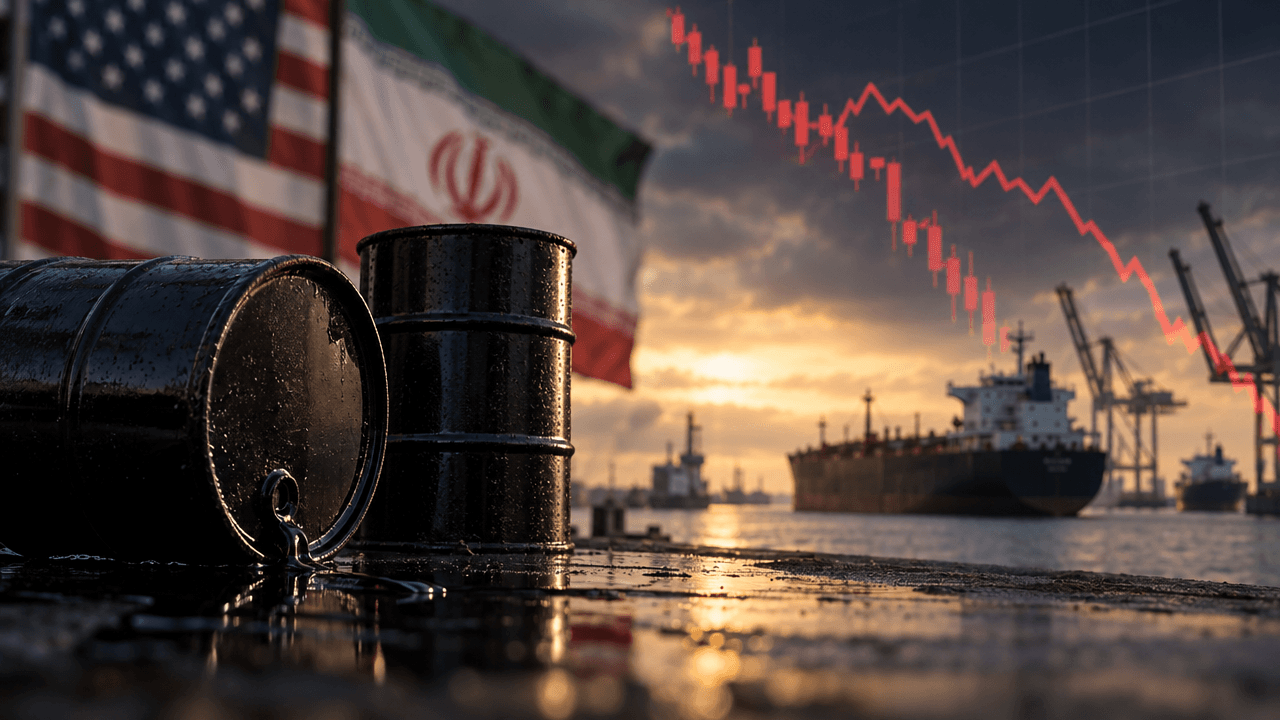
Oil futures fell sharply as signs of possible diplomatic progress between the United States and Iran reduced fears that the conflict would cause a prolonged disruption to Middle Eastern energy supplies. West Texas Intermediate (WTI) crude settled at $96.46 a barrel, down 7.4%, while Brent crude declined 7.6% to $104.77. Both benchmarks recorded their steepest one-day percentage losses since July 27. [2]
Why The Oil Market Reacted
Oil prices had been supported by a substantial geopolitical risk premium. Traders were concerned that continued hostilities could threaten production, exports, storage infrastructure, or shipping routes across the Middle East. Even when physical supply remains available, the possibility of disruption can push buyers to secure crude in advance, lifting futures prices.
The latest decline shows how quickly that premium can unwind when investors see a credible path toward de-escalation. Reports indicated that Washington and Tehran were open to negotiations, while Qatari mediation efforts helped advance potential settlement language. Iranian officials also signaled that talks could continue, encouraging markets to price in a lower probability of further escalation. [3]
The move was not necessarily a judgment that a final agreement had been reached. Instead, it reflected a shift in probabilities. Markets often respond to the possibility of improved supply conditions well before an agreement is formally signed.
Wti And Brent Signal Different Risks
WTI and Brent are both major global oil benchmarks, but they reflect different parts of the market. WTI is primarily associated with landlocked or inland U.S. production and delivery at Cushing, Oklahoma. Brent is the international benchmark and is more directly sensitive to global seaborne supply, including developments affecting the Middle East.
The sharper concern around Brent is understandable because the region plays an important role in global oil exports. Any threat to shipping lanes, terminals, or production facilities can immediately affect international prices. Brent’s settlement near $105 therefore continues to show that the market is not treating the geopolitical risk as completely resolved.
WTI falling below $100 is also significant from a sentiment perspective. Round-number levels often influence trading psychology, option positioning, and corporate planning. A sustained break below that threshold could encourage additional selling, while a rapid recovery above it would suggest that traders still view the diplomatic outlook as fragile.
The Diplomatic Signal Is Important, But Not Final
The market’s reaction should be interpreted carefully. Diplomatic discussions can reduce risk, but negotiations do not automatically restore lost production or normalize shipping conditions. A durable decline in oil prices would likely require more than statements of intent. Traders will look for an actual agreement, evidence of compliance, and measurable improvement in the movement of crude.
Recent price action also illustrates the danger of treating every diplomatic headline as a definitive turning point. Oil prices have swung sharply as officials offered conflicting signals about negotiations. After the initial sell-off, prices stabilized when Iran indicated that the U.S. response to its demands was not satisfactory and that no new developments had been reached. [4]
That pattern creates a market defined by headline sensitivity. Positive developments can trigger rapid declines as traders remove risk premiums, while setbacks can produce equally forceful rebounds.
What Traders Should Watch Next
The first factor is the credibility and pace of negotiations. Statements from senior U.S. and Iranian officials will remain important, but markets may place greater weight on concrete milestones, such as a formal framework, third-party verification, or an agreed timetable.
The second factor is the condition of regional transportation routes. Even if diplomatic relations improve, shipping disruptions may persist until operators, insurers, and governments are confident that vessels can travel safely. Any sustained return to normal traffic would add evidence that supply risks are easing.
The third factor is physical market data. Traders should monitor inventories, export flows, refinery demand, and the forward curve. Rising inventories and weaker prompt-month pricing would reinforce the view that immediate supply concerns are fading. By contrast, tight nearby contracts could signal that physical buyers remain worried about availability.
Finally, broader macroeconomic conditions will continue to influence crude. Oil demand depends heavily on industrial activity, transportation, and consumer spending. If economic growth slows, lower demand could compound the decline caused by easing geopolitical risk. If global activity remains strong, falling prices could instead stimulate consumption and limit the downside.
Practical Takeaways For Simfi Traders
For SimFi traders, this event offers a useful lesson in separating headline direction from confirmed trend. A large one-day decline may create momentum opportunities, but it can also be followed by a sharp reversal if negotiations lose credibility.
Risk management is especially important when markets are reacting to geopolitical news. Traders can define invalidation levels before entering a position, reduce exposure during major announcements, and avoid assuming that a single headline represents a permanent change in fundamentals.
It is also valuable to compare instruments rather than focusing on one price alone. The relationship between WTI and Brent, the shape of the futures curve, and volatility across related assets can provide additional information about whether the move reflects genuine supply relief or temporary liquidation.
Conclusion
Oil’s sharp decline reflects the power of geopolitical risk premiums to move markets in both directions. Reports of possible U.S.-Iran diplomatic progress eased fears of prolonged supply disruption and pushed WTI toward $96 and Brent toward $104. [1]
The next phase will depend on whether diplomatic signals become tangible agreements and whether energy flows return to normal. Until then, traders should expect volatility, respect the possibility of reversals, and evaluate each headline alongside inventory data, shipping conditions, and broader demand trends.