
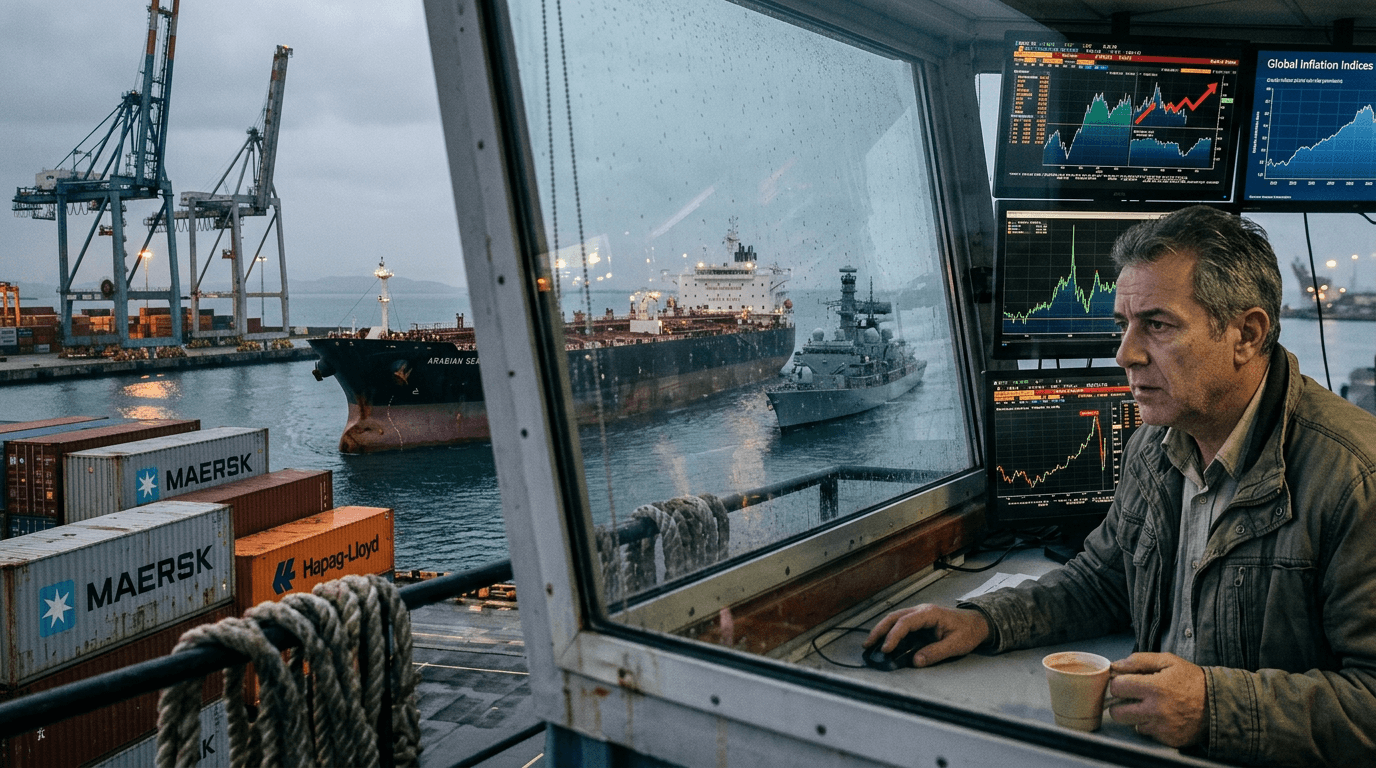
Oil markets are once again trading as much on geopolitics as on fundamentals, and the unresolved tensions around the Strait of Hormuz are keeping an elevated inflation risk premium embedded in prices. Persistent uncertainty over one of the world’s key energy chokepoints is sustaining a higher floor for crude, feeding through into inflation expectations, rate markets, and commodity-linked currencies.
Global Oil Risk Premium: Why Hormuz Matters
Around 20% of global oil consumption moves through the Strait of Hormuz, making it arguably the single most important maritime chokepoint in the energy system[10]. Any credible threat to shipping in this narrow channel forces traders to price in the possibility of supply disruption, even when physical flows are still intact[10].
Analysts estimate that the current geopolitical risk premium in crude prices is in the high single to low double digits per barrel, compared with where oil would trade on pure supply‑demand fundamentals[1][2][5][6][13]. One leading research house recently put the risk premium at roughly $9 per barrel, assuming tensions stay contained but unresolved[1]. Commodity strategists at a major investment bank estimate traders are demanding about $14 more per barrel than before the latest conflict flare‑up, with real‑time risk premium readings around $18 at the peak of recent stresses[2][5].
Scenario analysis underscores how sensitive this premium is to perceived disruption risk. Estimates suggest that a full one‑month closure of Hormuz, even with some offset from pipelines or strategic reserve releases, could add $10–15 per barrel to prices, while a partial closure of 25–50% of flows might still justify a $1–4 per barrel increase[2][5]. In practice, this has already pushed benchmarks such as Brent above $80 and toward $90 at times, with refined products like gasoil spiking sharply and crack spreads widening as markets price both supply risk and refining bottlenecks[3][8][10].
For traders on a SimFi platform, this is a textbook illustration of a risk premium: the spread between a “fair value” implied by current supply and demand, and the higher price that reflects tail‑risk scenarios like blockades, sanctions, or attacks[6]. Understanding that premium—and how quickly it can build or unwind as headlines evolve—is central to trading oil and energy‑linked assets in a risk‑aware way.
How Energy Shocks Feed Inflation Expectations
Higher oil and refined product prices feed into inflation expectations through several channels: direct fuel and utility costs, indirect effects on transport and goods prices, and the psychological impact of repeated energy shocks. When markets keep a persistent geopolitical premium embedded in crude, breakeven inflation rates and inflation swaps tend to incorporate that higher path for energy, even if core demand conditions are stable.
Recent moves in Brent, WTI and gasoil highlight how the Hormuz story is being reflected across the energy complex. Brent has traded close to $90 per barrel following renewed tension and stalled diplomatic progress, while gasoil has climbed to levels not seen since the spring, with crack spreads back above $70 per barrel as distillate margins widen[8][12]. On days when rhetoric about shipping restrictions or naval blockades intensifies, front‑month futures have jumped 3–5%, reinforcing the perception that upside energy price risks are alive and well[9][10][13].
Macro and FX analysts note that this persistent energy premium is showing up in implied inflation expectations, particularly at shorter maturities where oil and gasoline have outsized influence. Rate markets have responded by repricing near‑term policy paths, with investors demanding a higher inflation compensation to hold government bonds and inflation‑linked securities. This is exactly the kind of environment where identifying the linkage between commodity futures curves and inflation instruments becomes a powerful analytical edge for traders.
CENTRAL BANK TRADE‑OFFS AND RATE FUTURES
Central banks are not strangers to volatile energy prices, but repeated supply‑side shocks raise the stakes. When oil spikes on geopolitical risk, policymakers face the familiar trade‑off between stabilising inflation and supporting growth[11]. A temporary premium might be looked through, but a prolonged period of elevated energy costs can push headline inflation higher and complicate the path back to target.
Commentary from monetary policymakers has increasingly acknowledged that more frequent and persistent energy shocks could force difficult choices about the timing and size of rate moves[11]. If the Hormuz stalemate keeps a risk premium embedded in oil for months, central banks may be slower to cut rates or may signal a willingness to tolerate slightly weaker growth rather than allow inflation expectations to drift.
Rate futures and swaps are already reflecting this uncertainty. Traders have trimmed the probability of aggressive easing, instead pricing a more cautious, data‑dependent approach in the face of headline inflation that is vulnerable to further energy surprises. For SimFi participants, this creates a rich environment to practice cross‑asset scenario analysis: how a $10 move in crude, driven by Hormuz headlines, can ripple through break‑evens, short‑dated rate futures, and yield curves.
COMMODITY CURRENCIES AND CROSS‑ASSET POSITIONING
The inflation risk premium tied to Hormuz is not just an oil story; it also underpins the performance of commodity‑linked currencies. Higher energy prices and stronger terms of trade generally support currencies of oil‑exporting economies, while increasing inflation risks for net importers. Traders have seen episodes where the Canadian dollar, Norwegian krone, or other petro‑FX pairs find support as crude rallies on geopolitical tension, even when local data are mixed.
At the same time, elevated energy costs can weigh on currencies of large net importers by worsening trade balances and putting pressure on real incomes. That divergence creates opportunities for relative‑value trades and hedging strategies that pair energy exporters against importers, especially around key event risks such as OPEC+ meetings, central bank decisions, or major Hormuz‑related headlines.
On the equity side, higher oil and refined product prices can boost energy producers and some industrials while squeezing transport, airlines, and consumer‑facing sectors. Credit spreads may widen for vulnerable sectors if markets begin to price in a more sustained inflation shock. For SimFi traders, these cross‑asset linkages are an ideal playground to test multi‑leg strategies: long energy, short rate‑sensitive sectors, or FX overlays that hedge inflation shocks in simulated portfolios.
HOW TRADERS CAN NAVIGATE HORMUZ‑DRIVEN VOLATILITY
With the Hormuz stalemate keeping an oil risk premium alive, traders should focus on three practical pillars: scenario mapping, risk‑adjusted positioning, and disciplined use of options and hedges.
First, build clear scenarios around the geopolitical path—from a gradual de‑escalation that allows the risk premium to unwind, to intermittent flare‑ups, to a more severe disruption with partial or full flow restrictions. Existing estimates of how closures of different magnitudes could impact prices provide a useful baseline for stress tests and position sizing[2][5][7].
Second, treat the inflation risk premium as a cross‑asset factor, not just an oil story. Map exposures across crude futures, rate futures, inflation‑linked instruments, and commodity currencies. Assess whether your simulated portfolio is implicitly short or long “energy‑driven inflation” and adjust accordingly.
Third, consider using options structures to express views on tail risks. Geopolitical risk around chokepoints like Hormuz tends to produce fat‑tailed distributions of outcomes, where most of the time flows continue but occasional shocks are severe. SimFi environments allow traders to experiment with strategies such as call spreads on crude or breakeven inflation, or volatility‑targeted positions that recognise this asymmetric payoff profile.
Conclusion
As long as the political and military stalemate around the Strait of Hormuz persists, markets are likely to keep an elevated oil and inflation risk premium embedded in prices. That premium is already visible in crude benchmarks, refined products, and the behaviour of rate and FX markets, complicating central bank decisions and reshaping cross‑asset dynamics[1][2][5][8][10][12][13]. For traders and investors—whether in live markets or simulated finance—the key is not predicting every headline, but understanding how geopolitical risk at a critical chokepoint can transmit into inflation expectations, policy paths, and asset prices, and positioning thoughtfully for a world where energy shocks remain part of the macro landscape.