
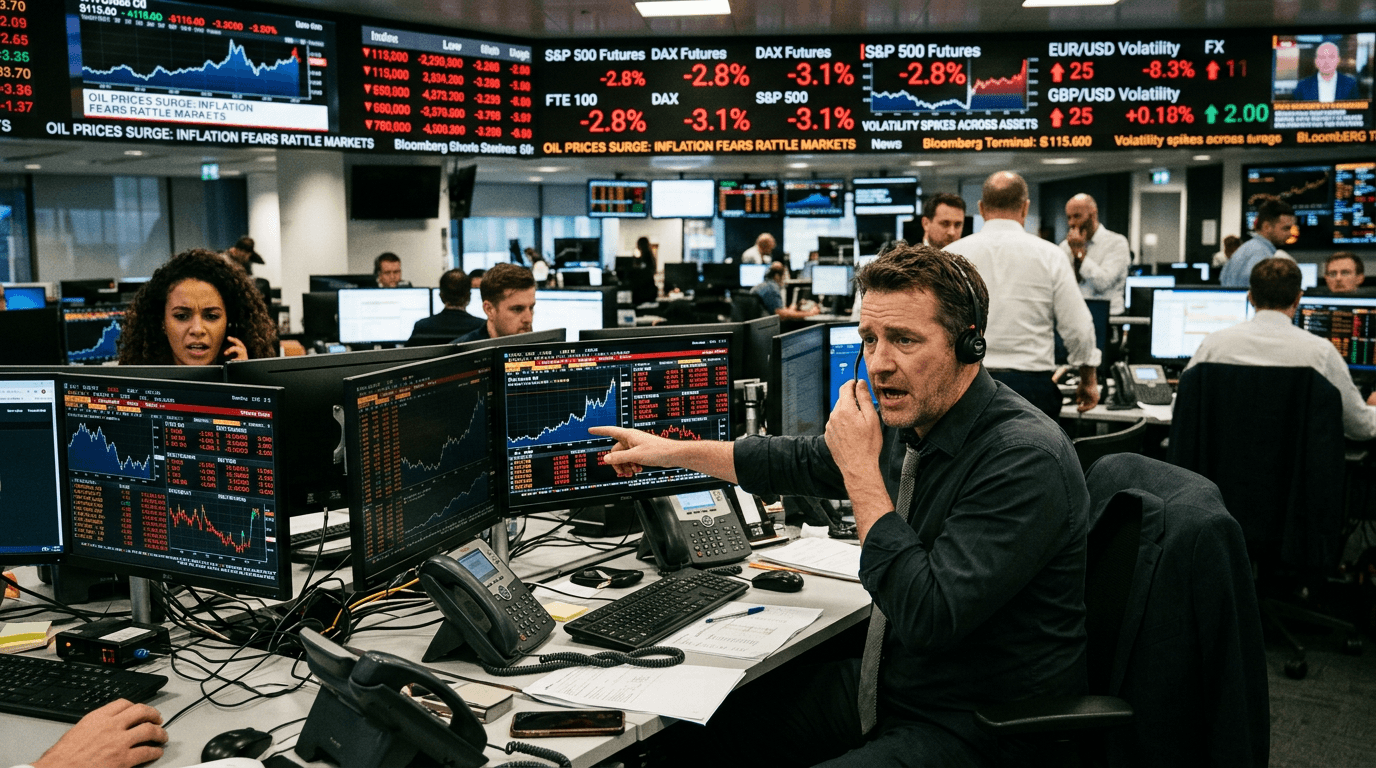
Surging oil prices are back at the center of the macro narrative, and this time the ripple effects are hitting far more than the energy sector. As traders reassess inflation trajectories and the path of central bank policy, risk assets are under pressure and futures markets are flashing a clear message: higher uncertainty, wider ranges, and more volatile price action across equities, FX, rates, and crypto.
Oil, Inflation And The Policy Narrative
Oil is not just another commodity; it is a core input into transportation, manufacturing, and logistics. When crude and refined product prices rise sharply, the immediate impact shows up in headline inflation via higher fuel and energy bills for households and businesses. This is the first-round effect most market participants understand instinctively when they see gasoline prices jump.
The more important question for markets is what comes next. If elevated energy prices persist, they can feed into broader price pressures as firms pass higher costs along and workers demand wage compensation. At the same time, inflation expectations—the market’s belief about future price levels—can drift higher, making central banks more cautious about easing policy. When the narrative shifts from “transitory shock” to “persistent inflation risk,” the macro backdrop for all risk assets changes.
This is exactly why surging oil is now reducing expectations for imminent Federal Reserve rate cuts. If the Fed worries that energy-driven inflation will keep headline readings elevated, it has less room to deliver the kind of dovish pivot equity and crypto bulls have been hoping for. For traders, the key takeaway is that oil moves are now a policy signal as much as a commodity story.
Why Higher Oil Hits Risk Asset Pricing
Higher expected inflation and fewer rate cuts feed directly into the discount rates used to value risk assets. When investors anticipate that policy will stay tighter for longer, the present value of future cash flows—whether from corporate earnings or crypto adoption—declines. The result is pressure on valuations, particularly in growth and long-duration assets that are most sensitive to changes in interest rates.
At the same time, rising energy costs can squeeze corporate profit margins. Sectors with high fuel intensity, such as airlines, transportation, and heavy industry, may see earnings expectations revised lower. Equity index futures quickly incorporate these revisions, often leading to weaker index levels even if headline economic growth remains resilient. Defensive sectors and energy producers may outperform, but broad risk appetite tends to cool.
Crypto and high-beta tech names are especially exposed to shifts in liquidity and risk sentiment. When traders worry that inflation will stay sticky and central banks will remain cautious, the “search for yield” in speculative assets can reverse. Outflows from riskier segments into cash, short-term bonds, or commodity hedges are a common pattern in oil-driven inflation episodes. The takeaway: higher oil can change both the valuation math and the psychology supporting risk assets.
Futures Volatility: How Markets Price Uncertainty
Futures markets are the first place where shifting macro narratives show up in a quantifiable way: volatility. When traders become less confident about the path of inflation and interest rates, they adjust both the level and the distribution of expected future prices. This uncertainty translates directly into higher implied volatility across equity, rate, and commodity futures.
In equity index futures, renewed inflation worries often lead to larger intraday swings, faster repricing around data releases, and more aggressive hedging via options. Volatility indices built from S&P 500 options, for example, tend to rise when energy shocks hit and policy expectations become more fluid. In rates futures, the curve can move sharply as traders toggle between scenarios of “higher for longer” and eventual normalization.
Oil futures themselves typically see both higher volume and wider ranges as participants debate whether the price surge reflects temporary supply disruptions, structural underinvestment, or robust demand. The more ambiguous the underlying drivers, the more volatile the term structure and spread relationships become.
For traders, the practical implication is straightforward: in an oil-driven macro regime, futures volatility is not noise—it is the market’s real-time expression of uncertainty about inflation, growth, and policy.
Trading Implications: Strategies In A High-oil Regime
A key skill in this environment is connecting commodity moves to cross-asset positioning. When oil spikes, disciplined traders immediately reassess their exposure to sectors and instruments that are sensitive to inflation expectations and rate paths, rather than viewing the move in isolation. This means looking at equity index futures, FX pairs tied to energy importers and exporters, and crypto alongside crude charts.
Risk management becomes more important as volatility rises. Position sizing, leverage, and stop placement should reflect wider expected ranges and faster moves around macro headlines. For directional traders, it may be prudent to shorten holding periods and focus on well-defined levels where liquidity is concentrated. For volatility-focused strategies, elevated implied vol can create opportunities in options—both for premium sellers who trust their risk controls and for hedgers who need protection at a reasonable cost.
Data and narrative awareness also matter. Economic releases such as CPI, PCE, and central bank minutes now carry added weight when they intersect with recent energy moves. Traders who prepare scenarios in advance—“What if headline inflation re-accelerates but core stays contained?”—are better positioned to react rationally rather than emotionally when the numbers hit the tape.
Simulated Finance: Using Volatile Backdrops As A Training Ground
For participants on SimFi platforms like E8 Markets, an oil-driven inflation shock creates a valuable environment to build and test robust trading frameworks. Simulated accounts allow traders to experience how cross-asset pricing adapts to macro stress without putting real capital at risk, which is especially useful when volatility spikes.
This is an ideal regime to practice
- Interpreting macro news and connecting it to asset pricing.
- Adjusting position size and leverage as volatility regimes change.
- Stress-testing strategies against scenarios of persistent inflation versus rapid normalization.
- Observing how correlations between equities, FX, rates, and crypto evolve when the narrative shifts from “disinflation” to “renewed inflation risk.”
By treating this backdrop as a live case study, traders can refine the habits and risk protocols they will rely on when trading real capital in similar environments down the line.
CONCLUSION: OIL AS A MACRO SIGNAL, NOT JUST A COMMODITY PRICE
The current episode of oil-driven inflation concerns is a reminder that markets are deeply interconnected. A strong move in one input price can reshape expectations for central bank policy, pressure risk assets, and alter the volatility landscape across futures markets. Whether you trade equities, FX, rates, or crypto, ignoring the energy narrative is no longer an option.
For traders and investors alike, the opportunity lies in understanding the transmission channels rather than reacting to headlines alone. Those who learn to read oil as a macro signal, manage risk proactively in volatile futures markets, and adapt to shifting policy expectations will be better positioned to navigate—and potentially benefit from—the turbulence that accompanies energy-driven inflation scares.