
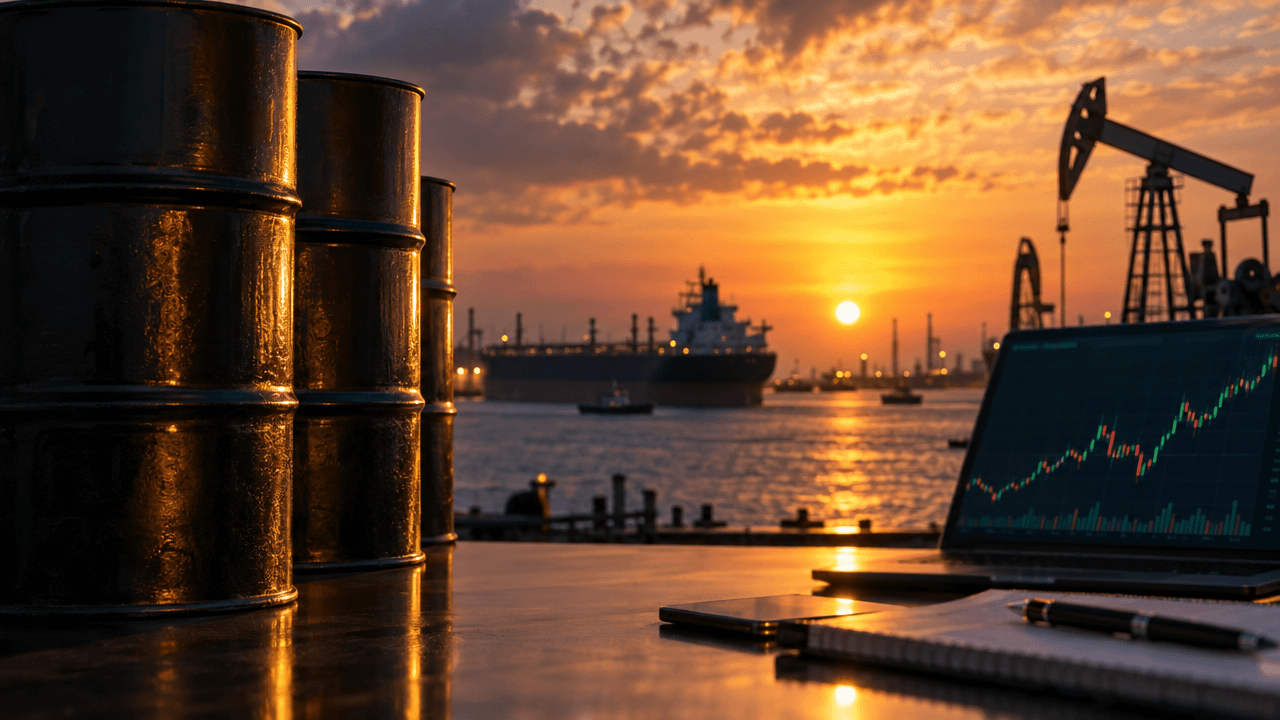
Oil prices are surging as traders confront two competing forces: the immediate risk of supply disruption in the Gulf and the possibility that OPEC+ could reshape production policy at its November 29 ministerial meeting. WTI recently climbed roughly 2% toward $85.75 a barrel, while Brent moved back toward the mid-to-high $90s after reports of attacks involving Saudi energy infrastructure and commercial shipping near the Strait of Hormuz. [6][8]
The move highlights how quickly geopolitical risk can overwhelm normal supply-and-demand analysis. Even when no major production loss has been confirmed, the possibility of damage to refineries, export terminals, pipelines, or shipping routes can trigger a risk premium. For traders, that premium represents the extra price buyers are willing to pay for protection against an uncertain future.
Why Gulf Supply Risks Matter
The Gulf remains central to the global oil market. Saudi Arabia is one of the world’s most important producers, while the Strait of Hormuz is a critical route for energy shipments. Any threat to infrastructure or tanker traffic raises concerns about whether crude can move from producers to international buyers smoothly.
That does not mean every attack immediately removes oil from the market. Prices can rise simply because traders expect potential delays, higher insurance costs, rerouted cargoes, or temporary shutdowns. If infrastructure is damaged, restoring full capacity may take time and require significant investment. Market participants therefore price the possibility of future shortages before official production data confirms them.
Recent reports of attacks on Saudi energy assets and vessels near the Strait of Hormuz have intensified those concerns. Brent gained nearly 3.5% in one recent session, while WTI also posted a strong advance as investors reassessed the security of regional supply. [3][9]
WHY OPEC+ IS THE NEXT CATALYST
The November 29 OPEC+ meeting adds another layer of uncertainty. Ministers are expected to discuss production policy and quotas for 2027, meaning the group’s communication could influence prices well beyond the weekend. [1][2]
A decision to maintain a cautious supply policy would reinforce the market’s current risk premium. Traders could interpret that approach as an effort to prevent a surplus from developing while geopolitical risks remain elevated. Conversely, signals that producers are comfortable increasing output could limit the rally by suggesting that additional barrels will be available if disruptions worsen.
The challenge for OPEC+ is balancing several competing objectives. Higher prices support producer revenues, but an excessive rally can intensify inflation and encourage consumers to reduce fuel demand. Lower prices may benefit consumers and economies, yet they can pressure producer budgets and undermine investment in future supply.
The meeting may therefore matter as much for its language as for its formal decision. References to market stability, spare capacity, inventories, or potential output adjustments can move crude futures even if quotas remain unchanged.
The Inflation And Risk-sentiment Channel
Higher oil prices affect more than energy companies. Crude is a major input for transportation, manufacturing, chemicals, plastics, and agriculture. When fuel costs rise, businesses may pass those expenses to consumers, increasing inflation pressure.
That creates a difficult environment for central banks. If energy prices remain elevated, policymakers may become more cautious about reducing interest rates, even if broader economic growth is slowing. Higher-for-longer interest-rate expectations can weigh on equities, particularly growth stocks whose valuations depend heavily on future earnings.
Oil also influences broader risk sentiment. A controlled price increase may benefit energy producers and commodity-linked currencies. A disorderly spike caused by prolonged supply disruption could have the opposite effect, raising recession concerns and encouraging investors to seek defensive assets.
For SimFi traders, this cross-market connection is essential. A crude oil position should not be viewed in isolation. Oil strength may coincide with gains in energy equities, weakness in fuel-sensitive industries, changes in inflation expectations, and increased volatility across major indices.
How Traders Can Approach The Volatility
The first priority is distinguishing confirmed supply losses from headline-driven risk premiums. Traders should monitor official production updates, shipping data, refinery operating reports, inventory releases, and statements from OPEC+ members rather than reacting to a single social-media report or unverified claim.
Position sizing is equally important. Geopolitical markets can move sharply in both directions. A report of damage may lift prices immediately, while a clarification that exports remain unaffected can erase much of the gain. Smaller positions and predefined risk limits help prevent one unexpected headline from causing disproportionate losses.
Traders should also identify key scenarios before the OPEC+ meeting. A steady-output message combined with continued Gulf tensions could support higher prices. A surprise increase in supply targets, or evidence that disruptions are limited, could produce a rapid reversal. Planning both outcomes is more robust than relying on one directional forecast.
In a simulated environment, traders can use the event to practice scenario analysis without risking real capital. One exercise is to map potential reactions across oil, energy stocks, currencies, and equity indices under three outcomes: temporary disruption, prolonged disruption, and no material supply loss.
The Bigger Market Lesson
The latest oil jump demonstrates that markets price uncertainty before they price confirmed damage. Gulf security concerns have lifted crude, but the rally remains vulnerable to new information. The November 29 OPEC+ meeting could either validate the move by signaling restraint or challenge it by pointing to greater future supply.
The most disciplined approach is to treat the market as a series of probabilities rather than a guaranteed trend. Track the physical evidence, follow OPEC+ communication closely, manage exposure carefully, and consider how higher energy prices could affect inflation and risk appetite. Oil may be the headline, but the consequences can extend across the entire financial system.